Gamze Çavdar – författare
Visar alla böcker från författaren Gamze Çavdar. Handla med fri frakt och snabb leverans.
4 produkter
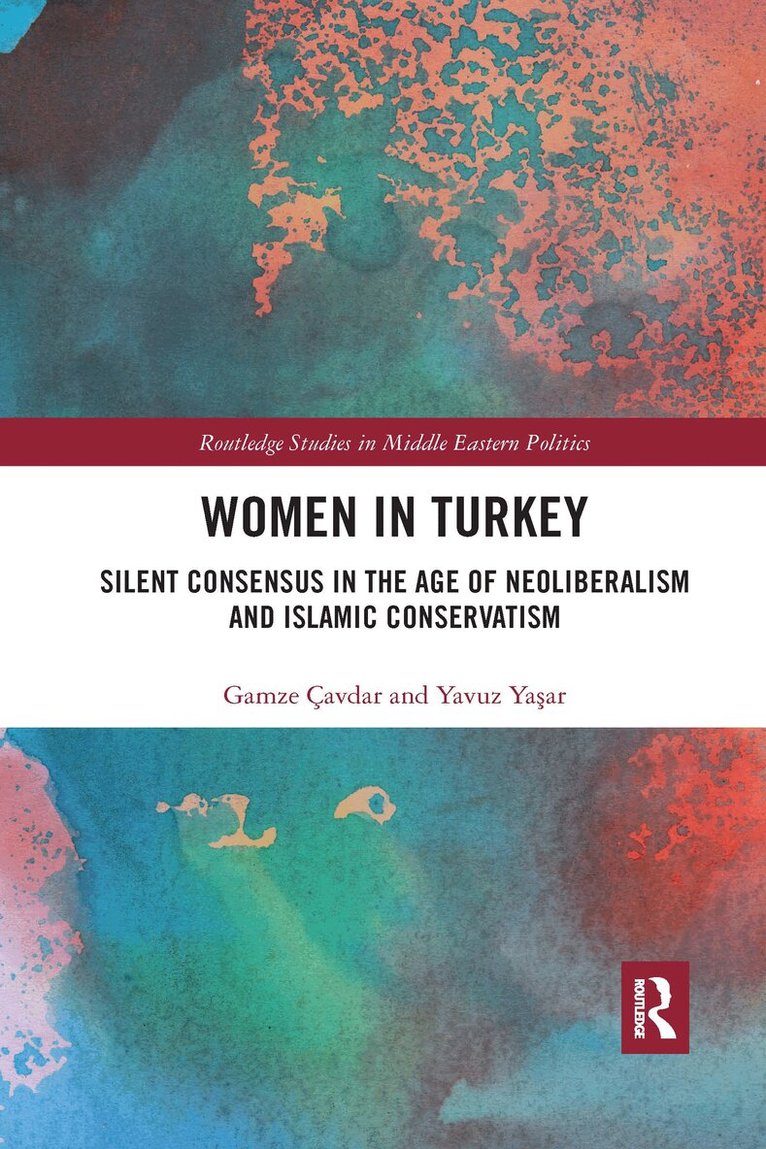
Women in Turkey
Silent Consensus in the Age of Neoliberalism and Islamic Conservatism
Häftad, 2020
692 kr
Lägg i varukorg
This book provides a socio-economic examination of the status of women in contemporary Turkey, assessing how policies have combined elements of neoliberalism and Islamic conservatism.Using rich qualitative and quantitative analyses, Women in Turkey analyses the policies concerning women in the …
Women in Turkey
Silent Consensus in the Age of Neoliberalism and Islamic Conservatism
Inbunden, 2019
2513 kr
Lägg i varukorg
Winner of the 2021 Suraj Mal and Shyama Devi Agarwal Book PrizeThis book provides a socio-economic examination of the status of women in contemporary Turkey, assessing how policies have combined elements of neoliberalism and Islamic conservatism.Using rich qualitative and quantitative analyses, …
Women in Turkey
Silent Consensus in the Age of Neoliberalism and Islamic Conservatism
E-bok, 2019
796 kr
Lägg i varukorg
Winner of the 2021 Suraj Mal and Shyama Devi Agarwal Book Prize This book provides a socio-economic examination of the status of women in contemporary Turkey, assessing how policies have combined elements of neoliberalism and Islamic conservatism. Using rich qualitative and quantitative analyses, …
Women in Turkey
Silent Consensus in the Age of Neoliberalism and Islamic Conservatism
E-bok, 2019
814 kr
Lägg i varukorg
Winner of the 2021 Suraj Mal and Shyama Devi Agarwal Book Prize This book provides a socio-economic examination of the status of women in contemporary Turkey, assessing how policies have combined elements of neoliberalism and Islamic conservatism. Using rich qualitative and quantitative analyses, …