Ganesh Prasad – författare
180 kr
Skickas inom 5-8 vardagar
360 kr
Skickas inom 5-8 vardagar
201 kr
Skickas inom 5-8 vardagar
357 kr
Skickas inom 5-8 vardagar
360 kr
Skickas inom 5-8 vardagar
208 kr
Skickas inom 5-8 vardagar
102 kr
Skickas inom 5-8 vardagar
218 kr
Skickas inom 5-8 vardagar
170 kr
Skickas inom 5-8 vardagar
1 597 kr
Skickas inom 5-8 vardagar
1 541 kr
Skickas inom 5-8 vardagar
457 kr
Skickas inom 5-8 vardagar
1 551 kr
Läs direkt efter köp
The aim of sedimentology, studying sediments, is to derive information on the depositional conditions which acted to deposit the rock unit, and the relation of the individual rock units in a basin into a coherent understanding of the evolution of the sedimentary sequences and basins, and thus, the Earth’s geological history as a whole. The scientific basis of this is the principle of uniformitarianism, which states that the sediments within ancient sedimentary rocks were deposited in the same way as sediments which are being deposited at the Earth’s surface today. Sedimentological conditions are recorded within the sediments as they are laid down; the form of the sediments at present reflects the events of the past and all events which affect the sediments, from the source of the sedimentary material to the stresses enacted upon them after diagenesis are available for study. The principle of superposition is critical to the interpretation of sedimentary sequences, and in older metamorphic terrains or fold and thrust belts where sediments are often intensely folded or deformed, recognising younging indicators or graded bedding is critical to interpretation of the sedimentary section and often the deformation and metamorphic structure of the region. This book is offered with the hope that it will be a constant companion for students of this subject.
4 450 kr
Läs direkt efter köp
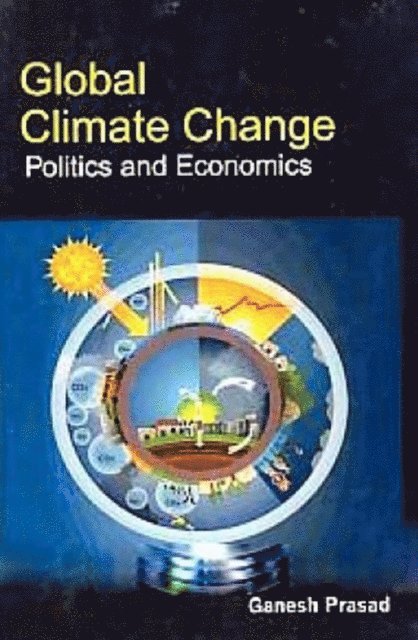
The urgency of the global warming challenge combined with the implication of almost every facet of a nation-state’s economic interests places significant burdens on the established largely-voluntary global institutions that have developed over the last century; institutions that have been unable to effectively reshape themselves and move fast enough to deal with this unique challenge. This book expatiates on the desideratum of a paradigm shift from faith in the Newtonian mechanistic view of the universe to a faith in the profundity of Eastern wisdom and new insights presently found in science, which see both nature and human beings as warp and woof woven beautifully into the divine tapestry. Contents: Historical Perspective • Abrupt Climate Change • Greenhouse Effect • Global Cooling • Responses to Global Warming • Global Food Security under Climate Change • Climate Change and World Food Supply • The Climate Change - Agriculture Conundrum • Impact of Climate Change on Indian Agriculture • Fisheries and Climate Change.
4 450 kr
Läs direkt efter köp
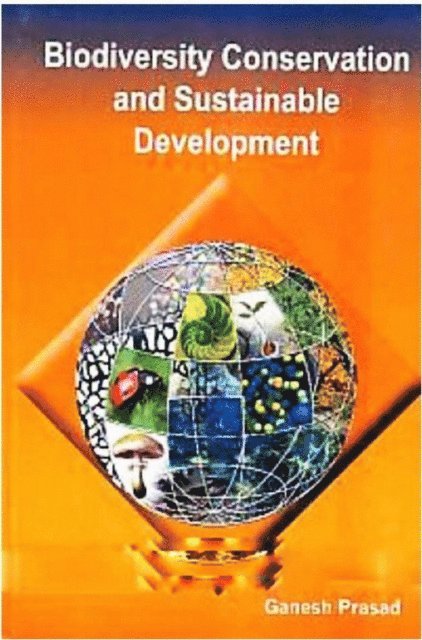
Sustainable use of biodiversity is measured under the headings — ‘Direct-use value’, ‘Indirect-use value’ and ‘Non-use value’. Direct-use value includes food, medicine, biological control, industrial materials, recreational harvesting and ecotourism. Indirect-use value deals with biodiversity and ecosystem functions for maintenance of soundness of environment as a whole. Non-use value provides options value, bequest value, existence value and intrinsic value. The entire volume has rich quality of papers that could act as referral to take up further action strategies and research initiatives on the conservation process for biodiversity. The attempt of the editors in this endeavour has been to offer a conceptual and research foundation to those who are motivated to take up further action on the area of biodiversity conservation and awareness campaign. Contents: Environmental Problems in Developing Countries • Political Economy of Future Water Crisis • Economics of Pollution • Impact of Liberalization on Environment • Economics of Sustainable Development • Environment and Sustainable Development • Ecological Issues of Farming • Environmental Statistics, Communication, Informatics and Ecological Sanitation • Management of Ozone Layer • Energy and Environmental Politics • Environmental Regulation and Energy.
2 147 kr
Läs direkt efter köp
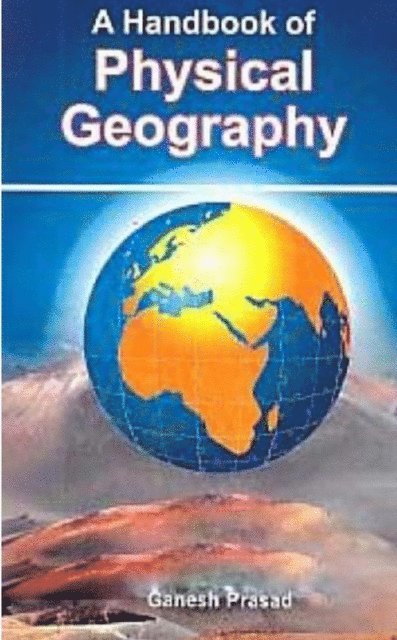
Physical geography is one of the two major subfields of geography. Physical geography is that branch of natural science which deals with the study of processes and patterns in the natural environment like the atmosphere, hydrosphere, biosphere, and geosphere, as opposed to the cultural or built environment, the domain of human geography. This book contains the fundamental and basic information of physical geography and the selection of contents makes it an appropriate textbook for the students. The publication includes history of the earth; climate and weather; mountains, plains and plateaus; earthquake and volcanoes; natural vegetation; hydrosphere; deserts; cloud, rain and ground water; lakes and islands etc. Contents: Introduction . The Earth as a Planet . Geography and the Tropics . Fields of Physical Geography . Soil Science . Rock . Mountain . Oceans and Atmosphere . Plant Geography . Nature of Cartography . The Geographical Distribution of Man.
1 431 kr
Läs direkt efter köp
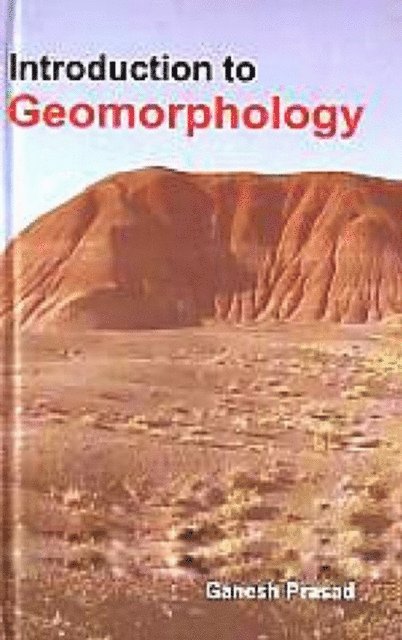
The surface of Earth is modified by a combination of surface processes that sculpt landscapes, and geologic processes that cause tectonic uplift and subsidence. Surface processes comprise the action of water, wind, ice, fire, and living things on the surface of the Earth, along with chemical reactions that form soils and alter material properties, the stability and rate of change of topography under the force of gravity, and other factors, such as (in the very recent past) human alteration of the landscape. Many of these factors are strongly mediated by climate. Geologic processes include the uplift of mountain ranges, the growth of volcanoes, isostatic changes in land surface elevation (sometimes in response to surface processes), and the formation of deep sedimentary basins where the surface of Earth drops and is filled with material eroded from other parts of the landscape. This book has been written in an easy language and a lucid style. This book would serve as a reference book for readers and a semi-textbook for students.
1 484 kr
Läs direkt efter köp
The study of geologic structures has been of prime importance in economic geology, both petroleum geology and mining geology. Folded and faulted rock strata commonly form traps for the accumulation and concentration of fluids such as petroleum and natural gas. Faulted and structurally complex areas are notable as permeable zones for hydrothermal fluids and the resulting concentration areas for base and precious metal ore deposits. Veins of minerals containing various metals commonly occupy faults and fractures in structurally complex areas. These structurally fractured and faulted zones often occur in association with intrusive igneous rocks. They often also occur around geologic reef complexes and collapse features such as ancient sinkholes. Deposits of gold, silver, copper, lead, zinc, and other metals, are commonly located in structurally complex areas. This book is a comprehensive, up-to-date textbook on the constantly changing and often complex world of this subject.