Gareth Edwards-Jones - Böcker
Visar alla böcker från författaren Gareth Edwards-Jones. Handla med fri frakt och snabb leverans.
2 produkter
2 produkter
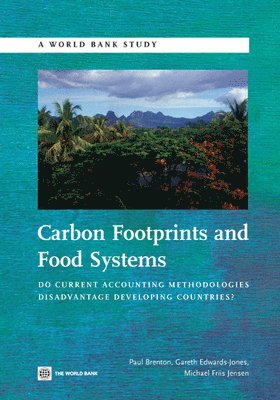
Carbon Footprints and Food Systems
Do Current Accounting Methodologies Disadvantage Developing Countries?
Häftad, Engelska, 2010
155 kr
Skickas inom 10-15 vardagar
This report addresses carbon labeling schemes, a high-profile issue and one that has important economic implications for developing countries. Carbon accounting and labeling instruments are designed to present information on greenhouse gas emissions (GHG) from supply chains. These instruments have become an important awareness-raising channel for governments, producers, retailers and consumers to bring about the reduction of GHGs. At the same time, they have emerged as a crucial element of supply chain management, trade logistics and, potentially, trade regulations between countries. But the underlying science of GHG emissions is only partially developed. Many of these schemes are based on rudimentary knowledge of GHG emissions and have mainly been designed by industrialized countries. There is a concern that these systems do not accurately reflect production processes in developing countries, and that they may even shift consumer preferences away from developing country exports. The report includes an analysis of current and emerging carbon labeling schemes and an assessment of available data, emissions factors and knowledge gaps of carbon footprinting methodologies.The report also analyzes carbon accounting methodologies for sugar and pineapple products from Zambia and Mauritius according to PAS 2050 guidelines, to illustrate whether these schemes accurately represent the production systems in developing countries. The report concludes with a series of recommendations on how carbon footprint labeling can be made more development-friendly
1 039 kr
Skickas inom 7-10 vardagar
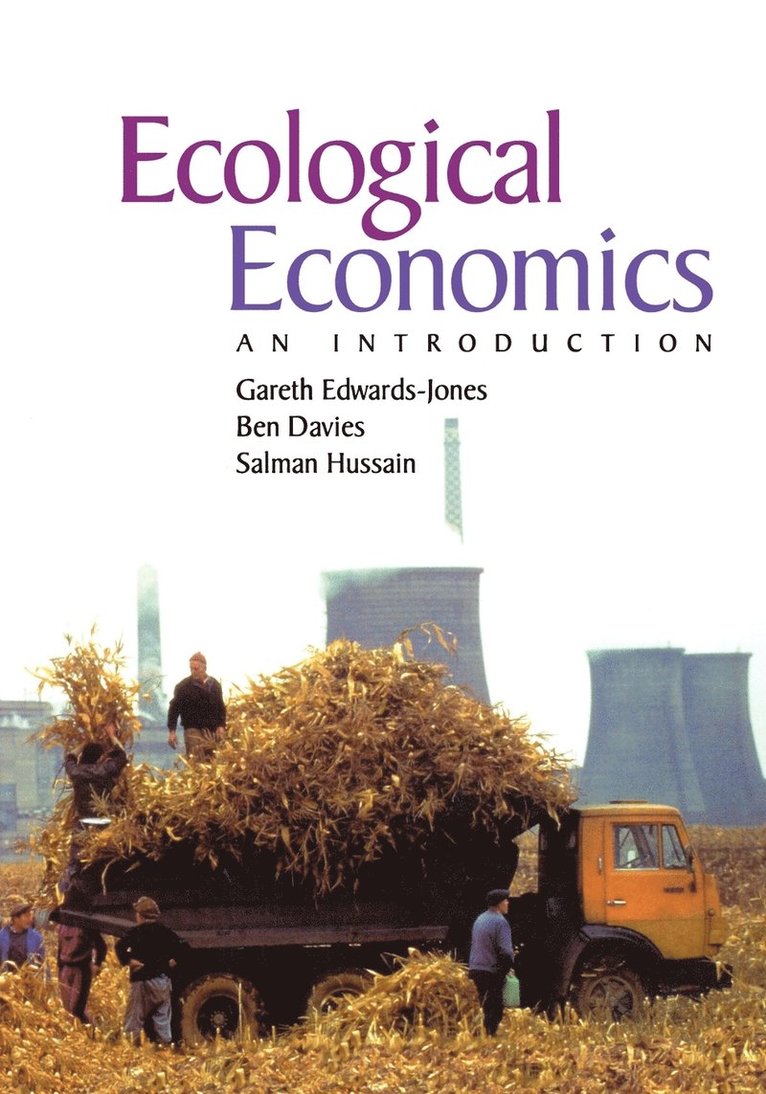
Ecological economics is an exciting interdisciplinary field of study that combines insights from the natural sciences, economics, philosophy and other fields to develop innovative approaches to environmental problems. It draws on a wide range of analytical perspectives, some radical others more conventional, to build a more complete understanding of human-ecosystem interactions. Current research in the field includes work on nature conservation, land use planning, pollution control, natural resource management, and environmental impact assessment/evaluation.Ecological Economics provides a comprehensive introduction to the core themes, presented in a clearly structured style, with chapters tailored specifically to readers without any economic or philosophical training. There is an emphasis throughout on the complementary roles of economics, ethics and ecology in environmental decision-making processes. The book reviews the evolution of important ideas in the field, explores the fundamental philosophies underlying different approaches to environmental problems, explains in detail the specific tools and techniques used in these approaches, and gives numerous examples of how they can be applied. Special importance is attached to understanding both the advantages and limitations of different analyses, in order to provide a balanced and coherent view of how these different approaches interrelate and how their roles vary in different contexts. Written by three authors specializing in ecology, economics and philosophy, this textbook provides an excellent introduction to the field of ecological economics for students in the natural sciences and other environmental disciplines. It will also be of interest to a wide range of professionals and researchers involved in environmental management and policy, and thers including economists seeking to broaden their knowledge of new methodologies and approaches. Further reading suggestions and extensive references are provided for those interested in pursuing particular themes beyond the introductory level. The first introductory ecological economics text written specifically for natural scientists. Assumes no prior knowledge of economics or philosophy. Emphasises the complementary roles of ecology, economics and ethics in environmental decision-making processes. An emphasis on clarity and accessibility throughout.