Gareth Leng – författare
409 kr
Läs direkt efter köp
How hormonal signals in one small structure of the brain—the hypothalamus—govern our physiology and behavior.
As human beings, we prefer to think of ourselves as reasonable. But how much of what we do is really governed by reason? In this book, Gareth Leng considers the extent to which one small structure of the neuroendocrine brain—the hypothalamus—influences what we do, how we love, and who we are.
The hypothalamus contains a large variety of neurons. These communicate not only through neurotransmitters, but also through peptide signals that act as hormones within the brain. While neurotransmitter signals tend to be ephemeral and confined by anatomical connectivity, the hormone signals that hypothalamic neurons generate are potent, wide-reaching, and long-lasting. Leng explores the evolutionary origins of these remarkable neurons, and where the receptors for their hormone signals are found in the brain. By asking how the hypothalamic neurons and their receptors are regulated, he explores how the hypothalamus links our passions with our reason. The Heart of the Brain shows in an accessible way how this very small structure is very much at the heart of what makes us human.
346 kr
Läs direkt efter köp
How biases, the desire for a good narrative, reliance on citation metrics, and other problems undermine confidence in modern science.
Modern science is built on experimental evidence, yet scientists are often very selective in deciding what evidence to use and tend to disagree about how to interpret it. In The Matter of Facts, Gareth and Rhodri Leng explore how scientists produce and use evidence. They do so to contextualize an array of problems confronting modern science that have raised concerns about its reliability: the widespread use of inappropriate statistical tests, a shortage of replication studies, and a bias in both publishing and citing “positive” results. Before these problems can be addressed meaningfully, the authors argue, we must understand what makes science work and what leads it astray.
The myth of science is that scientists constantly challenge their own thinking. But in reality, all scientists are in the business of persuading other scientists of the importance of their own ideas, and they do so by combining reason with rhetoric. Often, they look for evidence that will support their ideas, not for evidence that might contradict them; often, they present evidence in a way that makes it appear to be supportive; and often, they ignore inconvenient evidence.
In a series of essays focusing on controversies, disputes, and discoveries, the authors vividly portray science as a human activity, driven by passion as well as by reason. By analyzing the fluidity of scientific concepts and the dynamic and unpredictable development of scientific fields, the authors paint a picture of modern science and the pressures it faces.
504 kr
Skickas inom 5-8 vardagar
1 509 kr
Läs direkt efter köp
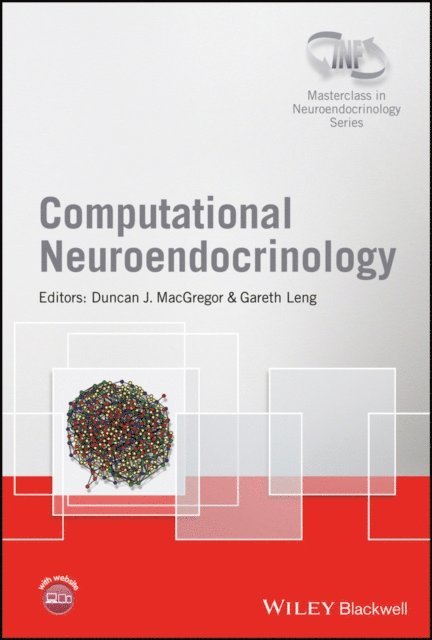
Neuroendocrinology with its well defined functions, inputs, and outputs, is one of the most fertile grounds for computational modeling in neuroscience. But modeling is often seen as something of a dark art. This book aims to display the power of modeling approaches in neuroendocrinology, and to showcase its potential for understanding these complex systems.
A recurring theme in neuroendocrinology is rhythms. How are rhythms generated, and what purpose do they serve? Are these two questions inextricably intertwined?
This book is written for innocents, presuming no math beyond high school or computing beyond calculators. It seeks to lead the curious into the thinking of the modeler, providing the tools to the reader to understand models, and even develop their own, giving life to paper diagrams. The diverse chapters, from ion channels to networks, systems, and hormonal rhythms, each tell the story of a model serving to join the hard won dots of experimentation, mapping a new understanding, and revealing hidden knowledge.
Written by a team of internationally renowned researchers Both print and enhanced e-book versions are available Illustrated in full colour throughoutThis is the fourth volume in a new Series ''Masterclass in Neuroendocrinology'' , a co- publication between Wiley and the INF (International Neuroendocrine Federation) that aims to illustrate highest standards and encourage the use of the latest technologies in basic and clinical research and hopes to provide inspiration for further exploration into the exciting field of neuroendocrinology.
Series Editors: John A. Russell, University of Edinburgh, UK and William E. Armstrong, The University of Tennessee, USA
1 509 kr
Läs direkt efter köp
Neuroendocrinology with its well defined functions, inputs, and outputs, is one of the most fertile grounds for computational modeling in neuroscience. But modeling is often seen as something of a dark art. This book aims to display the power of modeling approaches in neuroendocrinology, and to showcase its potential for understanding these complex systems.
A recurring theme in neuroendocrinology is rhythms. How are rhythms generated, and what purpose do they serve? Are these two questions inextricably intertwined?
This book is written for innocents, presuming no math beyond high school or computing beyond calculators. It seeks to lead the curious into the thinking of the modeler, providing the tools to the reader to understand models, and even develop their own, giving life to paper diagrams. The diverse chapters, from ion channels to networks, systems, and hormonal rhythms, each tell the story of a model serving to join the hard won dots of experimentation, mapping a new understanding, and revealing hidden knowledge.
Written by a team of internationally renowned researchers Both print and enhanced e-book versions are available Illustrated in full colour throughoutThis is the fourth volume in a new Series ''Masterclass in Neuroendocrinology'' , a co- publication between Wiley and the INF (International Neuroendocrine Federation) that aims to illustrate highest standards and encourage the use of the latest technologies in basic and clinical research and hopes to provide inspiration for further exploration into the exciting field of neuroendocrinology.
Series Editors: John A. Russell, University of Edinburgh, UK and William E. Armstrong, The University of Tennessee, USA
1 286 kr
Skickas inom 11-20 vardagar
Trends in Neuroendocrinology, Volume 1220
1 085 kr
Tillfälligt slut