Garrath Williams - Böcker
Visar alla böcker från författaren Garrath Williams. Handla med fri frakt och snabb leverans.
3 produkter
3 produkter
893 kr
Skickas inom 5-8 vardagar
Childhood obesity has become a central concern in many countries and a range of policies have been proposed or implemented to address it. This co-authored book is the first to focus on the complex set of ethical and policy issues that childhood obesity raises.Throughout the book, authors Kristin Voigt, Stuart G. Nicholls, and Garrath Williams emphasize that childhood obesity is a multi-faceted phenomenon, and just one of many issues that parents, schools and societies face. They argue that it is important to acknowledge the resulting complexities and not to think in terms "single-issue" policies. After first reviewing some of the factual uncertainties about childhood obesity, the authors explore central ethical questions. What priority should be given to preventing obesity? To what extent are parents responsible? How should we think about questions of stigma and inequality? In the second part of the book, the authors consider key policy issues, including the concept of the âobesogenic environment,â debates about taxation and marketing, and the role that schools can play in obesity prevention. The authors argue that political debate is needed to decide the importance given to childhood obesity and how to divide responsibilities for action. These debates have no simple answers. Nonetheless, the authors argue that there are reasons for hope. There are a wide range of opportunities for action. Many of these options also promise wider social benefits. "This book provides a welcome re-appraisal of commonly-held beliefs about child obesity and misconceptions about what needs to be done. The authors expose the futility of holding parents responsible for children's unhealthy behaviour, they challenge the assumption that education and family support will solve the problem, and they condemn the prejudice and stigma which surround the narrative of blame. The book shows convincingly how the causes of obesity - and the range of associated diseases - lie in the fabric of the modern market economy: in the food supply which shapes our diets, the social and physical environment which encourages sedentary behaviour, and in the media which promote ever greater consumption. Obesity is not the problem: it is the symptom of a more complex social and economic malaise encouraging poor health. The case for interventions by governments to promote health and wellbeing above crude economic growth is comprehensively proven." - Dr. Tim Lobstein, Director of Policy and Programmes, The International Association for the Study of Obesity and The International Obesity Task ForceA well-researched, highly critical, but carefully balanced examination of everyday assumptions about childhood obesity and its prevention from an intensely moral perspective. Although the authors demonstrate that no intervention is without ethical complications or effective entirely on its own, they call for immediate actions to reduce the stigma of childhood obesity, support parents, and create food environments healthier for children, adults, and the environment.- Marion Nestle, Paulette Goddard Professor of Nutrition, Food Studies, and Public Health, NYU Steinhardt School of Culture, Education, and Human Development
753 kr
Skickas inom 7-10 vardagar
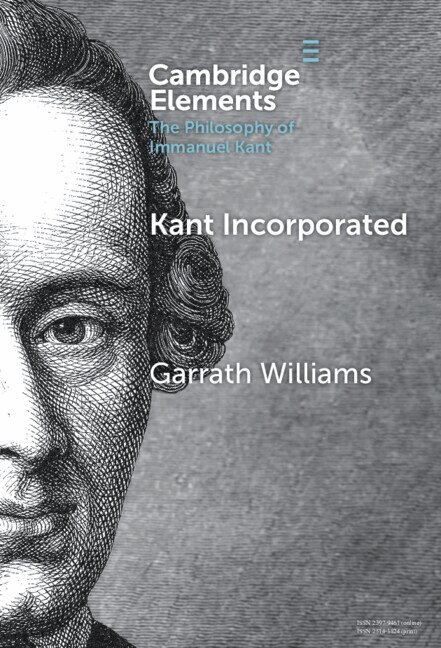
Corporations are legal bodies with duties and powers distinct from those of individual people. Kant discusses them in many places. He endorses universities and churches; he criticises feudal orders and some charitable foundations; he condemns early business corporations' overseas activities. This Element argues that Kant's practical philosophy offers a systematic basis for understanding these bodies. Corporations bridge the central distinctions of his practical philosophy: ethics versus right, public versus private right. Corporations can extend freedom, structure moral activity, and aid progress towards more rightful conditions. Kant's thought also highlights a fundamental threat. In every corporation, some people exercise the corporation's legal powers, without the same liabilities as private individuals. This threatens Kant's principle of innate equality: no citizen should have greater legal rights than any other. This Element explores the justifications and safeguards needed to deal with this threat. This title is also available as Open Access on Cambridge Core.
234 kr
Skickas inom 7-10 vardagar
Corporations are legal bodies with duties and powers distinct from those of individual people. Kant discusses them in many places. He endorses universities and churches; he criticises feudal orders and some charitable foundations; he condemns early business corporations' overseas activities. This Element argues that Kant's practical philosophy offers a systematic basis for understanding these bodies. Corporations bridge the central distinctions of his practical philosophy: ethics versus right, public versus private right. Corporations can extend freedom, structure moral activity, and aid progress towards more rightful conditions. Kant's thought also highlights a fundamental threat. In every corporation, some people exercise the corporation's legal powers, without the same liabilities as private individuals. This threatens Kant's principle of innate equality: no citizen should have greater legal rights than any other. This Element explores the justifications and safeguards needed to deal with this threat. This title is also available as Open Access on Cambridge Core.