Garrison Sposito – författare
1 371 kr
Läs direkt efter köp
1 421 kr
Skickas inom 5-8 vardagar
1 531 kr
Läs direkt efter köp
1 531 kr
Läs direkt efter köp
1 973 kr
Skickas inom 5-8 vardagar
2 329 kr
Skickas inom 5-8 vardagar
1 492 kr
Skickas inom 5-8 vardagar
1 371 kr
Läs direkt efter köp
1 353 kr
Läs direkt efter köp
1 353 kr
Läs direkt efter köp
4 623 kr
Läs direkt efter köp
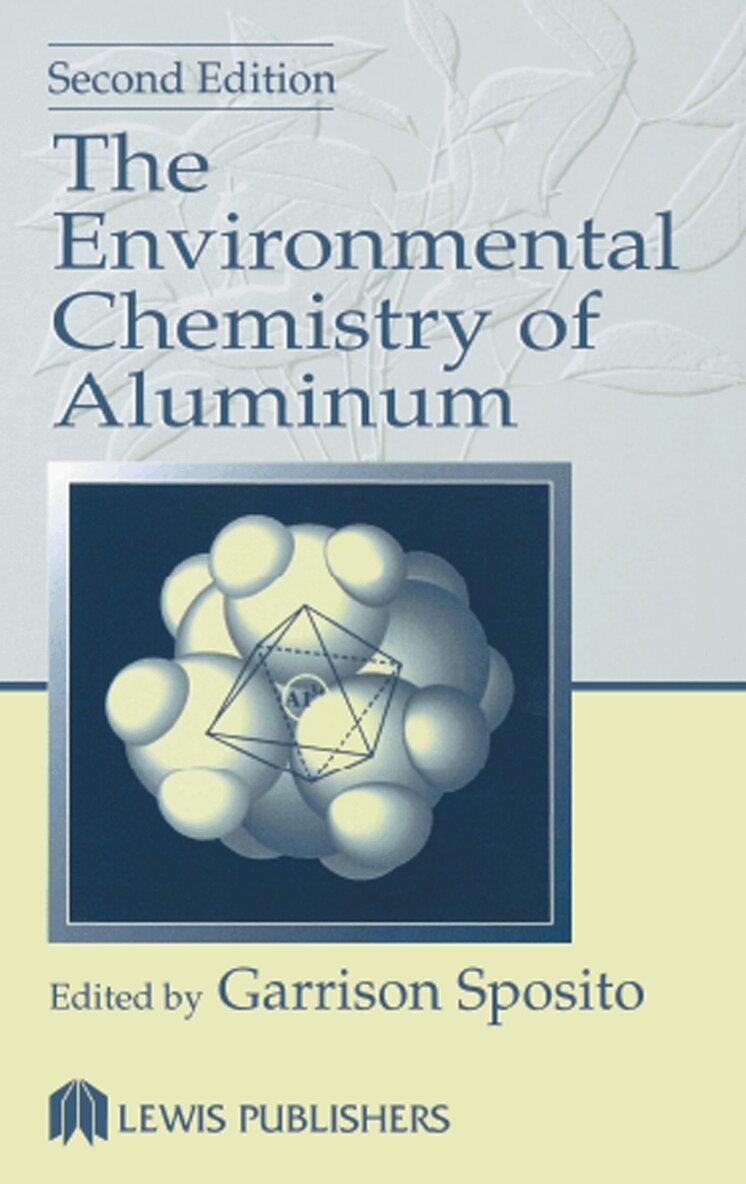
The Environmental Chemistry of Aluminum provides a comprehensive, fundamental account of the aqueous chemistry of aluminum within an environmental context. An excellent reference for environmental chemists and scientific administrators of environmental programs, this book contains material reflecting the many recent changes in this rapidly developing discipline. The first three chapters discuss the most fundamental aspects of aluminum chemistry: its quantitation in soils and natural waters, including speciation measurements, and its stable chemical forms, both as a dissolved solute and in a solid phase. These chapters emphasize both critical assessments of and definitive recommendations for laboratory methodologies and measured thermodynamic properties relating to aluminum chemistry. The next four chapters in The Environmental Chemistry of Aluminum build on this foundation to provide details of the polymeric chemistry of aluminum: its polynuclear and colloidal hydrolytic species in aqueous solution, its complexes with natural organic ligands, including humic substances, and its role as an adsorptive and adsorbent in surface reactions. These chapters are grounded in experimental results rather than conceptual modeling. The final three chapters describe the chemistry of aluminum in soils, waters, and watersheds. These chapters illustrate the problems of spatial and temporal variability, metastability, and scale that continue to make aluminum geochemistry one of the great challenges in modern environmental science.
4 623 kr
Läs direkt efter köp
The Environmental Chemistry of Aluminum provides a comprehensive, fundamental account of the aqueous chemistry of aluminum within an environmental context. An excellent reference for environmental chemists and scientific administrators of environmental programs, this book contains material reflecting the many recent changes in this rapidly developing discipline. The first three chapters discuss the most fundamental aspects of aluminum chemistry: its quantitation in soils and natural waters, including speciation measurements, and its stable chemical forms, both as a dissolved solute and in a solid phase. These chapters emphasize both critical assessments of and definitive recommendations for laboratory methodologies and measured thermodynamic properties relating to aluminum chemistry. The next four chapters in The Environmental Chemistry of Aluminum build on this foundation to provide details of the polymeric chemistry of aluminum: its polynuclear and colloidal hydrolytic species in aqueous solution, its complexes with natural organic ligands, including humic substances, and its role as an adsorptive and adsorbent in surface reactions. These chapters are grounded in experimental results rather than conceptual modeling. The final three chapters describe the chemistry of aluminum in soils, waters, and watersheds. These chapters illustrate the problems of spatial and temporal variability, metastability, and scale that continue to make aluminum geochemistry one of the great challenges in modern environmental science.
626 kr
Skickas inom 7-10 vardagar
1 850 kr
Skickas inom 7-10 vardagar
3 889 kr
Skickas inom 10-15 vardagar