Garry Wheeler Stone – författare
Visar alla böcker från författaren Garry Wheeler Stone. Handla med fri frakt och snabb leverans.
2 produkter
2 produkter
Häftad, Engelska, 2017
291 kr
Skickas inom 10-15 vardagar
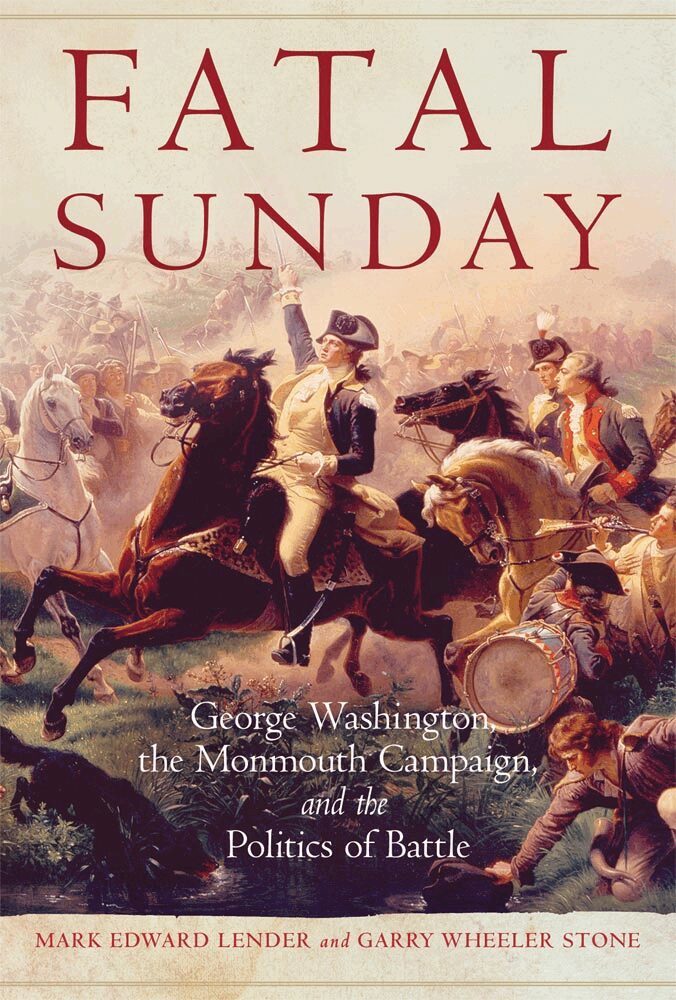
Historians have long considered the Battle of Monmouth one of the most complicated engagements of the American Revolution. Fought on Sunday, June 28, 1778, Monmouth was critical to the success of the Revolution. It also marked a decisive turning point in the military career of George Washington. Without the victory at Monmouth Courthouse, Washington's critics might well have marshaled the political strength to replace him as the American commander-in-chief. Authors Mark Edward Lender and Garry Wheeler Stone argue that in political terms, the Battle of Monmouth constituted a pivotal moment in the War for Independence.Viewing the political and military aspects of the campaign as inextricably entwined, this book offers a fresh perspective on Washington's role in it. Drawing on a wide range of historical sources - many never before used, including archaeological evidence - Lender and Stone disentangle the true story of Monmouth and provide the most complete and accurate account of the battle, including both American and British perspectives. In the course of their account it becomes evident that criticism of Washington's performance in command was considerably broader and deeper than previously acknowledged. In light of long-standing practical and ideological questions about his vision for the Continental Army and his ability to win the war, the outcome at Monmouth - a hard-fought tactical draw - was politically insufficient for Washington. Lender and Stone show how the general's partisans, determined that the battle for public opinion would be won in his favor, engineered a propaganda victory for their chief that involved the spectacular court-martial of Major General Charles Lee, the second-ranking officer of the Continental Army.Replete with poignant anecdotes, folkloric incidents, and stories of heroism and combat brutality; filled with behind-the-scenes action and intrigue; and teeming with characters from all walks of life, Fatal Sunday gives us the definitive view of the fateful Battle of Monmouth.
Inbunden, Engelska, 2022
310 kr
Skickas
The Marquis de Lafayette, a nineteen-year-old French youth, arrived in Philadelphia at the end of July 1777. He was a rich aristocrat, but he was unpretentious, charming, and eager to learn. Introduced to George Washington, he joined the commander-in-chief at the Battle of Brandywine in September, where he proved that he was courageous. Soon after, the British occupied Philadelphia and prepared to control the Delaware River, vital as a supply route. In November, the marquis volunteered to go to New Jersey with Major General Nathanael Greene and a detachment sent to defend Fort Mercer, a Delaware River fort controlling shipping access to Philadelphia. Mercer was threatened by an approaching enemy column led by Lord Charles Cornwallis. The Continentals were unable to reach Fort Mercer in time to save it, but Lafayette had ridden ahead of Greene to reconnoiter. He discovered a 350-man picket of German riflemen (jägers) guarding Cornwallis’s camp, and with ten light dragoons, 150 riflemen from Daniel Morgan’s Rifle Corps, and perhaps 200 New Jersey militia, he attacked. In forty-five minutes, Lafayette’s little band drove the jägers back two and a half miles, almost to Cornwallis’s camp. When the news of Lafayette’s small victory reached the Continental Congress at York, Pennsylvania, the delegates were elated—this was the only good news amid the gloom over the loss of Philadelphia and control of the Delaware River. Massachusetts delegate James Lovell relayed a glowing account of the skirmish to John Adams, concluding with “Genl. Greene says the Marquis seems determined to court Danger. I wish more were so determined.” In The Battle of Gloucester, 1777, archaeological historian Garry Wheeler Stone, with the assistance of historian Paul W. Schopp, recreates this minor but important clash during the Philadelphia campaign. Relying on both primary source documents and the latest archaeological interpretations, the authors have determined the course of this fascinating “battle,” as Benjamin Franklin later proclaimed it to be. As a result of this action, when Washington requested that Lafayette be given a division, Congress agreed. On December 4, 1777, the marquis, promoted to major-general, took command of the brigades of Generals Woodford and Scott to begin what would be a glorious career in American service.Small Battles: Military History as Local HistoryMark Edward Lender and James Kirby Martin, Series EditorsSmall Battles offers a fresh and important new perspective on the story of America’s early conflicts. It was the small battles, not the clash of major armies, that truly defined the fighting during the colonial wars, the American Revolution, the War of 1812, and the hostilities on the frontiers. This is dramatic military history as seen through the prism of local history—history with a depth of detail, a feeling for place, people, and the impact of battle and its consequences that the story of major battles often cannot convey. The Small Battles series focuses on America’s military conflicts at their most intimate and revealing level.