Gary B. Magee – författare
Visar alla böcker från författaren Gary B. Magee. Handla med fri frakt och snabb leverans.
10 produkter
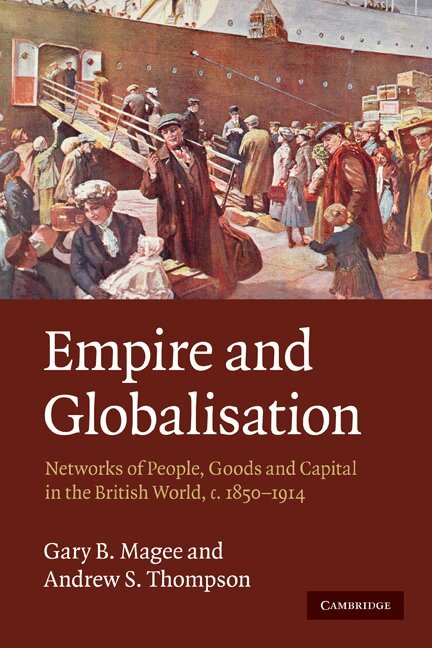
Empire and Globalisation
Networks of People, Goods and Capital in the British World, c.1850-1914
Av Gary B. Magee, Andrew S. Thompson
Häftad, 2010
502 kr
Lägg i varukorg
Focusing on the great population movement of British emigrants before 1914, this book provides a perspective on the relationship between empire and globalisation. It shows how distinct structures of economic opportunity developed around the people who settled across a wider British World through …
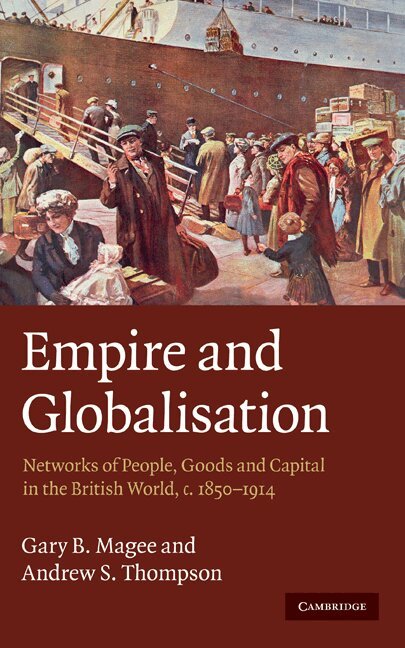
Empire and Globalisation
Networks of People, Goods and Capital in the British World, c.1850-1914
Av Gary B. Magee, Andrew S. Thompson
Inbunden, 2010
1442 kr
Lägg i varukorg
Focusing on the great population movement of British emigrants before 1914, this book provides a perspective on the relationship between empire and globalisation. It shows how distinct structures of economic opportunity developed around the people who settled across a wider British World through …
European Miracle and Beyond
Essays in Honour of Professor E. L. Jones
Inbunden, 2025
2260 kr
Lägg i varukorg
This edited volume presents a set of essays honouring the agricultural, environmental and world economic historian, Eric L. Jones. Drawing insights from contributors spanning the social sciences, it highlights how Jones' approach was ahead of its time, illuminating the benefits of studying economic …
European Miracle and Beyond
Essays in Honour of Professor E. L. Jones
E-bok, 2025
2948 kr
Lägg i varukorg
This edited volume presents a set of essays honouring the agricultural, environmental and world economic historian, Eric L. Jones. Drawing insights from contributors spanning the social sciences, it highlights how Jones' approach was ahead of its time, illuminating the benefits of studying economic …
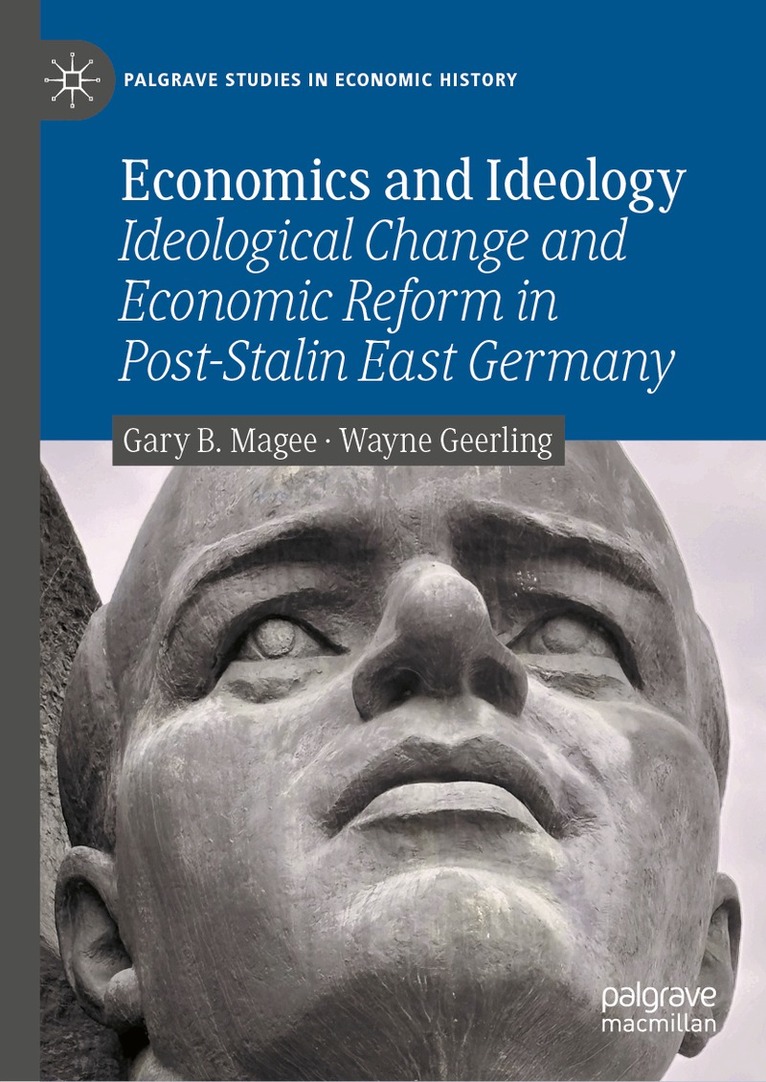
Economics and Ideology
Ideological Change and Economic Reform in Post-Stalin East Germany
Av Gary B. Magee, Wayne Geerling
Inbunden, 2027
1553 kr
Kommande
This book explains how ideology can be better integrated into economic history analysis, arguing that if economists and economic historians are to fully understand economic behaviour a much deeper appreciation of ideological processes is required. The book has two parts. The first part presents a …
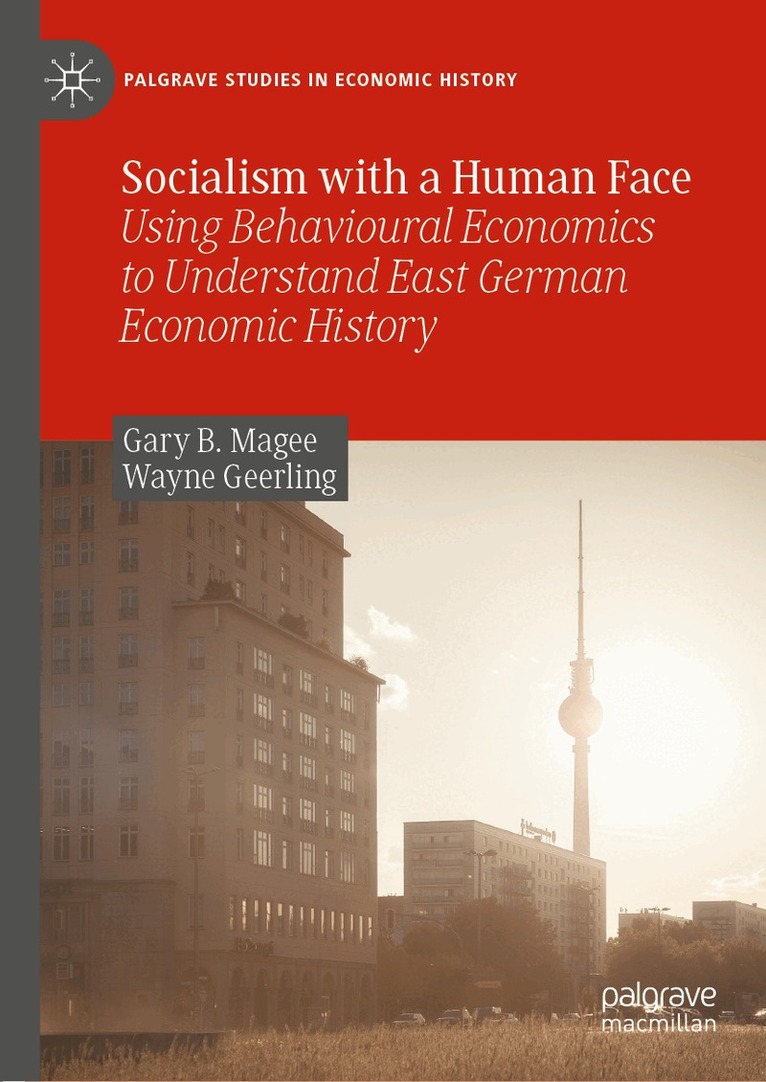
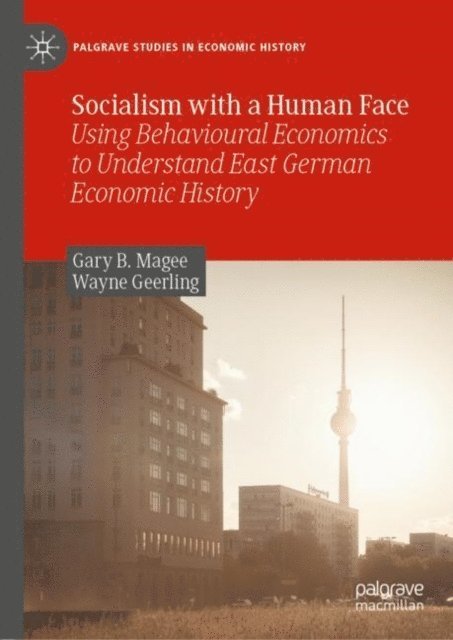
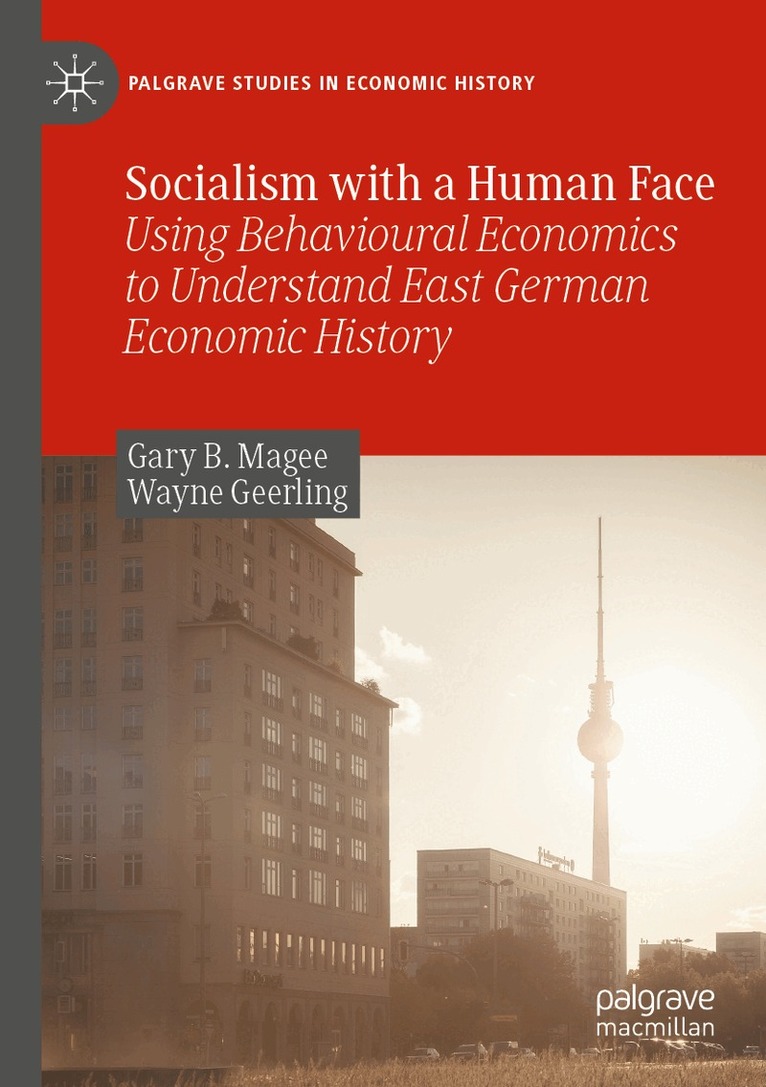
Socialism with a Human Face
Using Behavioural Economics to Understand East German Economic History
Av Gary B. Magee, Wayne Geerling
Inbunden, 2022
1249 kr
Lägg i varukorg
East Germany’s economic history is typically told as a story of the unravelling of an inherently flawed system. Yet, while the system’s inefficiency is undeniable, its economic history was much richer than its comparatively poor economic performance suggests. For many who lived there, it was a …
Socialism with a Human Face
Using Behavioural Economics to Understand East German Economic History
Av Wayne Geerling, Gary B. Magee
E-bok, 2022
1634 kr
Lägg i varukorg
East Germany’s economic history is typically told as a story of the unravelling of an inherently flawed system. Yet, while the system’s inefficiency is undeniable, its economic history was much richer than its comparatively poor economic performance suggests. For many who lived there, it was a …
Socialism with a Human Face
Using Behavioural Economics to Understand East German Economic History
Av Gary B. Magee, Wayne Geerling
Häftad, 2023
1249 kr
Lägg i varukorg
East Germany’s economic history is typically told as a story of the unravelling of an inherently flawed system. Yet, while the system’s inefficiency is undeniable, its economic history was much richer than its comparatively poor economic performance suggests. For many who lived there, it was a …
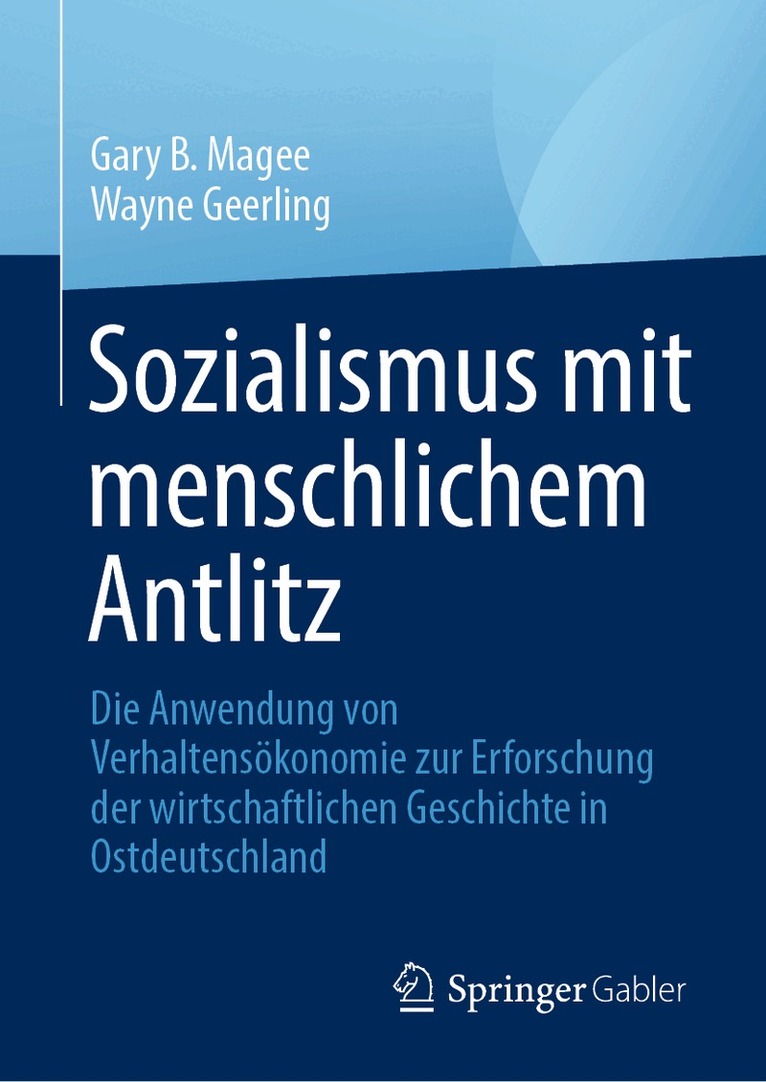
Sozialismus mit menschlichem Antlitz
Die Anwendung von Verhaltensökonomie zur Erforschung der wirtschaftlichen Geschichte in Ostdeutschland
Av Gary B. Magee, Wayne Geerling
Inbunden, 2024
1062 kr
Lägg i varukorg
Die Wirtschaftsgeschichte Ostdeutschlands wird in der Regel als eine Geschichte des Zusammenbruchs eines von Natur aus fehlerhaften Systems erzählt. Doch obwohl die Ineffizienz des Systems unbestreitbar ist, war seine Wirtschaftsgeschichte viel reicher, als seine vergleichsweise schlechte …
Sozialismus mit menschlichem Antlitz
Die Anwendung von Verhaltensökonomie zur Erforschung der wirtschaftlichen Geschichte in Ostdeutschland
Av Wayne Geerling, Gary B. Magee
E-bok, 2024
1074 kr
Lägg i varukorg
Die Wirtschaftsgeschichte Ostdeutschlands wird in der Regel als eine Geschichte des Zusammenbruchs eines von Natur aus fehlerhaften Systems erzählt. Doch obwohl die Ineffizienz des Systems unbestreitbar ist, war seine Wirtschaftsgeschichte viel reicher, als seine vergleichsweise schlechte …