Gary Griffiths – författare
Visar alla böcker från författaren Gary Griffiths. Handla med fri frakt och snabb leverans.
5 produkter
5 produkter
E-bok
Engelska, 2017779 kr
Läs direkt efter köp
The first edition of this highly acclaimed publication received a Shingo Research and Professional Publication Prize in 2009. Explaining how to create and sustain a Lean business, it followed Cogent Power‘s first two Lean Roadmaps along their journey. Since then, much has changed. Several members of Cogent Power‘s senior management have moved on, s
Inbunden, Engelska, 2017
2 752 kr
Skickas inom 10-15 vardagar
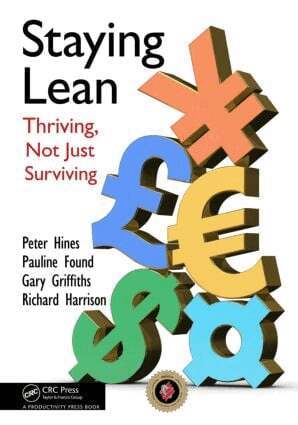
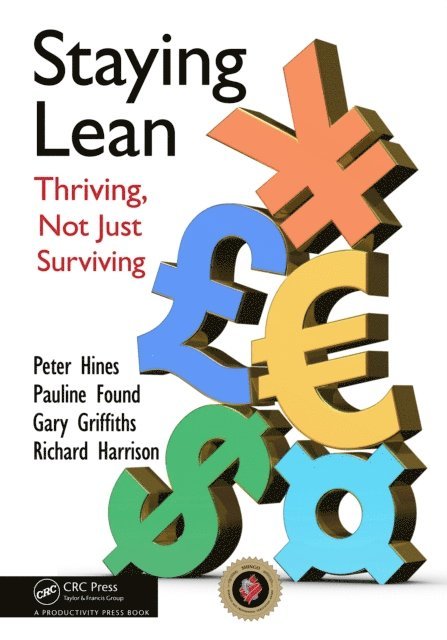
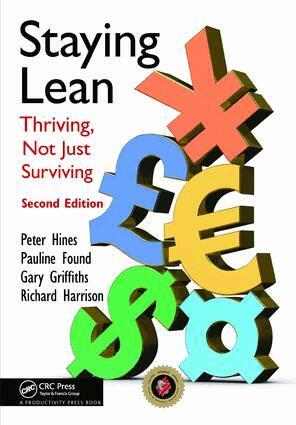
The first edition of this highly acclaimed publication received a Shingo Research and Professional Publication Prize in 2009. Explaining how to create and sustain a Lean business, it followed Cogent Power‘s first two Lean Roadmaps along their journey. Since then, much has changed. Several members of Cogent Power‘s senior management have moved on, steel prices have declined, and the credit crisis has sparked an unstable global economy. Set against these developments, Staying Lean: Thriving, Not Just Surviving, Second Edition reports on Cogent Power‘s response to these issues detailing how they worked through their third Lean Roadmap. It also:Guides readers with readily reproducible advice and an easy-to-follow model for sustaining Lean improvements Presents a case study of a successful multinational Lean implementation Covers a six-year Lean transformation from start to finish, illustrating the application of three distinct roadmapsFocusing on how to sustain change, the new edition of this bestselling reference, illustrates the experience of a multi-national company that successfully implemented Lean in its manufacturing and commercial operations. Based on a model of sustainable change, the text defines by example the elements of successful Lean management that are often difficult to emulate as well as the more visible features of process management.
Häftad, Engelska, 2011
657 kr
Skickas inom 10-15 vardagar
The first edition of this highly acclaimed publication received a Shingo Research and Professional Publication Prize in 2009. Explaining how to create and sustain a Lean business, it followed Cogent Power’s first two Lean Roadmaps along their journey. Since then, much has changed. Several members of Cogent Power’s senior management have moved on, steel prices have declined, and the credit crisis has sparked an unstable global economy. Set against these developments, Staying Lean: Thriving, Not Just Surviving, Second Edition reports on Cogent Power’s response to these issues—detailing how they worked through their third Lean Roadmap. It also: Guides readers with readily reproducible advice and an easy-to-follow model for sustaining Lean improvements Presents a case study of a successful multinational Lean implementation Covers a six-year Lean transformation from start to finish, illustrating the application of three distinct roadmapsFocusing on how to sustain change, the new edition of this bestselling reference, illustrates the experience of a multi-national company that successfully implemented Lean in its manufacturing and commercial operations. Based on a model of sustainable change, the text defines by example the elements of successful Lean management that are often difficult to emulate as well as the more visible features of process management.
E-bok
PDF, Engelska, 20121 377 kr
Läs direkt efter köp
Dr Peter Milton, Director of Programme Review, Quality Assurance Agency I am grateful to the authors for giving me the opportunity to write this foreword, mainly because it represents the first occasion that the Fund for the Development of Teaching and Learning (FDTL) has led directly to a pUblication such as this. In my former capacity as Director of Quality Assessment at the Higher Education Funding Council for England (HEFCE), I chaired the FDTL Committee during 1996/7 and am delighted to see the projects which were selected so painstakingly leading to successful outcomes. Assessment of the quality of higher education (HE) was introduced in 1993 and was intended to improve public information about what was on offer in British universities and colleges, as well as to assist in the enhancement of educational opportunities for students. This was part of a larger agenda in which educational quality and the standards achieved by students have come under increasing scrutiny, with a long-term objective of linking funding allocations to the quality of the provision. It was in this context that the FDTL Initiative was launched in 1995 to support projects aimed at stimulating developments in teaching and learning and to encourage the dissemination of good practice across the HE sector. Good practice is identified through the process of quality assessment and bids for funding can only be made by those institutions which have demonstrated high quality provision. To date, the programme includes 63 projects drawn from 23 subject areas.
Häftad, Engelska, 1998
1 050 kr
Skickas inom 10-15 vardagar
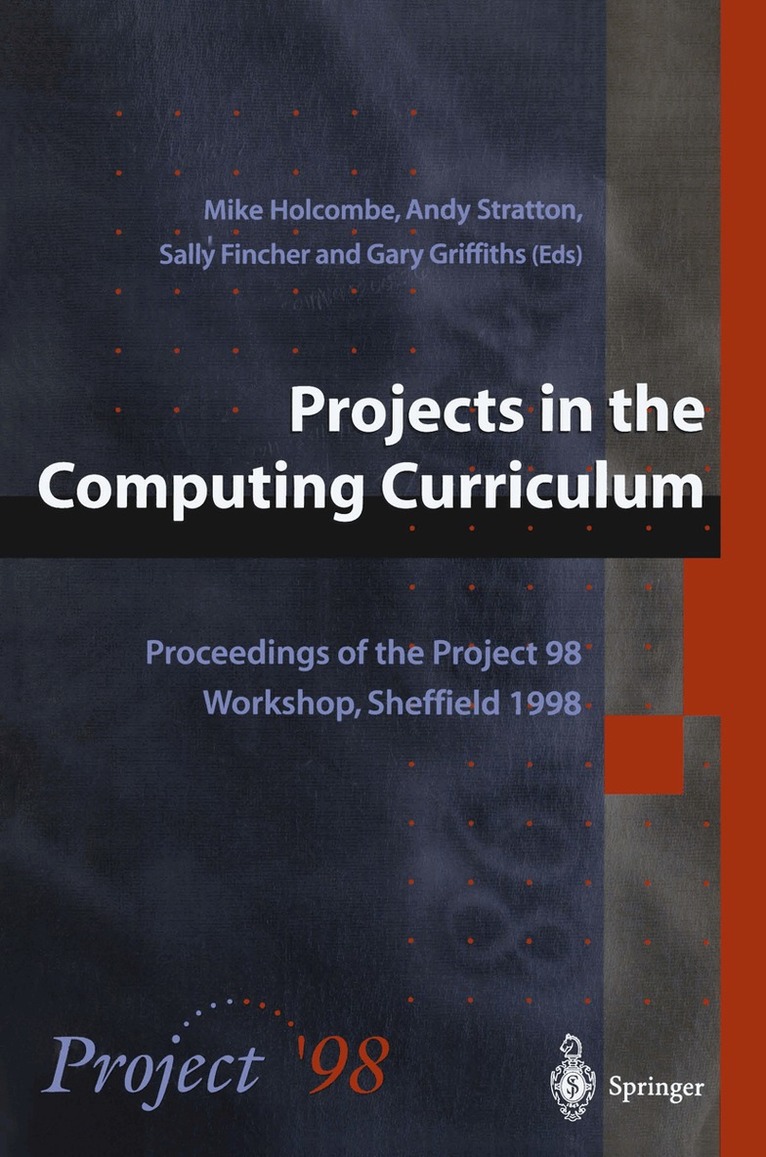
Dr Peter Milton, Director of Programme Review, Quality Assurance Agency I am grateful to the authors for giving me the opportunity to write this foreword, mainly because it represents the first occasion that the Fund for the Development of Teaching and Learning (FDTL) has led directly to a pUblication such as this. In my former capacity as Director of Quality Assessment at the Higher Education Funding Council for England (HEFCE), I chaired the FDTL Committee during 1996/7 and am delighted to see the projects which were selected so painstakingly leading to successful outcomes. Assessment of the quality of higher education (HE) was introduced in 1993 and was intended to improve public information about what was on offer in British universities and colleges, as well as to assist in the enhancement of educational opportunities for students. This was part of a larger agenda in which educational quality and the standards achieved by students have come under increasing scrutiny, with a long-term objective of linking funding allocations to the quality of the provision. It was in this context that the FDTL Initiative was launched in 1995 to support projects aimed at stimulating developments in teaching and learning and to encourage the dissemination of good practice across the HE sector. Good practice is identified through the process of quality assessment and bids for funding can only be made by those institutions which have demonstrated high quality provision. To date, the programme includes 63 projects drawn from 23 subject areas.