Gary S Metcalf – författare
Systems Literacy
Proceedings of the Eighteenth IFSR Conversation
164 kr
Skickas inom 3-6 vardagar
184 kr
Skickas inom 3-6 vardagar
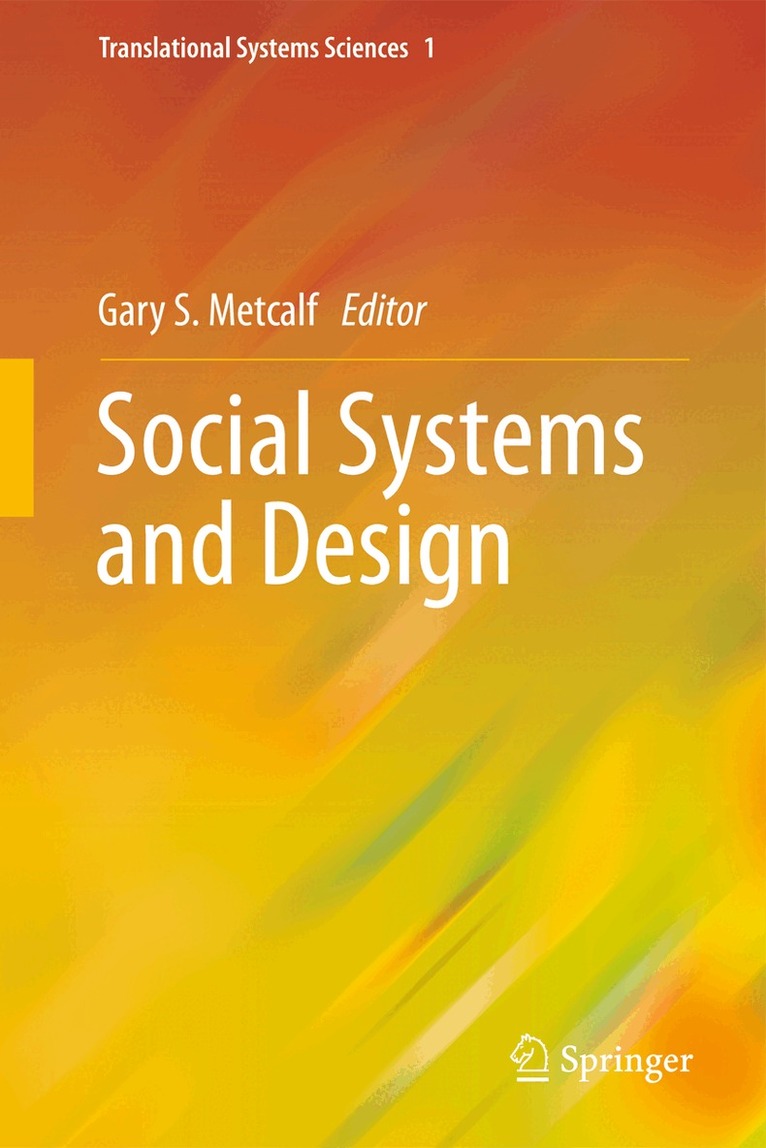
Social Systems and Design
1 084 kr
Skickas inom 10-15 vardagar
1 367 kr
Läs direkt efter köp
We live in the worlds that we help to create every day. Every activity either supports an existing system or effects some change, however small. But is it possible to consciously create the worlds in which we want to live?
This volume brings together systems theorists and practitioners who have worked on that question for decades. It explores connections between design and systems ideas to explain why some efforts have been more successful than others, and what is needed if we are to move forward. It offers reflections on early and large-scale attempts at impacting societal systems, as well as proposals for taking those ideas into the future. Examples date back to the Club of Rome in the 1960s and look forward to the creation of ecologically sustainable systems in the future. They address the need for collaboration and inclusion in settings from communities to corporations. And while theories are presented as support for the examples, they are explained in practical ways meant to be accessible both to students and to general readers.
Social Systems and Design
1 084 kr
Skickas inom 10-15 vardagar
6 659 kr
Skickas inom 10-15 vardagar
8 158 kr
Läs direkt efter köp
The primary purpose of this handbook is to clearly describe the current state of theories of systems sciences and to support their use and practice. There are many ways in which systems sciences can be described. This handbook takes a multifaceted view of systems sciences and describes them in terms of a relatively large number of dimensions, from natural and engineering science to social science and systems management perspectives.
It is not the authors’ intent, however, to produce a catalog of systems science concepts, methodologies, tools, or products. Instead, the focus is on the structural network of a variety of topics. Special emphasis is given to a cyclic–interrelated view; for example, when a theory of systems sciences is described, there is also discussion of how and why the theory is relevant to modeling or practice in reality. Such an interrelationship between theory and practice is also illustrated when an applied research field in systems sciences is explained. The chapters in the handbook present definitive discussions of systems sciences from a wide array of perspectives. The needs of practitioners in industry and government as well as students aspiring to careers in systems sciences provide the motivation for the majority of the chapters. The handbook begins with a comprehensive introduction to the coverage that follows. It provides not only an introduction to systems sciences but also a brief overview and integration of the succeeding chapters in terms of a knowledge map. The introduction is intended to be used as a field guide that indicates why, when, and how to use the materials or topics contained in the handbook.