Gastón C. Hillar – författare
471 kr
Skickas inom 5-8 vardagar
503 kr
Skickas inom 5-8 vardagar
707 kr
Skickas inom 5-8 vardagar
707 kr
Skickas inom 5-8 vardagar
457 kr
Läs direkt efter köp
Get to grips with object-oriented programming in Swift to efficiently build powerful real-world applications
About This Book
Leverage the most efficient object-oriented design patterns in your Swift applicationsWrite robust, safer, and better code using the blueprints that generate objectsBuild a platform with object-oriented code by using real-world elements and represent them in your appWho This Book Is For
If you are an iOS developer who has a basic idea of object-oriented programming and want to incorporate its concepts with Swift to optimize your application''s code and create reusable and easily to understand building blocks, then this book is for you. This is a very useful resource for developers who want to shift from Objective C, C#, Java, Python, JavaScript, or other object-oriented languages to Swift
What You Will Learn
Build solid, stable, and reliable applications using SwiftWork with encapsulation, abstraction, and polymorphism using Swift 2.0Customize constructors and destructors based on your needsDevelop Swift 2.0 with classes, instances, properties, and methodsTake advantage of generic code to maximize code reuse and generalize behaviorsUse state of inheritance, specialization, and the possibility to overload membersWrite high quality object-oriented code to build apps for iOS or Mac OS XIn Detail
Object-Oriented Programming (OOP) is a programming paradigm based on the concept of objects; these are data structures that contain data in the form of fields, often known as attributes and code. Objects are everywhere, and so it is very important to recognize elements, known as objects, from real-world situations and know how they can easily be translated into object-oriented code.
Object-Oriented Programming with Swift is an easy-to-follow guide packed full of hands-on examples of solutions to common problems encountered with object-oriented code in Swift. It starts by helping you to recognize objects using real-life scenarios and demonstrates how working with them makes it simpler to write code that is easy to understand and reuse.
You will learn to protect and hide data with the data encapsulation features of Swift. Then, you will explore how to maximize code reuse by writing code capable of working with objects of different types. After that, you''ll discover the power of parametric polymorphism and will combine generic code with inheritance and multiple inheritance. Later, you move on to refactoring your existing code and organizing your source for easy maintenance and extensions.
By the end of the book, you will be able to create better, stronger, and more reusable code, which will help you build better applications.
Style and approach
This simple guide is packed with practical examples of solutions to common problems. Each chapter includes exercises and the possibility for you to test your progress by answering questions.
529 kr
Läs direkt efter köp
Interact with the world and rapidly prototype IoT applications using Python
About This Book
Rapidly prototype even complex IoT applications with Python and put them to practical useEnhance your IoT skills with the most up-to-date applicability in the field of wearable tech, smart environments, and home automationInteract with hardware, sensors, and actuators and control your DIY IoT projects through PythonWho This Book Is For
The book is ideal for Python developers who want to explore the tools in the Python ecosystem in order to build their own IoT applications and work on IoT-related projects. It is also a very useful resource for developers with experience in other programming languages that want to easily prototype IoT applications with the Intel Galileo Gen 2 board.
What You Will Learn
Prototype and develop IoT solutions from scratch with Python as the programming languageDevelop IoT projects with Intel Galileo Gen 2 board along with PythonWork with the different components included in the boards using Python and the MRAA libraryInteract with sensors, actuators, and shieldsWork with UART and local storageInteract with any electronic device that supports the I2C busAllow mobile devices to interact with the boardWork with real-time IoT and cloud servicesUnderstand Big Data and IoT analyticsIn Detail
Internet of Things (IoT) is revolutionizing the way devices/things interact with each other. And when you have IoT with Python on your side, you''ll be able to build interactive objects and design them.
This book lets you stay at the forefront of cutting-edge research on IoT. We''ll open up the possibilities using tools that enable you to interact with the world, such as Intel Galileo Gen 2, sensors, and other hardware. You will learn how to read, write, and convert digital values to generate analog output by programming Pulse Width Modulation (PWM) in Python. You will get familiar with the complex communication system included in the board, so you can interact with any shield, actuator, or sensor.
Later on, you will not only see how to work with data received from the sensors, but also perform actions by sending them to a specific shield. You''ll be able to connect your IoT device to the entire world, by integrating WiFi, Bluetooth, and Internet settings. With everything ready, you will see how to work in real time on your IoT device using the MQTT protocol in python.
By the end of the book, you will be able to develop IoT prototypes with Python, libraries, and tools.
Style and approach
This book takes a tutorial-like approach with mission critical chapters. The initial chapters are introductions that set the premise for useful examples covered in later chapters.
628 kr
Skickas inom 5-8 vardagar
707 kr
Skickas inom 5-8 vardagar
543 kr
Läs direkt efter köp
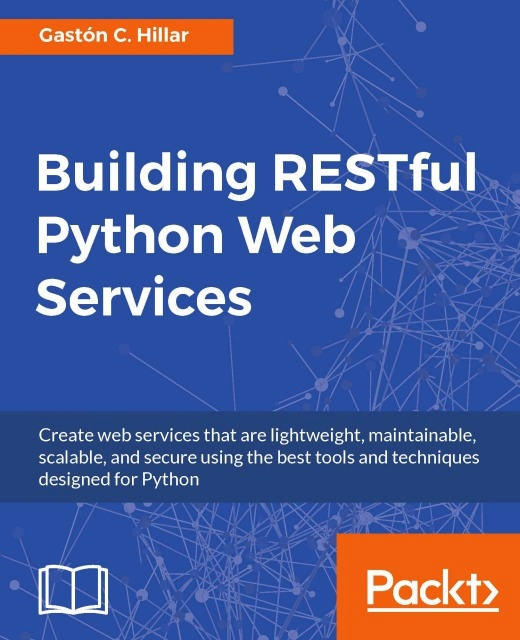
Create web services that are lightweight, maintainable, scalable, and secure using the best tools and techniques designed for Python
About This Book
Develop RESTful Web Services using the most popular frameworks in PythonConfigure and fine-tune your APIs using the best tools and techniques availableThis practical guide will help you to implement complete REST-based APIs from scratchWho This Book Is For
This book is for web developers who have working knowledge of Python and would like to build amazing web services by taking advantage of the various frameworks of Python. You should have some knowledge of RESTful APIs.
What You Will Learn
Develop complex RESTful APIs from scratch with Python combined with and without data sourcesChoose the most appropriate (micro) framework based on the specific requirements of a RESTful API / web serviceDebug, test, and profile RESTful APIs with each of the frameworksDevelop a complex RESTful API that interacts with a PostgreSQL database Add authentication and permissions to a RESTful API built in each of the frameworksMap URL patterns to request handlers and check how the API worksProfile an existing API and refactor it to take advantage of asynchronous codeIn Detail
Python is the language of choice for millions of developers worldwide, due to its gentle learning curve as well as its vast applications in day-to-day programming. It serves the purpose of building great web services in the RESTful architecture. This book will show you the best tools you can use to build your own web services.
Learn how to develop RESTful APIs using the popular Python frameworks and all the necessary stacks with Python, Django, Flask, and Tornado, combined with related libraries and tools. We will dive deep into each of these frameworks to build various web services, and will provide use cases and best practices on when to use a particular framework to get the best results.
We will show you everything required to successfully develop RESTful APIs with the four frameworks such as request handling, URL mapping, serialization, validation, authentication, authorization, versioning, ORMs, databases, custom code for models and views, and asynchronous callbacks. At the end of each framework, we will add authentication and security to the RESTful APIs and prepare tests for it.
By the end of the book, you will have a deep understanding of the stacks needed to build RESTful web services.
Style and approach
The book takes a straightforward approach, not spending time getting you started with RESTful APIs and web services. It will give you the best use cases for each framework to build great web services in Python.
707 kr
Skickas inom 5-8 vardagar
565 kr
Skickas inom 5-8 vardagar
369 kr
Läs direkt efter köp
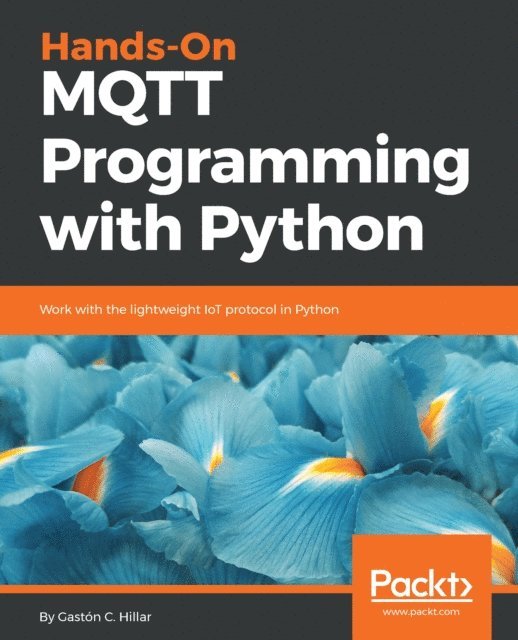
Explore the features included in the latest versions of MQTT for IoT and M2M communications and use them with modern Python 3.
About This Book
Make your connected devices less prone to attackers by understanding security mechanismsTake advantage of MQTT features for IoT and Machine-to-Machine communicationsThe only book that covers MQTT with a single language, PythonWho This Book Is For
This book is for developers who want to learn about the MQTT protocol for their IoT projects. Prior knowledge of working with IoT and Python will be helpful.
What You Will Learn
Learn how MQTT and its lightweight messaging system workUnderstand the MQTT puzzle: clients, servers (formerly known as brokers), and connectionsExplore the features included in the latest versions of MQTT for IoT and M2M communicationsPublish and receive MQTT messages with PythonLearn the difference between blocking and threaded network loopsTake advantage of the last will and testament featureWork with cloud-based MQTT interfaces in PythonIn Detail
MQTT is a lightweight messaging protocol for small sensors and mobile devices. This book explores the features of the latest versions of MQTT for IoT and M2M communications, how to use them with Python 3, and allow you to interact with sensors and actuators using Python.
The book begins with the specific vocabulary of MQTT and its working modes, followed by installing a Mosquitto MQTT broker. You will use different utilities and diagrams to understand the most important concepts related to MQTT. You will learn to make all the necessary configuration to work with digital certificates for encrypting all data sent between the MQTT clients and the server. You will also work with the different Quality of Service levels and later analyze and compare their overheads.
You will write Python 3.x code to control a vehicle with MQTT messages delivered through encrypted connections (TLS 1.2), and learn how leverage your knowledge of the MQTT protocol to build a solution based on requirements. Towards the end, you will write Python code to use the PubNub cloud-based real-time MQTT provider to monitor a surfing competition.
In the end, you will have a solution that was built from scratch by analyzing the requirements and then write Python code that will run on water-proof IoT boards connected to multiple sensors in surfboards.
Style and approach
This book shows you what MQTT is, and how to install and secure an MQTT server. You will write Python 3 code to control a vehicle with MQTT messages, test and improve, then monitor a surfing competition with cloud-based real-time MQTT providers.
628 kr
Skickas inom 5-8 vardagar
457 kr
Läs direkt efter köp
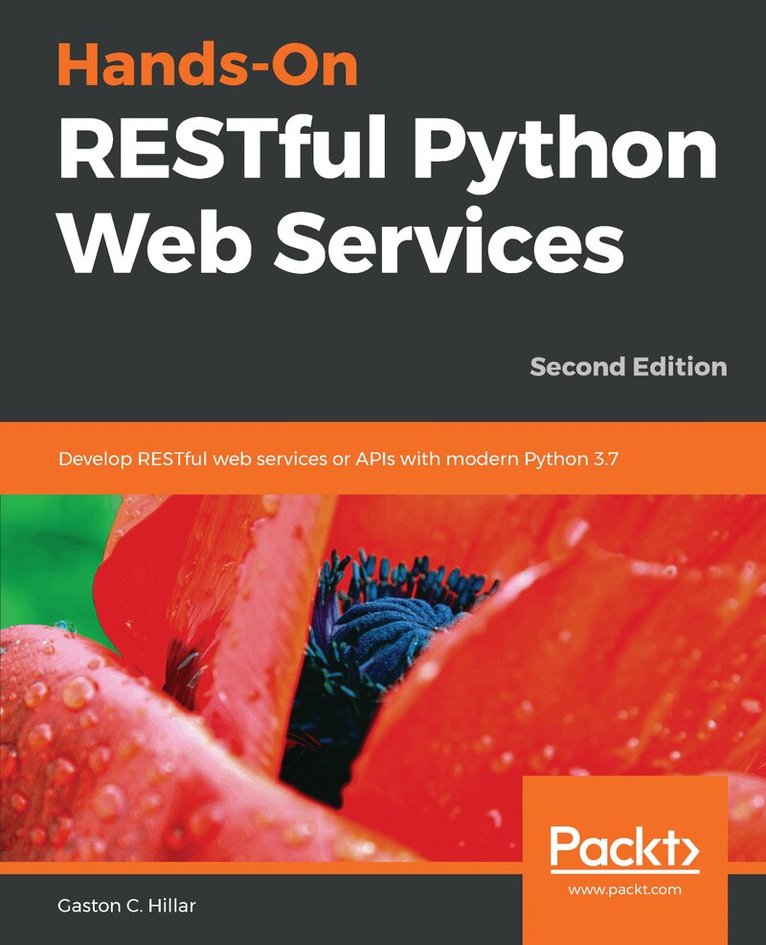
Explore the best tools and techniques to create lightweight, maintainable, and scalable Python web services
Key Features
Combine Python with different data sources to build complex RESTful APIs from scratchConfigure and fine-tune your APIs using the best tools and techniques availableUse command-line and GUI tools to test CRUD operations performed by RESTful Web Services or APIsBook Description
Python is the language of choice for millions of developers worldwide that builds great web services in RESTful architecture. This second edition of Hands-On RESTful Python Web Services will cover the best tools you can use to build engaging web services.
This book shows you how to develop RESTful APIs using the most popular Python frameworks and all the necessary stacks with Python, combined with related libraries and tools. You’ll learn to incorporate all new features of Python 3.7, Flask 1.0.2, Django 2.1, Tornado 5.1, and also a new framework, Pyramid. As you advance through the chapters, you will get to grips with each of these frameworks to build various web services, and be shown use cases and best practices covering when to use a particular framework.
You’ll then successfully develop RESTful APIs with all frameworks and understand how each framework processes HTTP requests and routes URLs. You’ll also discover best practices for validation, serialization, and deserialization. In the concluding chapters, you will take advantage of specific features available in certain frameworks such as integrated ORMs, built-in authorization and authentication, and work with asynchronous code. At the end of each framework, you will write tests for RESTful APIs and improve code coverage.
By the end of the book, you will have gained a deep understanding of the stacks needed to build RESTful web services.
What you will learn
Select the most appropriate framework based on requirementsDevelop complex RESTful APIs from scratch using PythonUse requests handlers, URL patterns, serialization, and validationsAdd authentication, authorization, and interaction with ORMs and databasesDebug, test, and improve RESTful APIs with four frameworksDesign RESTful APIs with frameworks and create automated testsWho this book is for
This book is for web developers who have a working knowledge of Python and would like to build amazing web services by taking advantage of the various frameworks of Python. You should have some knowledge of RESTful APIs.
443 kr
Skickas inom 5-8 vardagar
372 kr
Läs direkt efter köp
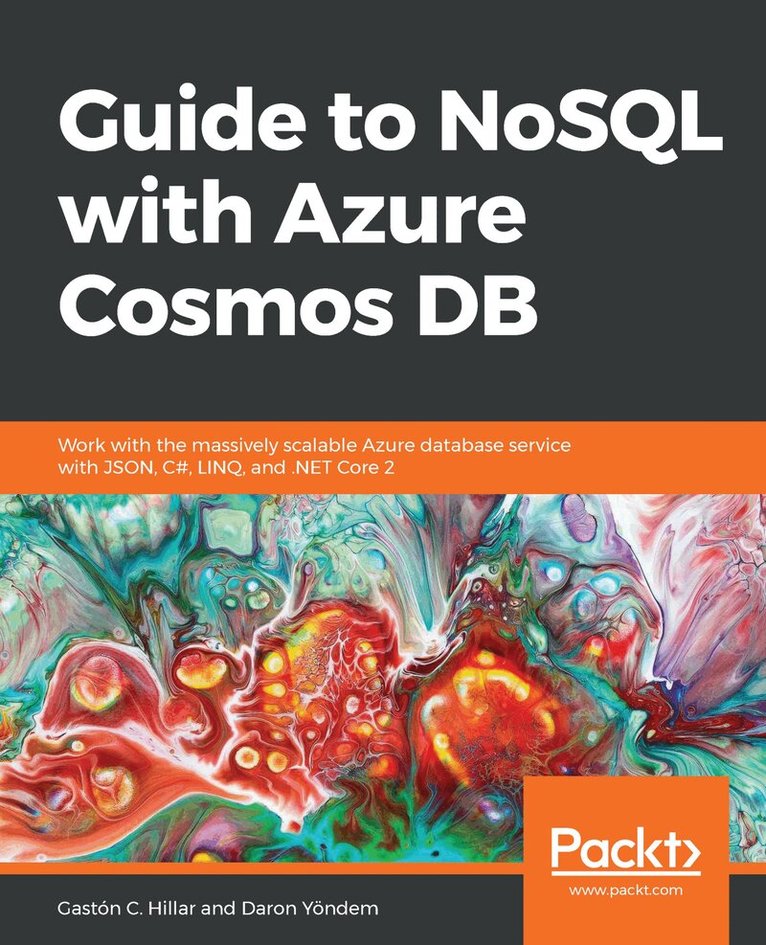
Create scalable applications by taking advantage of NoSQL document databases on the cloud with .NET Core
Key Features
Work with the latest available tools related to Cosmos DBLearn to work with the latest version of the .NET Core SDK, C# and the SQL APIWork with a database service that doesn’t require you to use an ORM and provides flexibilityBook Description
Cosmos DB is a NoSQL database service included in Azure that is continuously adding new features and has quickly become one of the most innovative services found in Azure, targeting mission-critical applications at a global scale. This book starts off by showing you the main features of Cosmos DB, their supported NoSQL data models and the foundations of its scalable and distributed architecture. You will learn to work with the latest available tools that simplify your tasks with Cosmos DB and reduce development costs, such as the Data Explorer in the Azure portal, Microsoft Azure Storage Explorer, and the Cosmos DB Emulator.
Next, move on to working with databases and document collections. We will use the tools to run schema agnostic queries against collections with the Cosmos DB SQL dialect and understand their results. Then, we will create a first version of an application that uses the latest .NET Core SDK to interact with Cosmos DB. Next, we will create a second version of the application that will take advantage of important features that the combination of C# and the .NET Core SDK provides, such as POCOs and LINQ queries. By the end of the book, you will be able to build an application that works with a Cosmos DB NoSQL document database with C#, the .NET Core SDK, LINQ, and JSON.
What you will learn
Understand the supported NoSQL data models and the resource hierarchyLearn the latest tools to work with Cosmos DB accounts and collectionsReduce your development costs by working with the Cosmos DB EmulatorUnderstand request units, automatic indexing, partitioning, and billingBuild an application with C#, Cosmos DB, .NET Core SDK, and the SQL APIPerform asynchronous operations with databases, and documents in C#Work with models, and customize serialization of LINQ queriesWho this book is for
This book is for C# developers. You do not require any knowledge of Azure Cosmos DB, but familiarity with the Azure platform is expected.
618 kr
Skickas inom 5-8 vardagar
707 kr
Skickas inom 5-8 vardagar
797 kr
Skickas inom 5-8 vardagar
503 kr
Skickas inom 5-8 vardagar