Gbemisola Adeoti – författare
Visar alla böcker från författaren Gbemisola Adeoti. Handla med fri frakt och snabb leverans.
3 produkter
3 produkter
Häftad, Engelska, 2006
503 kr
Skickas inom 10-15 vardagar
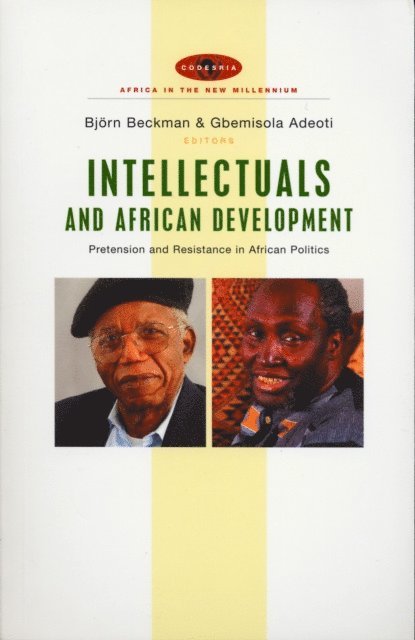
This book looks at the very different responses to the African predicament from prominent writers like Soyinka, Ngugi and Achebe, to the military men in power and the students who defy repression. It suggests that intervention by international agencies who claim to promote 'democracy' and 'empower the youth' may reinforce authoritarian attitudes and structures.The essays in the book give voice to the outrage, ridicule and revolutionary ardour, as well as to the reformist caution, of those directly affected. The shallow pretences of those in power and the hypocrisy and arrogance of the foreign helpers are also exposed. The book concludes that being an 'insider' or an 'outsider' is less important than being committed to listening to ordinary people.
E-bok
PDF, Engelska, 2008531 kr
Läs direkt efter köp
This book looks at the very different responses to the African predicament from prominent writers like Soyinka, Ngugi and Achebe, to the military men in power and the students who defy repression. It suggests that intervention by international agencies who claim to promote 'democracy' and 'empower the youth' may reinforce authoritarian attitudes and structures.The essays in the book give voice to the outrage, ridicule and revolutionary ardour, as well as to the reformist caution, of those directly affected. The shallow pretences of those in power and the hypocrisy and arrogance of the foreign helpers are also exposed.The book concludes that being an 'insider' or an 'outsider' is less important than being committed to listening to ordinary people.
E-bok
PDF, Engelska, 2015502 kr
Läs direkt efter köp
Many African countries achieved independence from their colonisers over five decades ago, but the people and the continent largely remain mere spectators in the arena of their own dance. The post-independence states are supposed to be sovereign, but the levers of economic and political powers still reside in the donor states. Not in many fora is the complex reality that defines Africa more trenchantly articulated than in imaginative literature produced about and on the continent. This is the crux of the essays collected in African Literature and the Future. The book reflects on Africa�s past and present, addressing anxieties about the future through the epistemological lens of literature. The contributors peep ahead from a backward glance. They dissect the trend and tenor of politics and their impact on the socio-cultural and economic development of the continent as portrayed in imaginative writings over the years. One salient feature of African literature is the close affinity between art and politics in its polemics. This is well established in all the six essays in the book as the authors stress the interconnections between literature and society in their textual analyses. On the whole, there is an overwhelming feeling of angst and pessimism, but the authors perceive a glimmer of hope despite daunting odds, under different conditions. Thus, they depict the plausible fate of Africa in the twenty-first century, as informed by its ancient and recent past, gleaned from primary texts.