G.C. Papavizas - Böcker
Visar alla böcker från författaren G.C. Papavizas. Handla med fri frakt och snabb leverans.
2 produkter
2 produkter
Del 230 - NATO Science Series A:
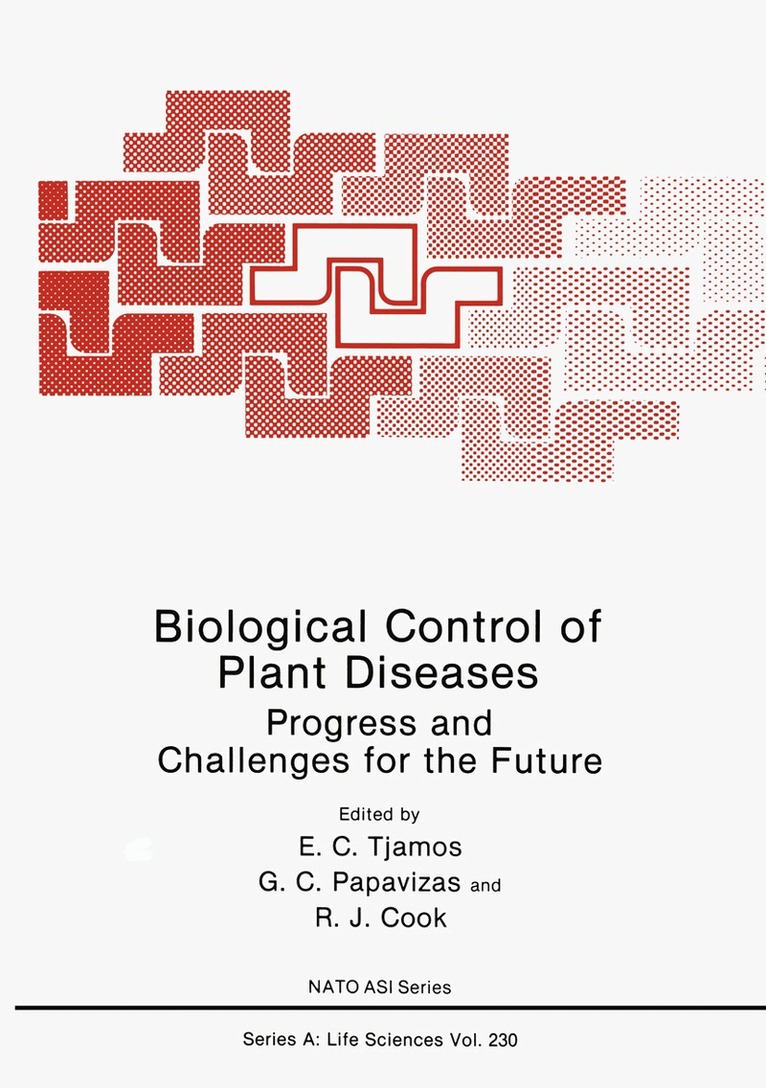
Biological Control of Plant Diseases
Progress and Challenges for the Future
Inbunden, Engelska, 1992
2 101 kr
Skickas inom 10-15 vardagar
The papers contained in this book were presented at a NATO Advanced Research Workshop (ARW) held at Cape Sounion, Athens, Greece, 19-24 May, 1991. The twenty-eight more comprehensive papers represent the key subjects of the ARW covered by invited speakers. The thirty-four short papers pre sented in a research format are contributions of those invited to participate in the ARW. There was a total of 70 participants from 21 countries. The objectives of the ARW were as follows: to review current knowledge of biological control of plant diseases and plant parasitic nematodes, with emphasis on mechanisms at the molecular, cellular, organismal, and ecosystem level; to examine and expand on current concepts and synthesize new concepts; to identify and prioritize limitations in the use of biological control for plant diseases and nematodes and the scientific research needed to overcome these limitations; and to develop strategies for biological control through management of resident agents or introduction of natural or modified agents.
2 164 kr
Skickas inom 10-15 vardagar
The papers contained in this book were presented at a NATO Advanced Research Workshop (ARW) held at Cape Sounion, Athens, Greece, 19-24 May, 1991. The twenty-eight more comprehensive papers represent the key subjects of the ARW covered by invited speakers. The thirty-four short papers pre sented in a research format are contributions of those invited to participate in the ARW. There was a total of 70 participants from 21 countries. The objectives of the ARW were as follows: to review current knowledge of biological control of plant diseases and plant parasitic nematodes, with emphasis on mechanisms at the molecular, cellular, organismal, and ecosystem level; to examine and expand on current concepts and synthesize new concepts; to identify and prioritize limitations in the use of biological control for plant diseases and nematodes and the scientific research needed to overcome these limitations; and to develop strategies for biological control through management of resident agents or introduction of natural or modified agents.