Geldolph A. Kohnstamm – författare
812 kr
Skickas inom 10-15 vardagar
2 120 kr
Skickas inom 10-15 vardagar
988 kr
Skickas inom 10-15 vardagar
2 120 kr
Skickas inom 10-15 vardagar
939 kr
Läs direkt efter köp
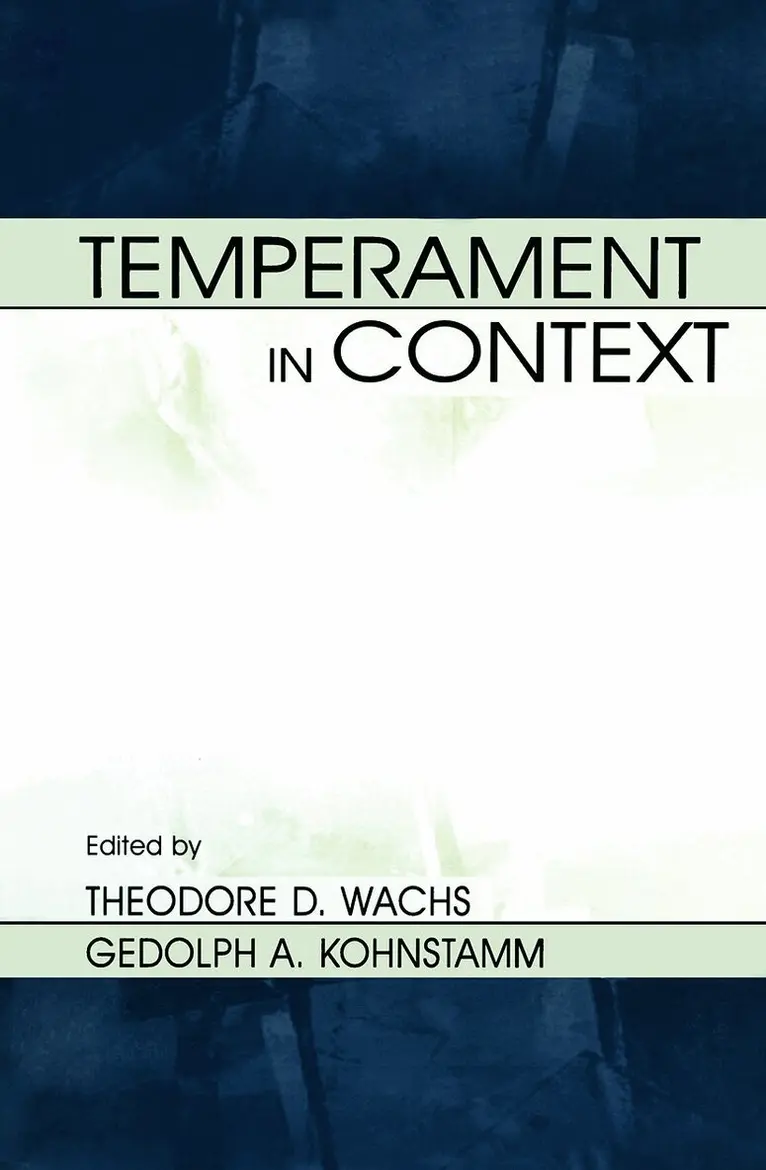
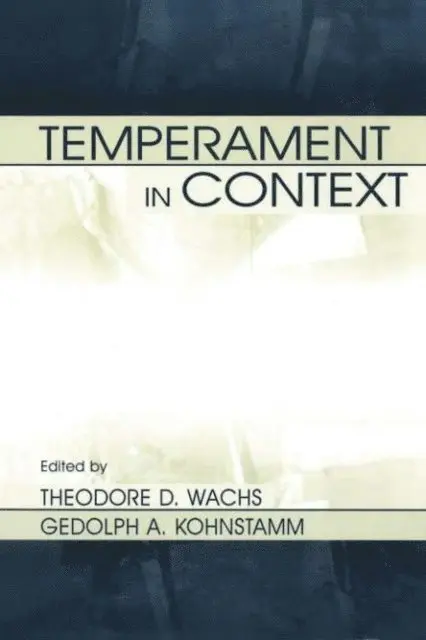
Although the importance of context has been emphasized by temperament researchers, until now there has been remarkably little systematic research on the unique role specific aspects of context play in the development and impact of temperament. The goal of this volume is to systematize current knowledge and theory on the role played by specific aspects of context in the etiology, expression, and influence of temperament, particularly for those aspects of temperament that are most likely to relate to later personality traits. Reflecting the editors'' view that the interface between temperament and context is a bidirectional phenomenon, this volume focuses on two broad issues: 1) How does context moderate the expression, continuity, or consequences of individual differences in introversion-extraversion, sociability, emotionality, and inhibition (the I-ESEI family of traits)? 2) How do individual differences in the I-ESEI family of traits moderate the nature of characteristics of the individual''s context? By bringing together outstanding international researchers who present their current research and theories, the editors systematize research contributions in the domain of contextual contributions to the I-ESIA family of traits and set the agenda for future research directions. Appropriate for use by scholars and practitioners in developmental science and family studies.
930 kr
Läs direkt efter köp
Although the importance of context has been emphasized by temperament researchers, until now there has been remarkably little systematic research on the unique role specific aspects of context play in the development and impact of temperament. The goal of this volume is to systematize current knowledge and theory on the role played by specific aspects of context in the etiology, expression, and influence of temperament, particularly for those aspects of temperament that are most likely to relate to later personality traits. Reflecting the editors'' view that the interface between temperament and context is a bidirectional phenomenon, this volume focuses on two broad issues: 1) How does context moderate the expression, continuity, or consequences of individual differences in introversion-extraversion, sociability, emotionality, and inhibition (the I-ESEI family of traits)? 2) How do individual differences in the I-ESEI family of traits moderate the nature of characteristics of the individual''s context? By bringing together outstanding international researchers who present their current research and theories, the editors systematize research contributions in the domain of contextual contributions to the I-ESIA family of traits and set the agenda for future research directions. Appropriate for use by scholars and practitioners in developmental science and family studies.
1 135 kr
Läs direkt efter köp
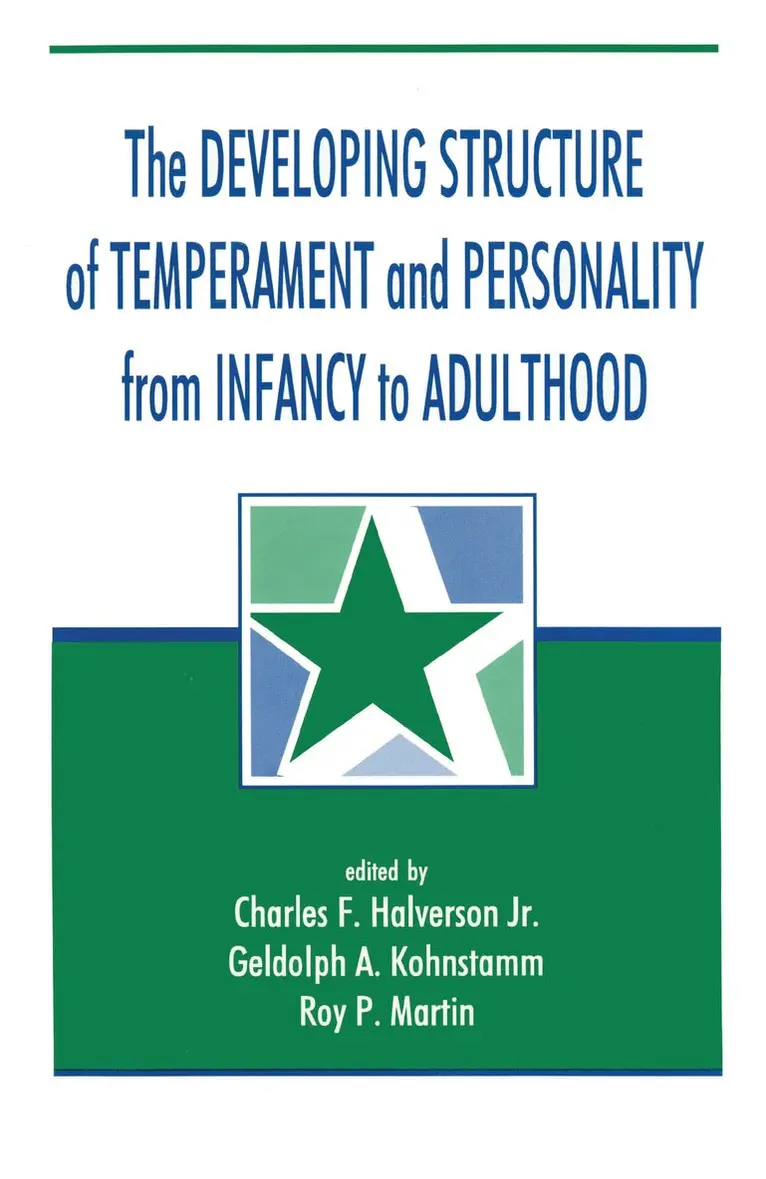
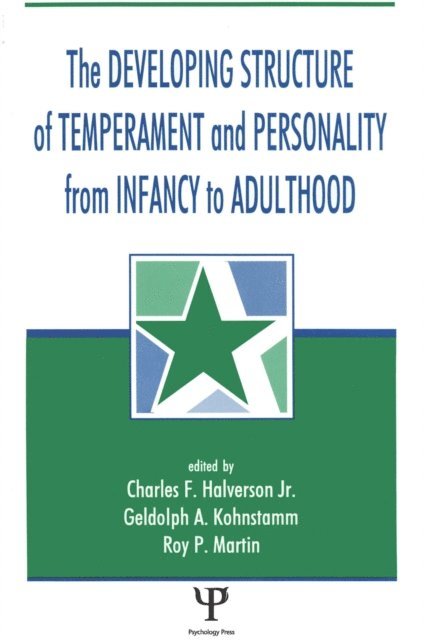
This book is the first to bring together researchers in individual differences in personality and temperament to explore whether there is any unity possible between the temperament researchers of infancy and childhood and the major researchers in adult personality. Prior to the workshop which resulted in this volume, the existing literature seemed to document a growing consensus on the part of the adult personality researchers that five major personality dimensions -- the "Big Five" -- might be sufficient to account for most of the important variances in adult individual differences in personality. In contrast to this accord, the literature on child and infant individual differences seemed to offer a wide variety of opinions regarding the basic dimensions of difference in personality or temperament. The editors believed that they could encourage researchers from both the adult and child areas to consider the importance of a lifespan conceptualization of individual differences by discussing their research in terms of a continuity approach. Written by some of the most distinguished scholars from Great Britain, continental Western Europe, and Eastern Europe as well as the United States and Canada, the chapters present a cross-cultural view of both adult personality and temperament in infancy and childhood. By sharing their recent data, techniques, and theoretical speculations, the chapter authors communicate the research enthusiasm engendered by the growing consensus of the adult "Big Five" as well as the exciting prospects of an integrative program of research from infancy to adulthood that will clarify and consolidate what is now a disparate set of methods, theory, and findings across the lifespan. The editors suggest that this volume will have considerable heuristic value in stimulating researchers to conceptualize their work in developmental, lifespan approaches that will lead to a consolidation of individual differences research at every age.
1 135 kr
Läs direkt efter köp
This book is the first to bring together researchers in individual differences in personality and temperament to explore whether there is any unity possible between the temperament researchers of infancy and childhood and the major researchers in adult personality. Prior to the workshop which resulted in this volume, the existing literature seemed to document a growing consensus on the part of the adult personality researchers that five major personality dimensions -- the "Big Five" -- might be sufficient to account for most of the important variances in adult individual differences in personality. In contrast to this accord, the literature on child and infant individual differences seemed to offer a wide variety of opinions regarding the basic dimensions of difference in personality or temperament. The editors believed that they could encourage researchers from both the adult and child areas to consider the importance of a lifespan conceptualization of individual differences by discussing their research in terms of a continuity approach. Written by some of the most distinguished scholars from Great Britain, continental Western Europe, and Eastern Europe as well as the United States and Canada, the chapters present a cross-cultural view of both adult personality and temperament in infancy and childhood. By sharing their recent data, techniques, and theoretical speculations, the chapter authors communicate the research enthusiasm engendered by the growing consensus of the adult "Big Five" as well as the exciting prospects of an integrative program of research from infancy to adulthood that will clarify and consolidate what is now a disparate set of methods, theory, and findings across the lifespan. The editors suggest that this volume will have considerable heuristic value in stimulating researchers to conceptualize their work in developmental, lifespan approaches that will lead to a consolidation of individual differences research at every age.
804 kr
Läs direkt efter köp
Jean Piaget, renowned Swiss developmental psychologist and epistemologist, is best known for his groundbreaking studies with children, which led him to develop a landmark theory of cognitive development. Geldolph A. Kohnstamm''s Jean Piaget: Children and the Inclusion Problem is a critical study of a cornerstone of Piaget''s theory. This theory holds that a child''s ability to solve problems of class inclusion marks the beginning of the period of concrete (logical) operations at about seven or eight years of age.
Kohnstamm''s experiments show, however, that with directive teaching methods, most children of five can already learn to solve inclusion problems. His results make him question the basic assumption of Piaget''s theory that logical operations can only develop in firmly connected groupings of operations, not in isolation. The author argues that experimenters must therefore show that children who come to master one kind of operation should also show transference to other operations of the same grouping. As a result, he questions the real existence in brain functioning of the hypothesized groupings of operations in Piaget''s theory.
This book is a revised edition of the 1967 original and includes a new introduction and epilogue. The original book was published in the Netherlands, not in the United States. Therefore it has reached only a negligible US audience and has sadly escaped the attention of many interested in Piaget''s developmental theory. This challenge to Piaget''s theory is an invaluable resource for cognitive, developmental, and educational psychologists.
804 kr
Läs direkt efter köp
Jean Piaget, renowned Swiss developmental psychologist and epistemologist, is best known for his groundbreaking studies with children, which led him to develop a landmark theory of cognitive development. Geldolph A. Kohnstamm''s Jean Piaget: Children and the Inclusion Problem is a critical study of a cornerstone of Piaget''s theory. This theory holds that a child''s ability to solve problems of class inclusion marks the beginning of the period of concrete (logical) operations at about seven or eight years of age.
Kohnstamm''s experiments show, however, that with directive teaching methods, most children of five can already learn to solve inclusion problems. His results make him question the basic assumption of Piaget''s theory that logical operations can only develop in firmly connected groupings of operations, not in isolation. The author argues that experimenters must therefore show that children who come to master one kind of operation should also show transference to other operations of the same grouping. As a result, he questions the real existence in brain functioning of the hypothesized groupings of operations in Piaget''s theory.
This book is a revised edition of the 1967 original and includes a new introduction and epilogue. The original book was published in the Netherlands, not in the United States. Therefore it has reached only a negligible US audience and has sadly escaped the attention of many interested in Piaget''s developmental theory. This challenge to Piaget''s theory is an invaluable resource for cognitive, developmental, and educational psychologists.