Geneva Declaration Secretariat – författare
Visar alla böcker från författaren Geneva Declaration Secretariat. Handla med fri frakt och snabb leverans.
5 produkter
5 produkter
Inbunden, Engelska, 2011
1 217 kr
Skickas inom 7-10 vardagar
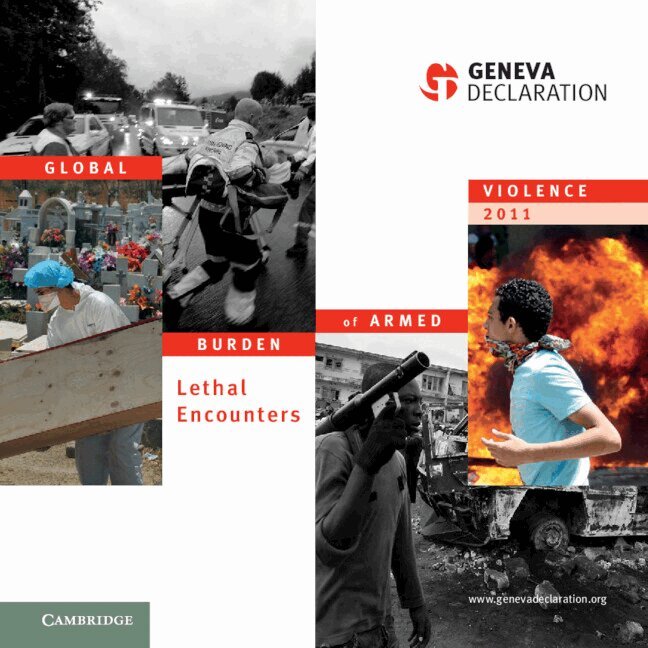
Global Burden of Armed Violence 2011 takes an integrated approach to the complex and volatile dynamics of armed violence around the world. Drawing on comprehensive country-level data, including both conflict-related and criminal violence, it estimates that at least 526,000 people die violently every year, more than three-quarters of them in non-conflict settings. It highlights the 58 countries with high rates of lethal violence, accounting for two-thirds of all violent deaths, and shows that one in four violent deaths occur in just 14 countries, seven of which are in the Americas. New research on femicide also reveals that about 66,000 women and girls are violently killed around the world each year. This volume also assesses linkages between violent death rates and socio-economic development. Its approach challenges the use of simple analytical classifications and policy responses and offers researchers and policy-makers new tools for studying and tackling different forms of violence.
Inbunden, Engelska, 2015
814 kr
Skickas inom 7-10 vardagar
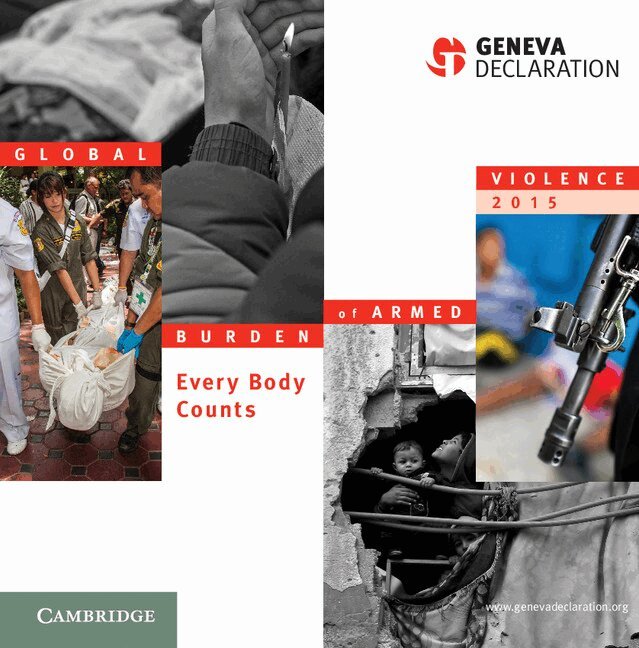
The 2015 edition of the Global Burden of Armed Violence provides a wealth of data relevant to security and the post-2015 sustainable development framework. It estimates that 508,000 people died violently - in both conflict and non-conflict settings - every year in 2007-12, down from 526,000 in 2004-09. This trend is visible in non-conflict settings, where the proportion of women and girls is also slightly reduced, from 17 to 16 per cent. Yet, the number of direct conflict deaths is on the rise: from 55,000 to 70,000 per year over the same periods. Firearms are used in close to half of all homicides committed and in almost one-third of direct conflict deaths. Nearly USD 2 trillion in global homicide-related economic losses could have been saved if the homicide rate in 2000-10 had been reduced to the lowest practically attainable levels - between 2 and 3 deaths per 100,000 population.
Häftad, Engelska, 2015
511 kr
Skickas inom 11-20 vardagar
The 2015 edition of the Global Burden of Armed Violence provides a wealth of data relevant to security and the post-2015 sustainable development framework. It estimates that 508,000 people died violently - in both conflict and non-conflict settings - every year in 2007-12, down from 526,000 in 2004-09. This trend is visible in non-conflict settings, where the proportion of women and girls is also slightly reduced, from 17 to 16 per cent. Yet, the number of direct conflict deaths is on the rise: from 55,000 to 70,000 per year over the same periods. Firearms are used in close to half of all homicides committed and in almost one-third of direct conflict deaths. Nearly USD 2 trillion in global homicide-related economic losses could have been saved if the homicide rate in 2000-10 had been reduced to the lowest practically attainable levels - between 2 and 3 deaths per 100,000 population.
E-bok
PDF, Engelska, 2011313 kr
Läs direkt efter köp
Conservative estimates indicate that at least 740 000 men, women, youth and children die each year as a result of armed violence, most of them in low- and medium-income settings. The majority of these deaths occur in situations other than war, though armed conflicts continue to generate a high incidence of casualties. Approaches to preventing and reducing these deaths and related suffering are becoming increasingly important on the international agenda. In spite of the global preoccupation with the costs and consequences of armed violence, comparatively little evidence exists about how to stem its risks and effects. Virtually no information is available on Armed Violence Reduction and Prevention interventions, much less their effectiveness. This publication aims to fill this gap. It seeks to generate more understanding of what works and what does not, to stimulate further evaluation and to contribute to more effective and efficient policies and programmes. A large-scale mapping of Armed Violence Reduction and Prevention activities around the world form the basis of analysis, focusing primarily on programming trends in six countries - Brazil, Burundi, Colombia, Liberia, South Africa and Timor-Leste. These countries represent the very different programming contexts - from high rates of urban criminal violence to protracted post-conflict insecurity - in which development practitioners are currently engaged. While offering new data and analysis, this assessment builds directly on the 2009 publication Armed Violence Reduction: Enabling Development.
Häftad, Engelska, 2011
435 kr
Tillfälligt slut
Global Burden of Armed Violence 2011 takes an integrated approach to the complex and volatile dynamics of armed violence around the world. Drawing on comprehensive country-level data, including both conflict-related and criminal violence, it estimates that at least 526,000 people die violently every year, more than three-quarters of them in non-conflict settings. It highlights the 58 countries with high rates of lethal violence, accounting for two-thirds of all violent deaths, and shows that one in four violent deaths occur in just 14 countries, seven of which are in the Americas. New research on femicide also reveals that about 66,000 women and girls are violently killed around the world each year. This volume also assesses linkages between violent death rates and socio-economic development. Its approach challenges the use of simple analytical classifications and policy responses and offers researchers and policy-makers new tools for studying and tackling different forms of violence.