Gennaro Ascione – författare
Visar alla böcker från författaren Gennaro Ascione. Handla med fri frakt och snabb leverans.
4 produkter
4 produkter
Inbunden, Engelska, 2016
872 kr
Skickas inom 10-15 vardagar
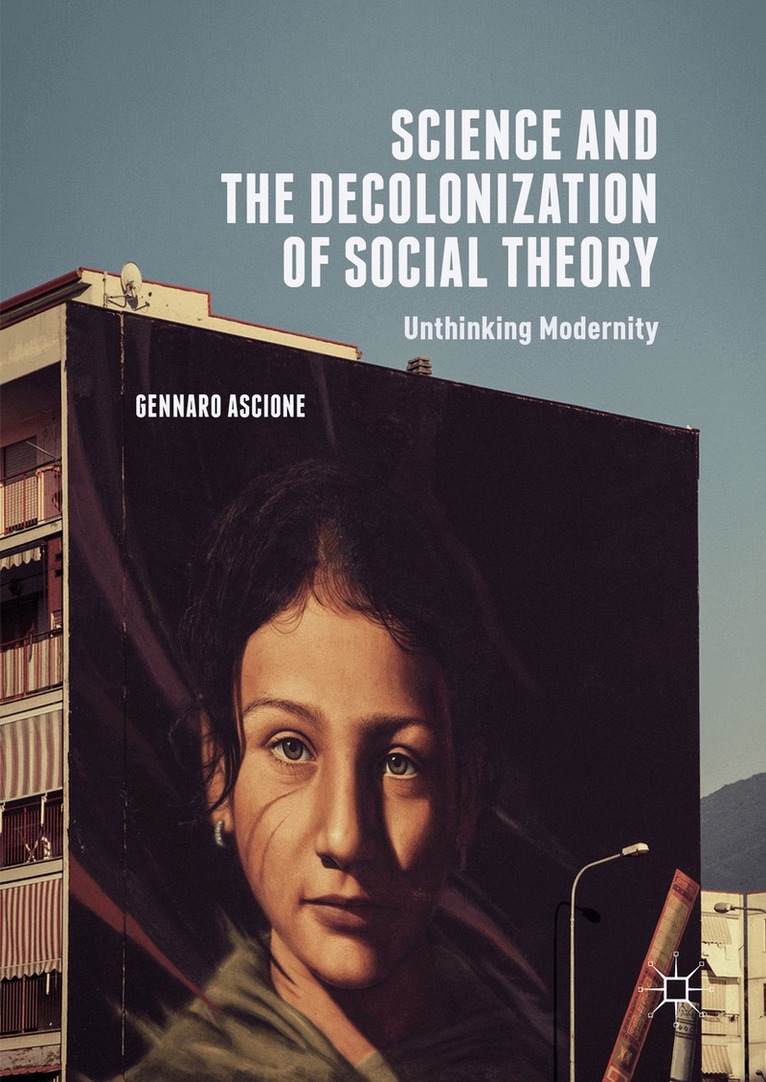
This book frees these concepts from ethnocentrism and discloses a path toward a new, non-Eurocentric, global social theory. This ground-breaking work challenges social theoriststo think globally beyond modernity, bringing together social theory and science in an unprecedented way.
E-bok
PDF, Engelska, 20161 069 kr
Läs direkt efter köp
This book addresses the ideological figure of modernity, its presumed historical significance as an era, and its theoretical adequacy as a frame. It shows how science is evoked to prevent the sociological imagination from elaborating non-Eurocentric categories and terminologies that are more adequate for a global age. The idea of modernity should not only be contested, but radically unthought in its foundational assumptions. These assumptions inform concepts such as secularization, emancipation, the ''global'' and accumulation of capital. This book frees these concepts from ethnocentrism and discloses a path toward a new, non-Eurocentric, global social theory. Gennaro Ascione explores the transformative potential of decolonizing knowledge through a radical reconsideration of the historical and epistemological role that the intellectual reference to science plays in the construction of concepts. This ground-breaking work challenges social theoriststo think globally beyond modernity, bringing together social theory and science in an unprecedented way. Importantly, it makes accessible a new space of missing theorization for further developments and inquiries in the field.
Inbunden, Engelska, 2024
1 178 kr
Skickas inom 10-15 vardagar
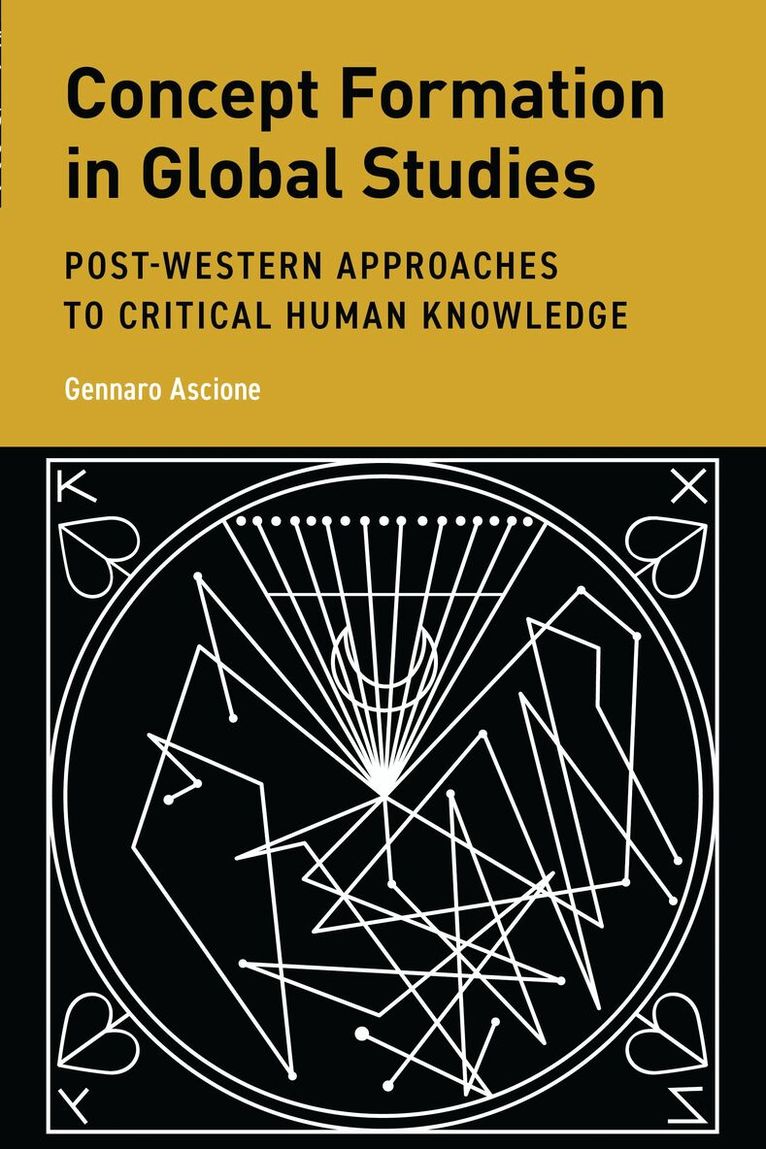
The book proposes a new epistemological and methodological approach to concept formation across human and natural sciences, beyond Eurocentrism and specism. It elaborates a method enabling global epistemics to cope with multiplex challenges coming from geohistorical as well as epistemological standpoints whose methodological potential remains unexplored. It assumes monstrosity as the generative grammar of a new holistic approach to human knowledge, and draws from postcolonial, decolonial or post-western perspectives to place new methodological cornerstones, as well as from arts, astrology and magic from the Islamic and European Renaissance, indigenous knowledge, genetics, theoretical physics or Afrofuturism. The book aims at provoking a shift in critical perspectives, which do not acknowledge their own inability to steam an appropriate methodology of terminological and conceptual elaboration for the lexicon of contemporary human knowledge, out of a pressing demand: once agreed upon the world as a single yet multilayered spacetime of analysis, how should research about large-scale/long-term processes of social change advance, in order to cope with the asymmetrical power relations that materialize colonial history through heterarchies of class, gender, race, ethnicity, culture, knowledge, cosmology and ecology?This book struggles against the prejudice that the instances heterogeneous yet non canonical epistemics are in fact exclusively confined to provincial, exotic or solipsistic particularisms; therefore never as universalistic as the dominant ones. To address this problem, the book proposes: a different way to think of the relation between the abstract and the concrete; a new relation between data or histories, and concepts; an alternative pathway to cross-cultural translation in conceptual and terminological analysis; a new posture to inhabit the spacetimes at the border between translation and untranslatability.
E-bok
Engelska, 20241 252 kr
Läs direkt efter köp
The book proposes a new epistemological and methodological approach to concept formation across human and natural sciences, beyond Eurocentrism and specism. It elaborates a method enabling global epistemics to cope with multiplex challenges coming from geohistorical as well as epistemological standpoints whose methodological potential remains unexplored. It assumes monstrosity as the generative grammar of a new holistic approach to human knowledge, and draws from postcolonial, decolonial or post-western perspectives to place new methodological cornerstones, as well as from arts, astrology and magic from the Islamic and European Renaissance, indigenous knowledge, genetics, theoretical physics or Afrofuturism. The book aims at provoking a shift in critical perspectives, which do not acknowledge their own inability to steam an appropriate methodology of terminological and conceptual elaboration for the lexicon of contemporary human knowledge, out of a pressing demand: once agreed upon the world as a single yet multilayered spacetime of analysis, how should research about large-scale/long-term processes of social change advance, in order to cope with the asymmetrical power relations that materialize colonial history through heterarchies of class, gender, race, ethnicity, culture, knowledge, cosmology and ecology?This book struggles against the prejudice that the instances heterogeneous yet non canonical epistemics are in fact exclusively confined to provincial, exotic or solipsistic particularisms; therefore never as universalistic as the dominant ones. To address this problem, the book proposes: a different way to think of the relation between the abstract and the concrete; a new relation between data or histories, and concepts; an alternative pathway to cross-cultural translation in conceptual and terminological analysis; a new posture to inhabit the spacetimes at the border between translation and untranslatability.