E-bok
PDF, Engelska, 2016783 kr
Läs direkt efter köp
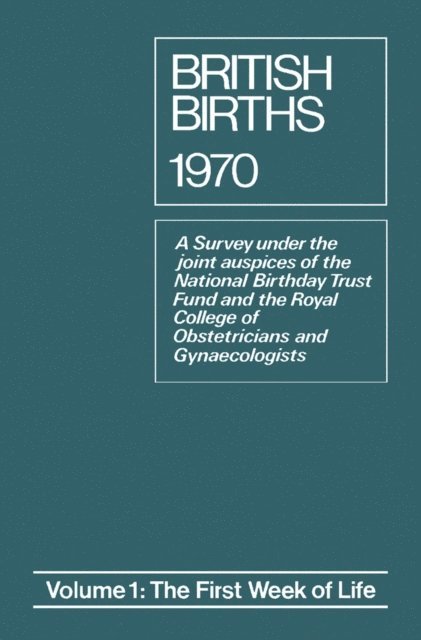
British Births 1970, A Survey under the Joint Auspices of the National Birthday Trust Fund and the Royal College of Obstetricians and Gynaecologists, Volume 1: The First Week of Life covers a fresh survey and a national study of all deliveries during a one-week period in 1970. This report is composed of eight chapters, tracing the success of the First Perinatal Mortality Survey done in 1958 to the new British Births survey in 1970, which took place in the week beginning April 5, 1970 in England, Wales, Scotland, and Northern Ireland. Topics analyzed are factors affecting the accuracy of the measurement of birth weight and those affecting the length of gestation. These factors are grouped into social, biological, maternal, and fetal factors that include the precise use of the weighing machines and poor recording. A useful guide throughout the survey is the state of the baby''s health. The illnesses prone to affect the baby are also discussed, from extra cranial injuries, hypoglycemia, hypocalcemia, congenital abnormalities, jaundice, and remaining other conditions such as feeding problems. The care of the baby is then discussed, including feeding patterns and the choice of feed. This report concludes with a discussion on stillbirths and deaths occurring in the first-week of life. Because of these surveys, British obstetric and pediatric management is improved, and the disabilities arising before and during birth, and in the early neonatal period, are reduced. This book is suitable for pediatricians, obstetricians and gynecologists, nurses, professors in general medicine, and administrators of public health services.