Geoffrey Reaume – författare
Visar alla böcker från författaren Geoffrey Reaume. Handla med fri frakt och snabb leverans.
7 produkter
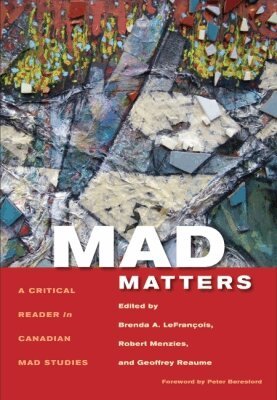
Mad Matters
A Critical Reader in Canadian Mad Studies
Av Brenda A. LeFrançois, Robert Menzies m. fl.
Häftad, 2012
776 kr
Lägg i varukorg
In 1981, Toronto activist Mel Starkman wrote: ""An important new movement is sweeping through the western world.... The 'mad,' the oppressed, the ex-inmates of society's asylums are coming together and speaking for themselves.""Mad Matters is the first Canadian book to bring together the writings …
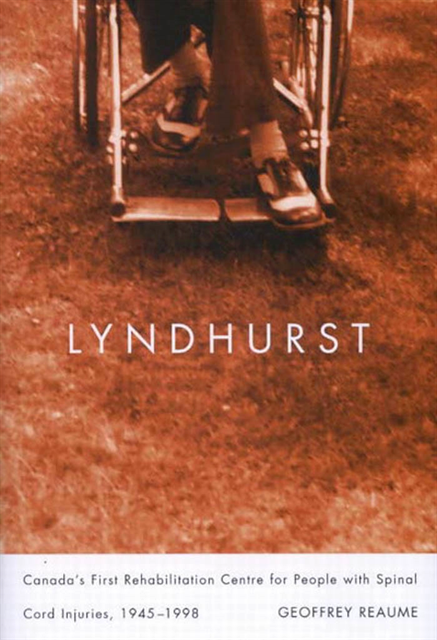
Lyndhurst
Canada's First Rehabilitation Centre for People with Spinal Cord Injuries, 1945-1998
Inbunden, 2007
540 kr
Lägg i varukorg
How patients experienced disability at a famous rehabilitation centre.
Lyndhurst
Canada''s First Rehabilitation Centre for People with Spinal Cord Injuries, 1945-1998
E-bok, 2007
338 kr
Lägg i varukorg
Lyndhurst was the first facility in Canada to focus solely on people with spinal cord injuries, eventually also treating people with related disabilities, such as polio. Geoffrey Reaume details the changes in treatment of paraplegia and quadriplegia that allowed more people to survive and to return …
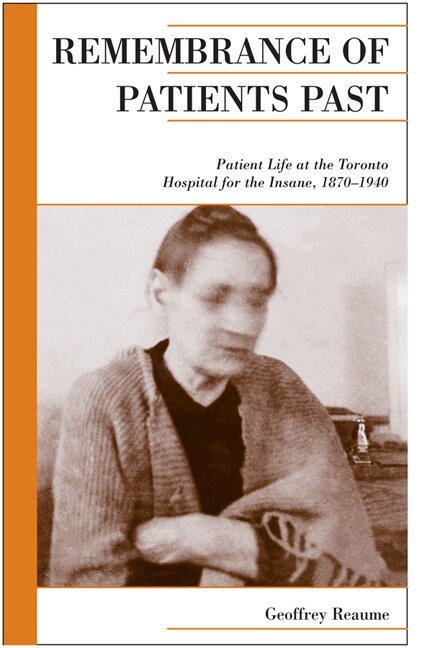
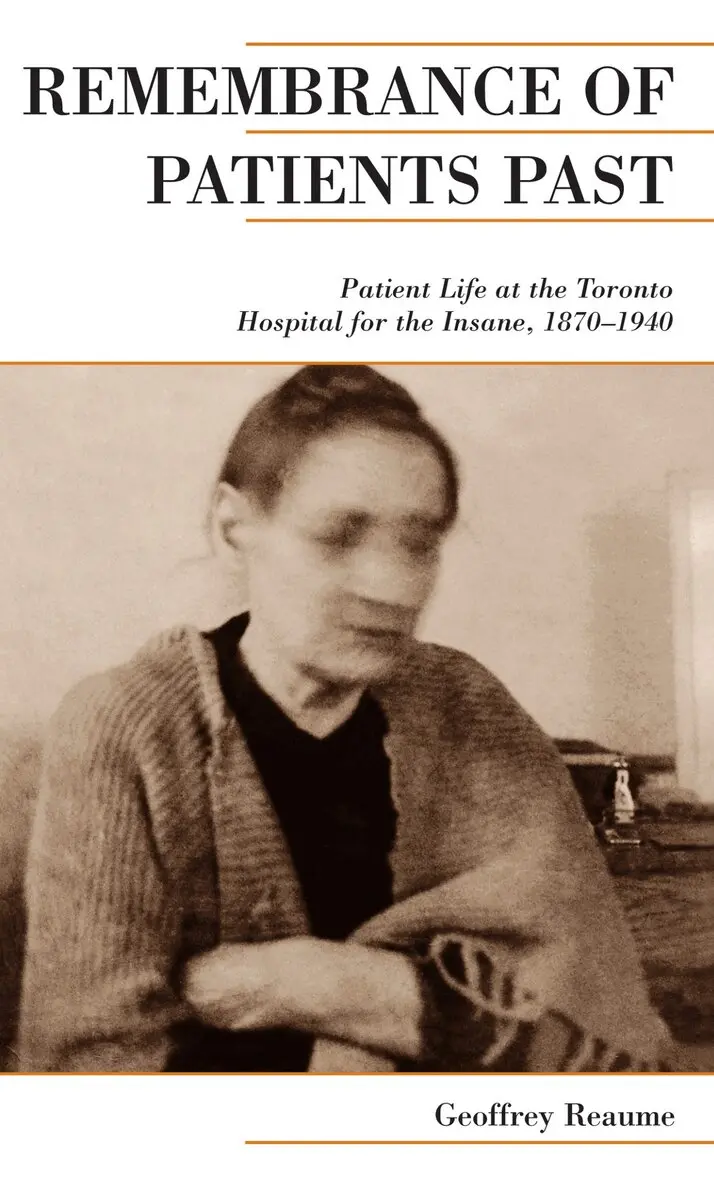
Remembrance of Patients Past
Life at the Toronto Hospital for the Insane, 1870-1940
Häftad, 2009
425 kr
Lägg i varukorg
In Remembrance of Patients Past, historian Geoffrey Reaume remembers previously forgotten psychiatric patients by examining in rich detail their daily life at the Toronto Hospital for the Insane (now called the Centre for Addiction and Mental Health – CAMH) from 1870-1940. Psychiatric patients …
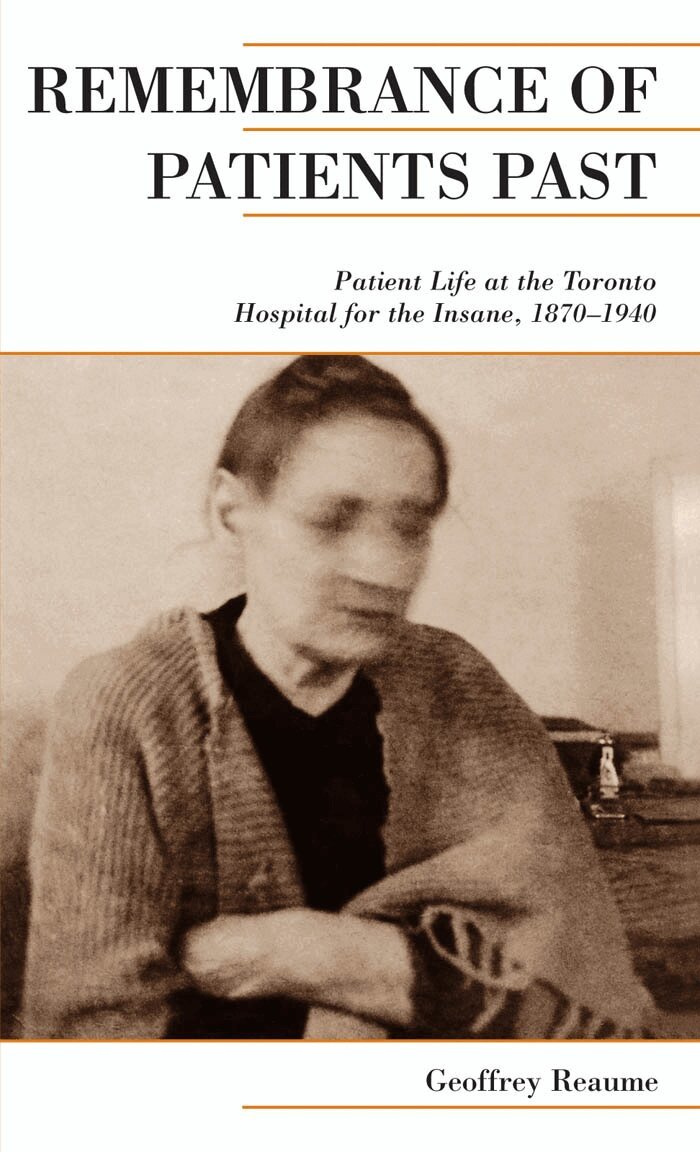
Remembrance of Patients Past
Life at the Toronto Hospital for the Insane, 1870-1940
E-bok, 2000
504 kr
Lägg i varukorg
In Remembrance of Patients Past, historian Geoffrey Reaume remembers previously forgotten psychiatric patients by examining in rich detail their daily life at the Toronto Hospital for the Insane (now called the Centre for Addiction and Mental Health – CAMH) from 1870-1940. Psychiatric patients …
Remembrance of Patients Past
Life at the Toronto Hospital for the Insane, 1870-1940
E-bok, 2000
504 kr
Lägg i varukorg
In Remembrance of Patients Past, historian Geoffrey Reaume remembers previously forgotten psychiatric patients by examining in rich detail their daily life at the Toronto Hospital for the Insane (now called the Centre for Addiction and Mental Health – CAMH) from 1870-1940. Psychiatric patients …
Mad Matters
A Critical Reader in Canadian Mad Studies
Av Idil Abdillahi, Bren A. LeFrançois m. fl.
Häftad, 2026
799 kr
Lägg i varukorg
Over the decade since the first edition of Mad Matters was published, Mad Studies has exploded into a new field of study across Canada and around the world. This thoroughly updated and expanded second edition continues the legacy of the groundbreaking first edition by presenting more critical …