George A. Bray – författare
Visar alla böcker från författaren George A. Bray. Handla med fri frakt och snabb leverans.
41 produkter
Obesity and Mental Disorders
Av Susan L. McElroy, David B. Allison m. fl.
Häftad, 2019
1040 kr
Lägg i varukorg
Currently, there are a limited amount of guidelines to help clinicians manage patients with obesity and comorbid mental disorders. This expertly written source fills the gap in the literature by providing a clear overview of obesity and its relationship to mental illness while reviewing the most …
Overweight and the Metabolic Syndrome:
From Bench to Bedside
Av George A. Bray, Louisiana State University Pennington Biomedical Research Cent m. fl.
Inbunden, 2006
1685 kr
Lägg i varukorg
Overweight and the Metabolic Syndrome will provide an overview of topics related to obesity, including associated health risks, childhood obesity, genetics, evaluation, treatment, behavioral strategies, and successes and failures in preventing obesity. The body composition that underlies obesity …
Overweight and the Metabolic Syndrome:
From Bench to Bedside
E-bok, 2007
2174 kr
Lägg i varukorg
Overweight and the Metabolic Syndrome will provide an overview of topics related to obesity, including associated health risks, childhood obesity, genetics, evaluation, treatment, behavioral strategies, and successes and failures in preventing obesity. The body composition that underlies obesity …
Obesity and Mental Disorders
Av Susan L. McElroy, David B. Allison m. fl.
Inbunden, 2006
3105 kr
Lägg i varukorg
Currently, there are a limited amount of guidelines to help clinicians manage patients with obesity and comorbid mental disorders. This expertly written source fills the gap in the literature by providing a clear overview of obesity and its relationship to mental illness while reviewing the most …
Obesity and Mental Disorders
Av George A. Bray, David B. Allison m. fl.
E-bok, 2006
1204 kr
Lägg i varukorg
Currently, there are a limited amount of guidelines to help clinicians manage patients with obesity and comorbid mental disorders. This expertly written source fills the gap in the literature by providing a clear overview of obesity and its relationship to mental illness while reviewing the most …
Obesity and Mental Disorders
Av George A. Bray, David B. Allison m. fl.
E-bok, 2006
1204 kr
Lägg i varukorg
Currently, there are a limited amount of guidelines to help clinicians manage patients with obesity and comorbid mental disorders. This expertly written source fills the gap in the literature by providing a clear overview of obesity and its relationship to mental illness while reviewing the most …
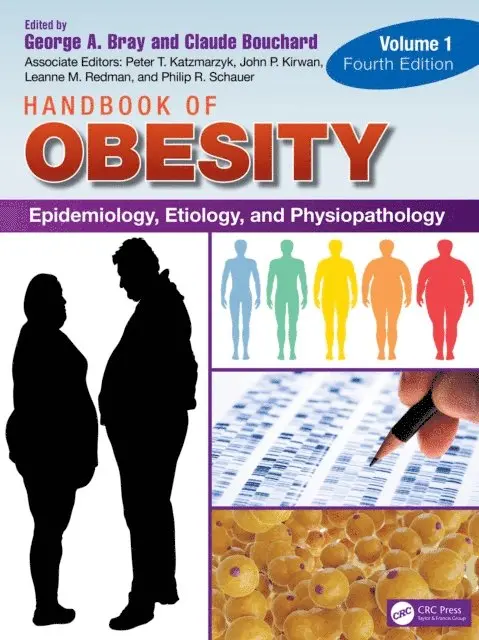
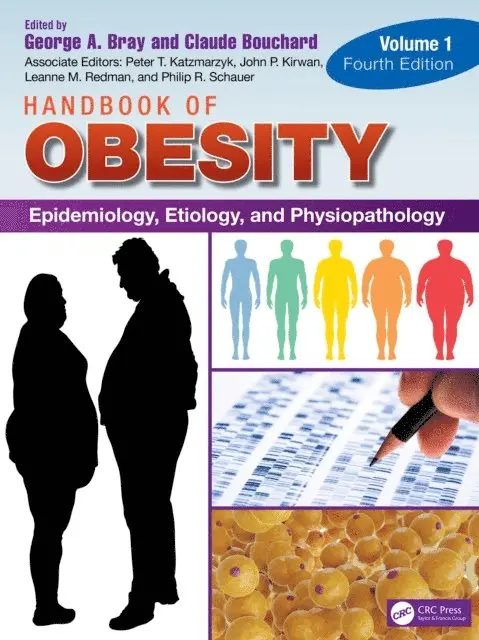
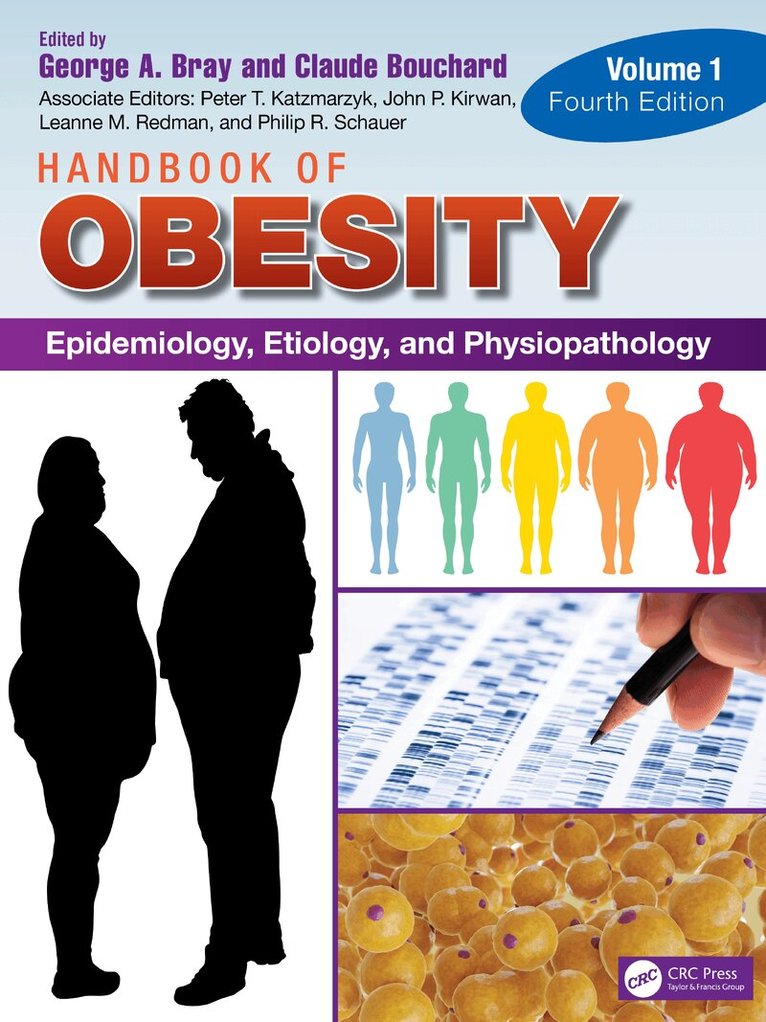
Handbook of Obesity - Volume 1
Epidemiology, Etiology, and Physiopathology
Av Claude Bouchard, George A. Bray
E-bok, 2023
3245 kr
Lägg i varukorg
The fifth edition of Volume 1 of Handbook of Obesity written by global experts covers the basic science aspects under the broad topic areas of epidemiology, etiology, and pathophysiology of obesity. Divided into 5 sections and detailed in 66 chapters, this edition covers the important advances …
Handbook of Obesity - Volume 1
Epidemiology, Etiology, and Physiopathology
Av Claude Bouchard, George A. Bray
E-bok, 2023
3175 kr
Lägg i varukorg
The fifth edition of Volume 1 of Handbook of Obesity written by global experts covers the basic science aspects under the broad topic areas of epidemiology, etiology, and pathophysiology of obesity. Divided into 5 sections and detailed in 66 chapters, this edition covers the important advances …
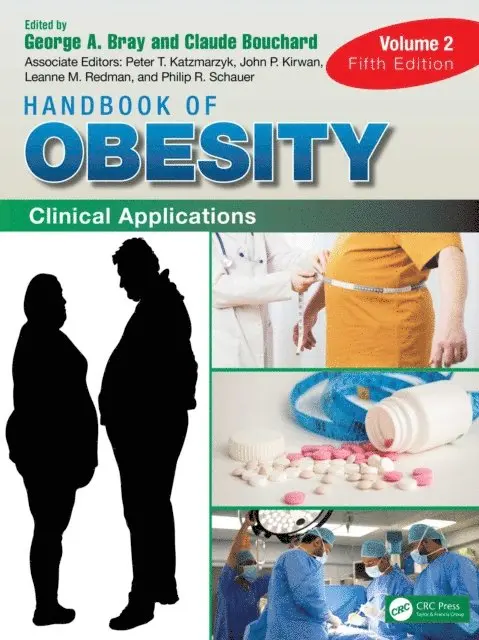
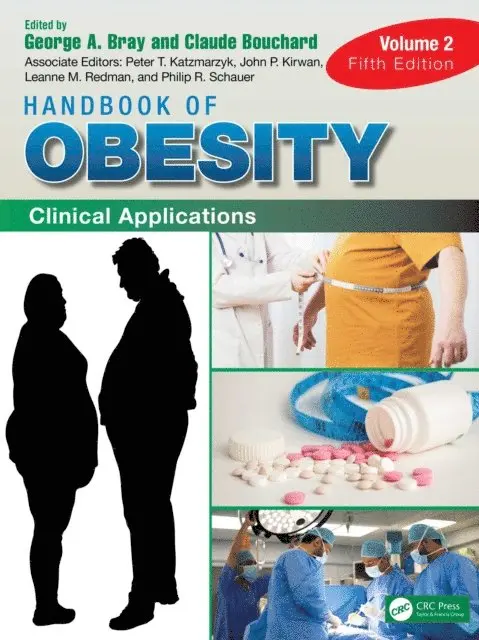
Handbook of Obesity - Volume 2
Clinical Applications
Av Claude Bouchard, George A. Bray
E-bok, 2023
3245 kr
Lägg i varukorg
Volume 2 of the 5th Edition of the Handbook of Obesity spotlights on clinical applications for evaluation, diagnosis, prevention, and treatment of obesity. It covers on the several major developments occurred between the previous and the new edition, including the effect of SARS-CoV-2 on people …
Handbook of Obesity - Volume 2
Clinical Applications
Av Claude Bouchard, George A. Bray
E-bok, 2023
3245 kr
Lägg i varukorg
Volume 2 of the 5th Edition of the Handbook of Obesity spotlights on clinical applications for evaluation, diagnosis, prevention, and treatment of obesity. It covers on the several major developments occurred between the previous and the new edition, including the effect of SARS-CoV-2 on people …
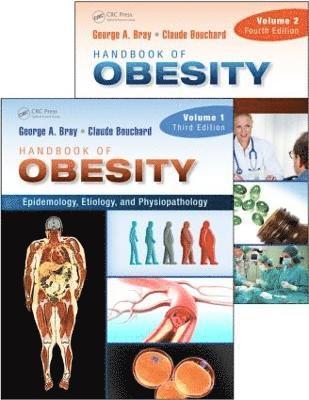
Handbook of Obesity, Two-Volume Set
Av Claude Bouchard, George A. Bray
E-bok, 2024
5617 kr
Lägg i varukorg
This 2 volume set comprises of the 4th edition of Volume 1 and the 5th edition of Volume 2. The fifth edition of Volume 1 of Handbook of Obesity written by global experts covers the basic science aspects under the broad topic areas of epidemiology, etiology, and pathophysiology of obesity. Divided …
Handbook of Obesity, Two-Volume Set
Av George A. Bray, Claude Bouchard
2024
6184 kr
Lägg i varukorg
This 2 volume set comprises of the 4th edition of Volume 1 and the 5th edition of Volume 2. The fifth edition of Volume 1 of Handbook of Obesity written by global experts covers the basic science aspects under the broad topic areas of epidemiology, etiology, and pathophysiology of obesity. Divided …
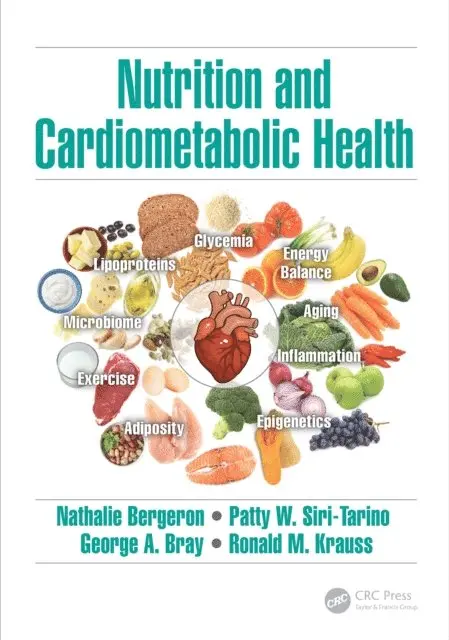
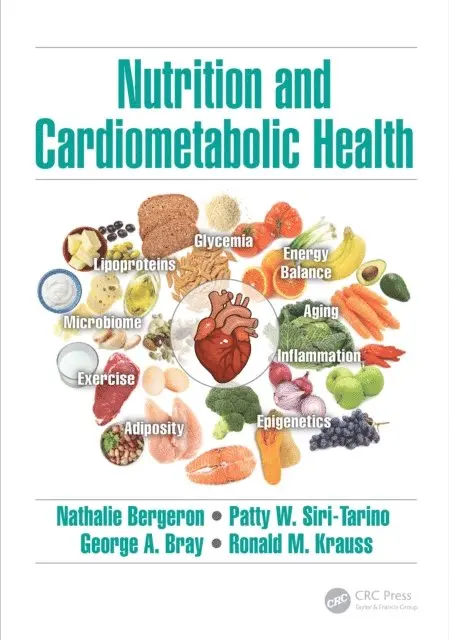
Nutrition and Cardiometabolic Health
Av Nathalie Bergeron, Patty W. Siri-Tarino m. fl.
Häftad, 2021
815 kr
Lägg i varukorg
Nutrition plays a key role in prevention of cardiovascular disease, the leading cause of death worldwide. Diet influences a broad spectrum of cardiometabolic risk factors, notably a cluster including excess adiposity, dyslipidemia, impaired glucose metabolism and high blood pressure. In the face of …
Handbook of Obesity - Volume 2
Clinical Applications
Av George A. Bray, Claude Bouchard
Inbunden, 2023
2820 kr
Lägg i varukorg
Volume 2 of the 5th Edition of the Handbook of Obesity spotlights on clinical applications for evaluation, diagnosis, prevention, and treatment of obesity. It covers on the several major developments occurred between the previous and the new edition, including the effect of SARS-CoV-2 on people …
Handbook of Obesity - Volume 1
Epidemiology, Etiology, and Physiopathology
Av George A. Bray, Claude Bouchard
Inbunden, 2023
2820 kr
Lägg i varukorg
The fifth edition of Volume 1 of Handbook of Obesity written by global experts covers the basic science aspects under the broad topic areas of epidemiology, etiology, and pathophysiology of obesity. Divided into 5 sections and detailed in 66 chapters, this edition covers the important advances …
Guide to Obesity and the Metabolic Syndrome
Origins and Treatment
E-bok, 2011
1437 kr
Lägg i varukorg
In the historical record there is abundant evidence that obesity was a medical and health concern as long as medicine has been practiced. The idea of diet and exercise are bulwarks in the fight against obesity in history from the time of Hippocrates to the 16th century-a span of 2,000 years. …
Guide to Obesity and the Metabolic Syndrome
Origins and Treatment
Häftad, 2017
1249 kr
Lägg i varukorg
In the historical record there is abundant evidence that obesity was a medical and health concern as long as medicine has been practiced. The idea of diet and exercise are bulwarks in the fight against obesity in history from the time of Hippocrates to the 16th century—a span of 2,000 years. …
Nutrition and Cardiometabolic Health
Av Ronald M. Krauss, George A. Bray m. fl.
E-bok, 2017
942 kr
Lägg i varukorg
Nutrition plays a key role in prevention of cardiovascular disease, the leading cause of death worldwide. Diet influences a broad spectrum of cardiometabolic risk factors, notably a cluster including excess adiposity, dyslipidemia, impaired glucose metabolism and high blood pressure. In the face of …
Guide to Obesity and the Metabolic Syndrome
Origins and Treatment
Inbunden, 2011
3524 kr
Lägg i varukorg
In the historical record there is abundant evidence that obesity was a medical and health concern as long as medicine has been practiced. The idea of diet and exercise are bulwarks in the fight against obesity in history from the time of Hippocrates to the 16th century—a span of 2,000 years. …
Guide to Obesity and the Metabolic Syndrome
Origins and Treatment
E-bok, 2011
1480 kr
Lägg i varukorg
In the historical record there is abundant evidence that obesity was a medical and health concern as long as medicine has been practiced. The idea of diet and exercise are bulwarks in the fight against obesity in history from the time of Hippocrates to the 16th century-a span of 2,000 years. …
Overweight and the Metabolic Syndrome:
From Bench to Bedside
Av George A. Bray, Louisiana State University Pennington Biomedical Research Cent m. fl.
Häftad, 2010
1679 kr
Lägg i varukorg
Overweight and the Metabolic Syndrome will provide an overview of topics related to obesity, including associated health risks, childhood obesity, genetics, evaluation, treatment, behavioral strategies, and successes and failures in preventing obesity. The body composition that underlies obesity …
Handbook of Obesity Treatment, Second Edition
Av Thomas A. Wadden, George A. Bray
Inbunden, 2018
1290 kr
Lägg i varukorg
The leading clinical reference work in the field--now significantly revised with 85% new material--this handbook gives practitioners and students a comprehensive understanding of the causes, consequences, and management of adult and childhood obesity. In concise, extensively referenced chapters …
Handbook of Obesity Treatment, Second Edition
Av Thomas A. Wadden, George A. Bray
Häftad, 2019
875 kr
Lägg i varukorg
The leading clinical reference work in the field--now significantly revised with 85% new material--this handbook gives practitioners and students a comprehensive understanding of the causes, consequences, and management of adult and childhood obesity. In concise, extensively referenced chapters …
Handbook of Obesity, Two-Volume Set
Av Claude Bouchard, George A. Bray
2014
5018 kr
Lägg i varukorg
This 2 volume set comprises of the 3rd edition of Volume 1 and the 4th edition of Volume 2, both published in 2014 . In recent years, we’ve developed a much better grasp of the biological and other factors associated with the development of obesity. New clinical trials, discoveries related to drug …
Nutrition and Cardiometabolic Health
Av Nathalie Bergeron, Patty W. Siri-Tarino m. fl.
Inbunden, 2017
3149 kr
Lägg i varukorg
Nutrition plays a key role in prevention of cardiovascular disease, the leading cause of death worldwide. Diet influences a broad spectrum of cardiometabolic risk factors, notably a cluster including excess adiposity, dyslipidemia, impaired glucose metabolism and high blood pressure. In the face of …
Nutrition and Cardiometabolic Health
Av Ronald M. Krauss, George A. Bray m. fl.
E-bok, 2017
963 kr
Lägg i varukorg
Nutrition plays a key role in prevention of cardiovascular disease, the leading cause of death worldwide. Diet influences a broad spectrum of cardiometabolic risk factors, notably a cluster including excess adiposity, dyslipidemia, impaired glucose metabolism and high blood pressure. In the face of …
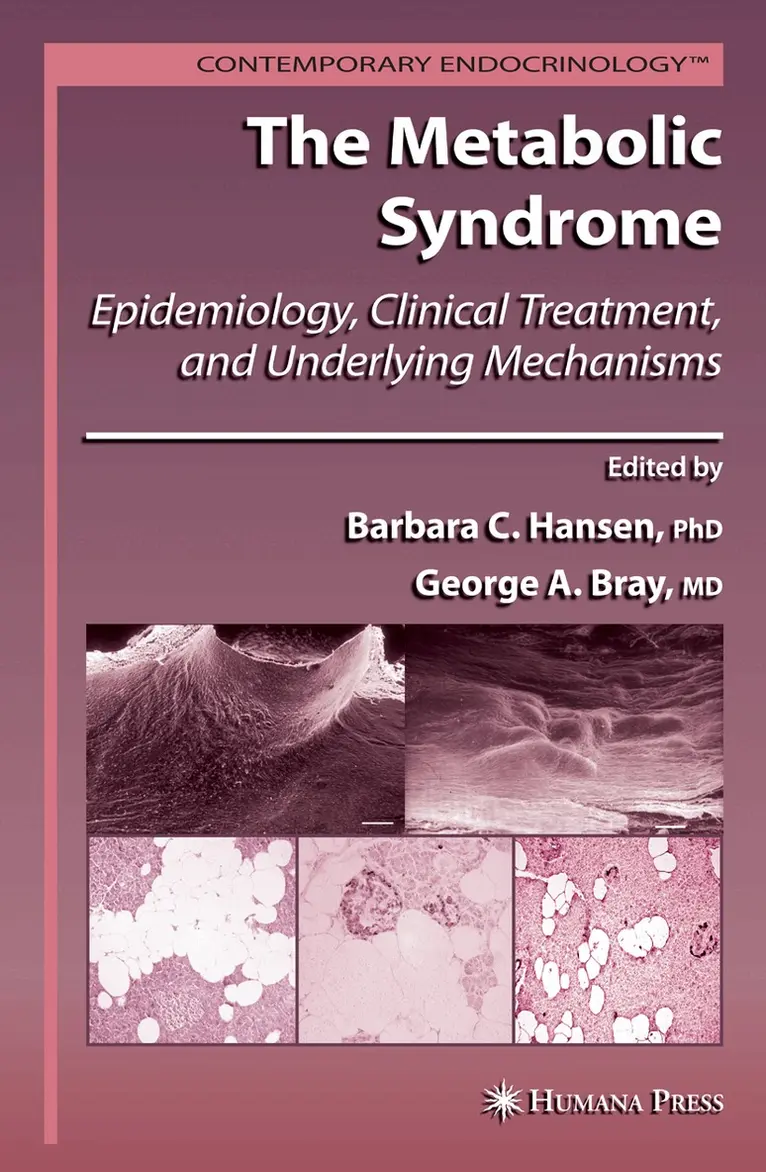
Metabolic Syndrome:
Epidemiology, Clinical Treatment, and Underlying Mechanisms
Av Barbara C. Hansen, George A. Bray
Inbunden, 2008
2244 kr
Lägg i varukorg
In the United States, 40 to 45% of those over 60 years of age have the metabolic syndrome (1,2,3), and this percentage, based on estimates of the increasing prevalence ofexcess body weight and the more comprehensive diagnostic criteria for the syndrome, is likely to exceed 60% in newer survey …
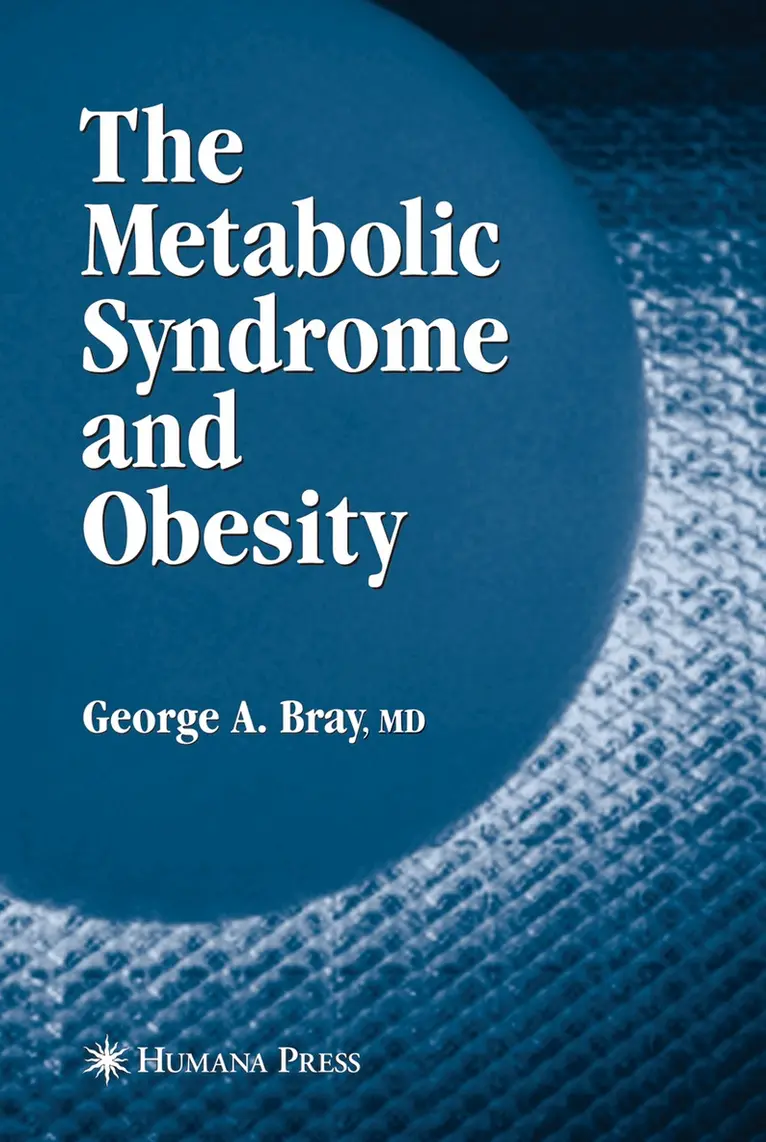
Metabolic Syndrome and Obesity
Inbunden, 2007
1685 kr
Lägg i varukorg
Thirty years ago, I published my first monograph on obesity (Bray, 1976). Many things have changed in these 30 years, but many have remained the same. Preparation of The Metabolic Syndrome and Obesity has given me a chance to survey the changes to the field and to present an update of the …
Metabolic Syndrome and Obesity
E-bok, 2008
2127 kr
Lägg i varukorg
Thirty years ago, I published my first monograph on obesity (Bray, 1976). Many things have changed in these 30 years, but many have remained the same. Preparation of The Metabolic Syndrome and Obesity has given me a chance to survey the changes to the field and to present an update of the …
Metabolic Syndrome:
Epidemiology, Clinical Treatment, and Underlying Mechanisms
Av George A. Bray, Barbara C. Hansen
E-bok, 2010
3013 kr
Lägg i varukorg
In the United States, 40 to 45% of those over 60 years of age have the metabolic syndrome (1,2,3), and this percentage, based on estimates of the increasing prevalence ofexcess body weight and the more comprehensive diagnostic criteria for the syndrome, is likely to exceed 60% in newer survey …