George David Miller – författare
Visar alla böcker från författaren George David Miller. Handla med fri frakt och snabb leverans.
8 produkter
8 produkter
E-bok
Engelska, 2011710 kr
Läs direkt efter köp
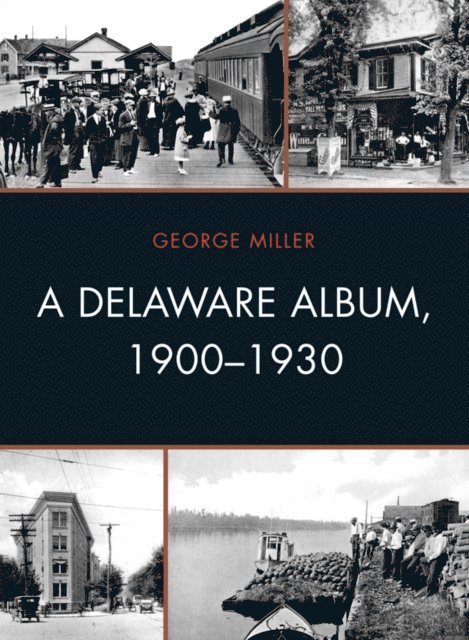
A Delaware Album, 1900-1930 contains over 300 postcard photographs from the entire state taken during the period from 1900 to 1930. Arranged by subjects—City and Town Views; Delaware Beaches; Amusements; Industry and Agriculture; Signs of the Times; Trains, Trolleys, and Automobiles; Water Transportation; Schools; Religion; Businesses; Hotels and Motels—each photo has a caption ranging from a sentence or two to several paragraphs. The book''s introduction details how the cards were produced, analyzes the subject matter depicted on the cards, documents the history of several of the most prominent local photographers in the state whose work is found almost only on postcards, and traces the evolution and popularization of postcard photography. Through the photographs readers can witness the development of Delaware agriculture and fisheries, the expansion of the railroad into southern Delaware, the declining days of steamship service on Delaware rivers and creeks, the fate of Middletown''s last trolley, and Delaware''s unsuccessful campaign against "King Alcohol." They can see how Delawareans worshiped, worked, and shopped. They can visit local amusement parks and beaches from New Castle county to Sussex county. For the early decades of the twentieth century the postcard recorded every aspect of American life. As local historians will tell you, the photographic record of small town America during the period from 1900 to 1930 exists almost only on postcards. That is why historical societies, libraries, and museums have begun to amass postcard collections. In the last twenty years, historians and scholars have increasingly turned to the postcard as a way of seeing what our past literally looked like, what we enjoyed doing, where we worked and played, how we viewed one other, what we thought was important, and what prejudices we held.
Inbunden, Engelska, 2021
1 402 kr
Skickas inom 10-15 vardagar
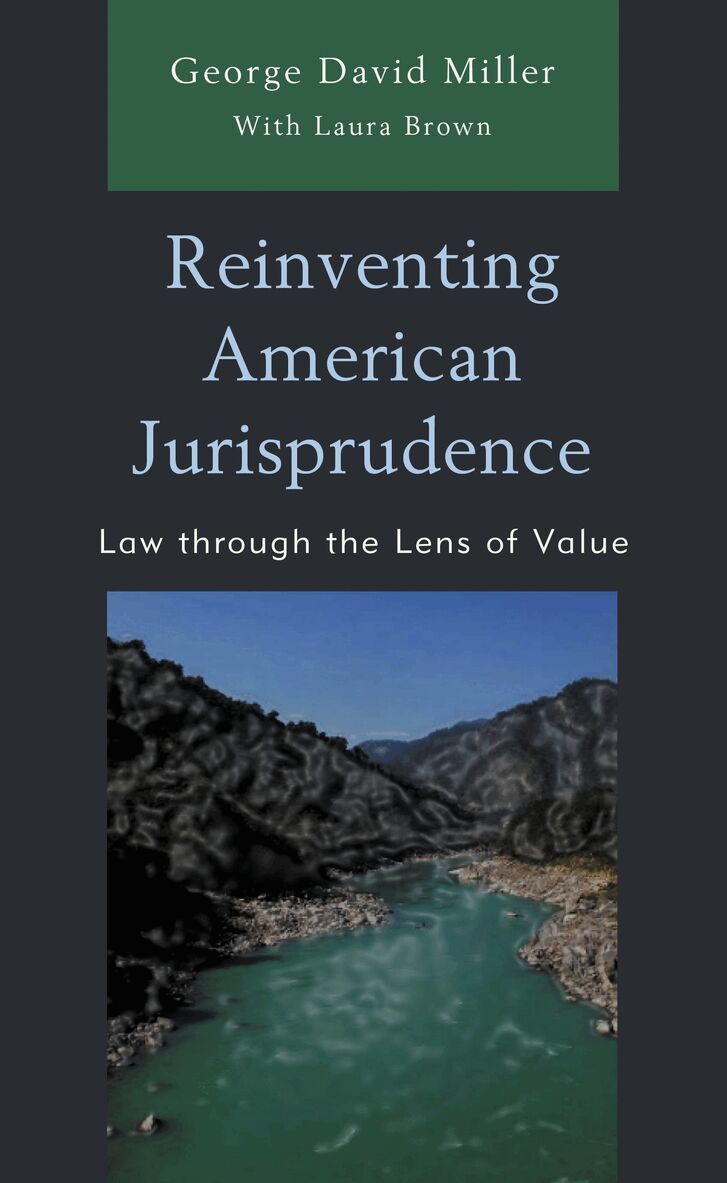
In Reinventing American Jurisprudence: Law through the Lens of Value, George David Miller and Laura Brown unfurl an original approach to value and an imaginative landscape in philosophy of law. Value essentialism identifies value formations such as a sacred cow and scapegoat tandem and the intensification of “oughtness” as it approaches sacred zenith values. Readers learn how Occam’s razor has been responsible for the death of many ideas; how the celebrated Other gains nuance as near and remote; and where a spectral assessment of probability and necessity leads. Analyses of Supreme Court cases grow out in different and exciting directions. Buck was not about eugenics, but another iteration of the value of efficiency and Yo Wick was decided less on law and more on a justice’s finding humanity in Chinese laundry mat proprietors. Lochner involved not an ideological binary but three distinct value schemes. “Separate but equal” was refined as parallelism and exploitative tangents. In Brown, the Fourteenth Amendment took a significant subjective turn. In Heller, the communitarian position of stopping violence before it began could be contrasted with the individualistic position of waiting until you see the whites of their eyes in your bedroom. Citizens United was distilled into the question: was the First Amendment designed to maximize participation or maximize democracy?
E-bok
PDF, Engelska, 20211 947 kr
Läs direkt efter köp
The educationally emaciated, suffering from intellectual and spiritual bilumia, binge on facts and linear thinking. The imprimatur of clarity and the infatuation with quantification are accoutrements of this affliction, often characterized by apathy. Chaos is introduced as the wrecking ball for the hierarchical skyscrapers that overcrowd the educational skyline. The type of chaos proposed can be explained by the neutron bomb analogy. Chaos destroys all that is inessential but leaves standing the essential and promotes holistic rather than compartmentalized learning. The authors further contend that one insight is better than a myriad of facts; in being vigilant of serendipity; that the value-aspect of facts is as important as the facts themselves. Such beliefs form a foundation for educational holism. Our goal is to popularize philosophy in the same way science has become popular without a mass understanding. Empiricism is criticized for creating the theoretical basis for fragmentation (forming the basis for an island ideology) by excising essence. Founded on inessential empirical ideology, efforts to teach multiculturalism merely exacerbate difference, promote alienation, and discourage tolerance. Within the framework of value hierarchies we favor, tolerance is not understood as open-armed acceptance of just anything, but the forbearance of an evil for the promise of greater good. Essence cannot be removed: even in the idiosyncratic we can find the essential. In the absence of chaotic methodology, critical thinking remains an apolitical, amoral, and atemporal process displaced from social and political reality. We propose a critical thinking that is not legalistic, but is action-oriented. The pipe dream for education is a political, moral, temporal, and decompartmentalized critical thinking that disseminates philosophy across the curriculum. Those who risk becoming pariahs and nomads are essential to the rejuvenation of the educational system.
E-bok
PDF, Engelska, 20212 180 kr
Läs direkt efter köp
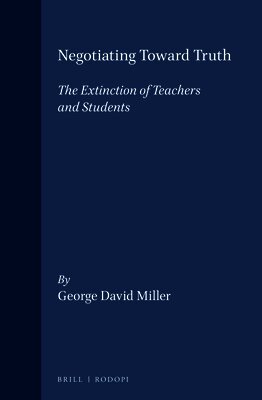
For far too many people for far too many years, schooling has been a debilitating, demoralizing, and ultimately dehumanizing experience. Make-shift, half-hearted, and watered-down reform measures have proved ineffective. Reform throws out the bath water, but keeps the baby. Radicalism recognizes not a baby but a beast lurks in the bath water and throws both out. This dramatic redefinition of schooling examines four models of dynamism as provided by Nietzsche, Whitehead, Dewey, and Freire. Nietzsche's af-firmation of dynamism is marred by his elitism. Whitehead understands that inert cripple schooling. Without dialogue, ideas remain inert. Dewey misunderstands thinking and does not grasp its inherent double movement: toward order and disorder. Freire's pedagogy is transcended, with emphasis on negotiation between prime values. The final chapter expounds a radical pedagogy of dynamism. Miller argues that teaching and learning are not separate acts, but form a continuum. Within the teaching-learning continuum, all participants are spontaneous and receptive and seek to overcome fear of process, ambiguity, and doubt. The key to radical schooling is a pro-active stance toward creativity that allows for a dynamic integration of difference in dialogue. Negotiating Toward Truth is a call to arms for all educators. The book asks us to look closely what is in the bath water and to have the courage to throw the beast out with the bath water.
E-bok
PDF, Engelska, 20221 947 kr
Läs direkt efter köp
This book is an original synthesis of four elements: (1) the phenomenology of value, (2) caring, (3) the moral imagination, and (4) Kant's formula of humanity. The striking result is an ethics of caring that develops our shared humanity. The probing analysis and pungent argument are assisted by imaginative forms of dialogue, narration, and parable. This lively contribution to our ethical fulfillment concludes with a case for student-centered education that is democratic, creative and caring.
E-bok
PDF, Engelska, 20212 180 kr
Läs direkt efter köp
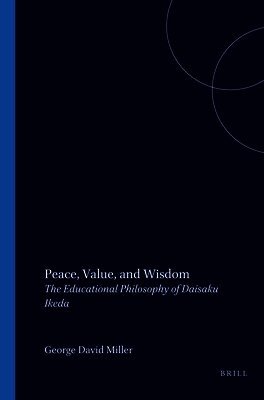
This book introduces readers to the Buddhist-based philosophy of education of Daisaku Ikeda. Ikeda's philosophy of education offers human revolution, value creation, and dialogue as counterweights to the violence lurking in today's classrooms. Where education becomes wisdom-based, it transforms learners into keen assessors of their inner lives and establishes a foundation for global citizenship.
Del 62 - Philosophy of Education
Negotiating Toward Truth
The Extinction of Teachers and Students
Häftad, Engelska, 1998
436 kr
Skickas inom 5-8 vardagar
For far too many people for far too many years, schooling has been a debilitating, demoralizing, and ultimately dehumanizing experience. Make-shift, half-hearted, and watered-down reform measures have proved ineffective. Reform throws out the bath water, but keeps the baby. Radicalism recognizes not a baby but a beast lurks in the bath water and throws both out. This dramatic redefinition of schooling examines four models of dynamism as provided by Nietzsche, Whitehead, Dewey, and Freire. Nietzsche's af-firmation of dynamism is marred by his elitism. Whitehead understands that inert cripple schooling. Without dialogue, ideas remain inert. Dewey misunderstands thinking and does not grasp its inherent double movement: toward order and disorder. Freire's pedagogy is transcended, with emphasis on negotiation between prime values. The final chapter expounds a radical pedagogy of dynamism. Miller argues that teaching and learning are not separate acts, but form a continuum. Within the teaching-learning continuum, all participants are spontaneous and receptive and seek to overcome fear of process, ambiguity, and doubt. The key to radical schooling is a pro-active stance toward creativity that allows for a dynamic integration of difference in dialogue. Negotiating Toward Truth is a call to arms for all educators. The book asks us to look closely what is in the bath water and to have the courage to throw the beast out with the bath water.
Del 122 - Daisaku Ikeda Studies
Peace, Value, and Wisdom
The Educational Philosophy of Daisaku Ikeda
Häftad, Engelska, 2002
601 kr
Skickas inom 5-8 vardagar
This book introduces readers to the Buddhist-based philosophy of education of Daisaku Ikeda. Ikeda's philosophy of education offers human revolution, value creation, and dialogue as counterweights to the violence lurking in today's classrooms. Where education becomes wisdom-based, it transforms learners into keen assessors of their inner lives and establishes a foundation for global citizenship.