George E. Shambaugh - Böcker
Visar alla böcker från författaren George E. Shambaugh. Handla med fri frakt och snabb leverans.
5 produkter
5 produkter
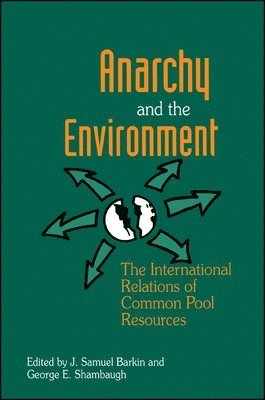
Anarchy and the Environment
The International Relations of Common Pool Resources
Inbunden, Engelska, 1999
1 057 kr
Tillfälligt slut
Argues that the logic of common pool resources is the most appropriate and productive way to understand international environmental conflict, and offers important practical insights into environmental negotiations and bargaining.Anarchy and the Environment examines how the recognition of environmental limits, combined with the ability of states to degrade common environmental resources, affects the strategies and bargaining power of particular groups involved in international environmental negotiations. The contributors examine a wide range of environmental issues, including fisheries management, ozone depletion, acid rain, and water consumption rights, offering important practical insights into environmental negotiations and bargaining. Anarchy and the Environment also offers an important theoretical contribution by challenging the conventional explanations of bargaining dynamics and the resolution of collective action problems in international environmental politics.This book analyzes these problems and uses them as means to evaluate and expand upon common hypotheses regarding the shadow effect of the future on current behavior, the role of free riders in management regimes, and the role of market power in solving collective action and enforcement problems in international environmental management.Contributors include J. Samuel Barkin, Barbara Connolly, Elizabeth R. DeSombre, David Leonard Downie, Christopher C. Joyner, Richard A. Matthew, Ronald Mitchell, and George E. Stambaugh VI.
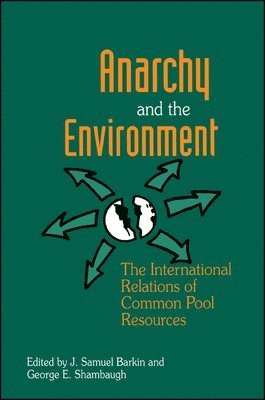
Anarchy and the Environment
The International Relations of Common Pool Resources
Häftad, Engelska, 1999
382 kr
Tillfälligt slut
Argues that the logic of common pool resources is the most appropriate and productive way to understand international environmental conflict, and offers important practical insights into environmental negotiations and bargaining.Anarchy and the Environment examines how the recognition of environmental limits, combined with the ability of states to degrade common environmental resources, affects the strategies and bargaining power of particular groups involved in international environmental negotiations. The contributors examine a wide range of environmental issues, including fisheries management, ozone depletion, acid rain, and water consumption rights, offering important practical insights into environmental negotiations and bargaining. Anarchy and the Environment also offers an important theoretical contribution by challenging the conventional explanations of bargaining dynamics and the resolution of collective action problems in international environmental politics.This book analyzes these problems and uses them as means to evaluate and expand upon common hypotheses regarding the shadow effect of the future on current behavior, the role of free riders in management regimes, and the role of market power in solving collective action and enforcement problems in international environmental management.Contributors include J. Samuel Barkin, Barbara Connolly, Elizabeth R. DeSombre, David Leonard Downie, Christopher C. Joyner, Richard A. Matthew, Ronald Mitchell, and George E. Stambaugh VI.
382 kr
Tillfälligt slut
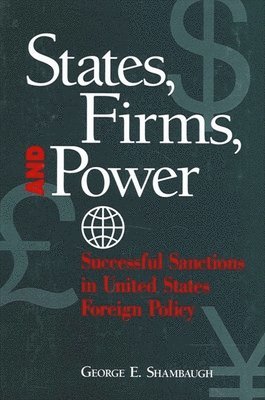
Analyses the effectiveness of economic sanctions as instruments of statecraft.States, Firms, and Power uncovers the workings behind frequently maligned and often misapplied economic sanctions and incentives that have emerged as the United States policy tools of choice. Shambaugh uses a theory of economic statecraft to analyze the sources and limitations of power relations between states and firms. The book features a statistical analysis of 66 sanction episodes since 1949, including detailed case studies of U.S. sanctions in the energy, computer, and telecommunications industries in the 1980s, and current U.S. sanctions against foreign companies conducting business in Cuba, Iran, and Libya. Understanding when and why economic statecraft works provides insights into the nature and exercise of power in world politics that can, in turn, guide policy-makers in their use of sanctions and incentives against friends, foes, and firms.
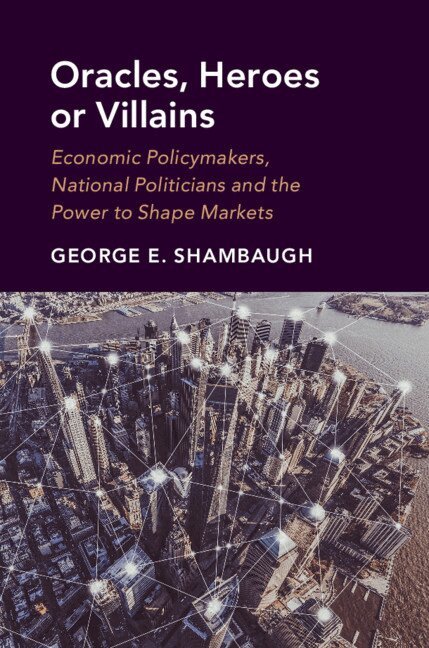
Oracles, Heroes or Villains
Economic Policymakers, National Politicians and the Power to Shape Markets
Inbunden, Engelska, 2019
1 034 kr
Skickas inom 7-10 vardagar
IMF Managing Director Christine Lagarde declared central bankers and finance ministers to be the heroes of recent economic crises for taking corrective action while national politicians squabbled. What enabled them to do so? In the wake of Brexit, chaotic trade policies in the United States, and resurgent nationalism around the world, national politicians are quarrelling again, meanwhile the markets are roiling. Can we again depend on economic technocrats to save the day for these national politicians and the rest of us? What happens if they fail or, perhaps worse, go too far? In this timely book, Shambaugh answers these questions using recent economic crises in Argentina, the United States and Europe as case studies for analysing the intersections of power, politics and markets. By specifying the interactions between political uncertainty, market intervention, and investor risk, Shambaugh predicts how economic technocrats manage market behaviour by shifting expectations regarding what national politicians will do and whether their policies will be effective.
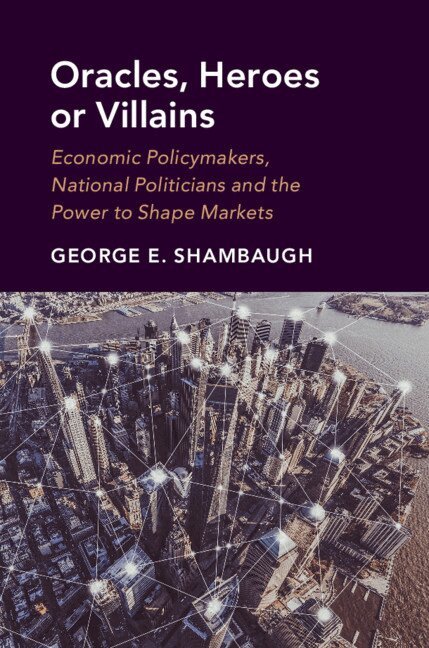
Oracles, Heroes or Villains
Economic Policymakers, National Politicians and the Power to Shape Markets
Häftad, Engelska, 2019
372 kr
Skickas inom 7-10 vardagar
IMF Managing Director Christine Lagarde declared central bankers and finance ministers to be the heroes of recent economic crises for taking corrective action while national politicians squabbled. What enabled them to do so? In the wake of Brexit, chaotic trade policies in the United States, and resurgent nationalism around the world, national politicians are quarrelling again, meanwhile the markets are roiling. Can we again depend on economic technocrats to save the day for these national politicians and the rest of us? What happens if they fail or, perhaps worse, go too far? In this timely book, Shambaugh answers these questions using recent economic crises in Argentina, the United States and Europe as case studies for analysing the intersections of power, politics and markets. By specifying the interactions between political uncertainty, market intervention, and investor risk, Shambaugh predicts how economic technocrats manage market behaviour by shifting expectations regarding what national politicians will do and whether their policies will be effective.