George E. Vaillant – författare
Visar alla böcker från författaren George E. Vaillant. Handla med fri frakt och snabb leverans.
6 produkter
Adaptation to Life
Häftad, 1998
359 kr
Lägg i varukorg
Between 1939 and 1942, one of America's leading universities recruited 268 of its healthiest and most promising undergraduates to participate in a revolutionary new study of the human life cycle. The originators of the program, which came to be known as the Grant Study, felt that medical research …
Triumphs of Experience
The Men of the Harvard Grant Study
Häftad, 2015
189 kr
Lägg i varukorg
At a time when many people around the world are living into their tenth decade, the longest longitudinal study of human development ever undertaken offers some welcome news for the new old age: our lives continue to evolve in our later years, and often become more fulfilling than before.Begun in …
Natural History of Alcoholism Revisited
Häftad, 1995
418 kr
Lägg i varukorg
When The Natural History of Alcoholism was first published in 1983, it was acclaimed in the press as the single most important contribution to the literature on alcoholism since the first edition of Alcoholic Anonymous’s Big Book. George Vaillant took on the crucial questions of whether alcoholism …
Wisdom of the Ego
Häftad, 1998
331 kr
Lägg i varukorg
One of America's preeminent psychiatrists draws on his famous Study of Adult Development to give us an exhilarating look at how the mind's defenses work. What we see as the mind's trickery, George Vaillant tells us, is actually healthy. What's more, it can reveal the mind at its most creative and …
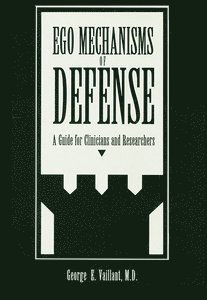
Ego Mechanisms of Defense
A Guide for Clinicians and Researchers
Inbunden, 1992
1176 kr
Lägg i varukorg
Not since Anna Freud's 1937 book, The Ego and the Mechanisms of Defense , has any one volume explored this topic as fully as Ego Mechanisms of Defense by George E. Vaillant. By summarizing the latest empirical studies, proposing a universal language of defense mechanisms, and demonstrating how …
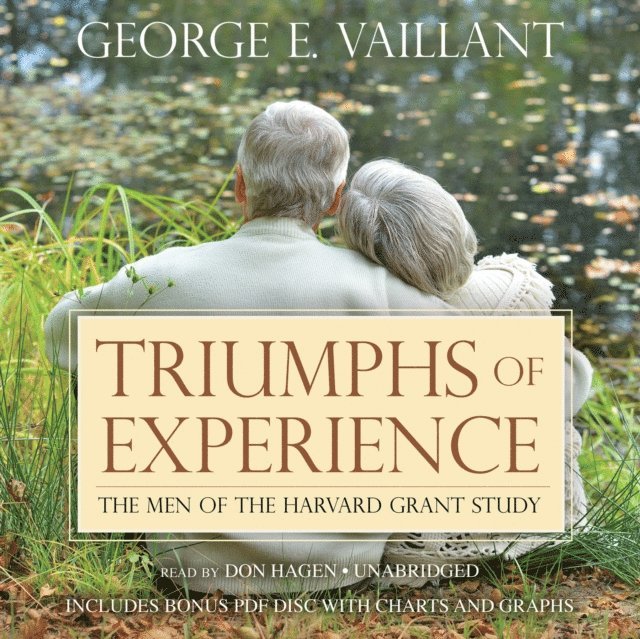
Triumphs of Experience
The Men of the Harvard Grant Study
Ljudbok, 2013
277 kr
Lägg i varukorg
At a time when many people around the world are living into their tenth decade, the longest longitudinal study of human development ever undertaken offers some welcome news for the new old age: our lives continue to evolve in our later years and often become more fulfilling than before. Begun in …