George F. Vander Voort – författare
Visar alla böcker från författaren . Handla med fri frakt och snabb leverans.
2 produkter
2 produkter
Inbunden, Engelska, 1991
3 728 kr
Skickas inom 5-8 vardagar
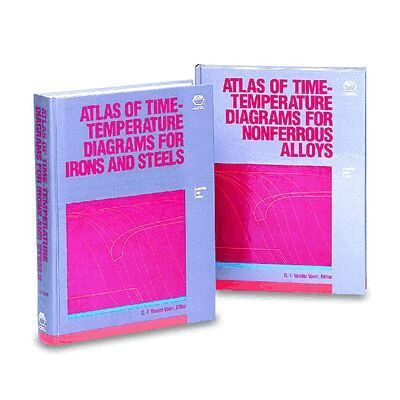
The most comprehensive collection of time-temperature diagrams for irons and steels ever collected.Between this volume and its companion, Atlas of Time Temperature Diagrams for Nonferrous Alloys, you'll find the most comprehensive collection of time-temperature diagrams ever collected. Containing both commonly used curves and out-of-print and difficult-to-find data, these Atlases represent an outstanding worldwide effort, with contributions from experts in 14 countries.Time-temperature diagrams show how metals respond to heating and cooling, allowing you to predict the behavior and know beforehand the sequence of heating and cooling steps to develop the desired properties. These collections are a valuable resource for any materials engineerBoth Collections Include:Easy-to-Read DiagramsIsothermal transformationContinuous cooling transformationTime-temperature precipitationTime-temperature embrittlementTime-temperature orderingMaterials Included in the Irons and Steels Volume:Low-carbonHigh Strength Low AlloyStainless (Maraging, austenitic, ferritic, duplex)Chromium, molybdenum, vanadium, siliconStructuralQuenched and temperedSpring and RailHigh-temperature creep-resistantTool and dieEutectoid, hypereutectoid carbonDeep hardeningTitanium bearingIrons: Gray cast, malleable, white, white cast, ductile.
Inbunden, Engelska, 2020
4 167 kr
Skickas inom 5-8 vardagar
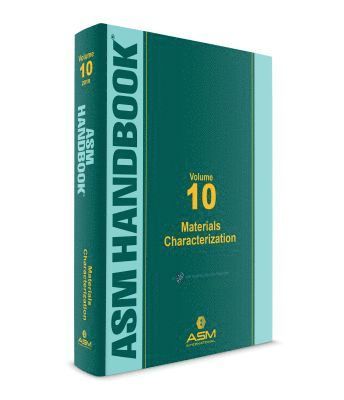
The 2019 edition of ASM Handbook, Volume 10: Materials Characterization provides detailed technical information that will enable readers to select and use analytical techniques that are appropriate for their problem. Each article describing a characterization technique begins with an overview of the method in simplified terms and lists common applications as well as limitations. Sample size, form, and special preparation requirements are listed upfront to help readers quickly decide if the techniques are appropriate to solve their problem. Tables and charts listing the most common characterization methods for different classes of materials are included in the beginning of the handbook. The tables give information on whether the technique is suitable for elemental analysis, qualitative analysis, surface analysis, or alloy verification. The articles also describe material characterization in general terms according to material type and serve as a jumping off point to the more specific technique articles.