George Georgiou - Böcker
Visar alla böcker från författaren George Georgiou. Handla med fri frakt och snabb leverans.
5 produkter
5 produkter
1 064 kr
Skickas inom 10-15 vardagar
A comprehensive compendium of cutting-edge protocols for the generation of molecular diversity. Described in step-by-step detail to ensure experimental success, these protocols include readily reproducible methods for random mutagenesis of entire genes or segments of genes, for homologous and nonhomologus recombination, and for constructing in vivo libraries in bacteria and yeast. In addition to the various protocols for creating libraries, this volume also describes ways to analyze libraries, particularly those made by recombination. An accompanying volume, Directed Enzyme Evolution: Screening and Selection Methods (ISBN: 1-58829-286-X), is devoted entirely to selection and screening methods that can be applied to the directed evolution of enzymes. Copy for Both Volumes Directed Evolution Library Creation: Methods and Protocols and Directed Enzyme Evolution: Screening and Selection Methods constitute an extraordinary collection of all the key methods used today for directed evolution research.Described in step-by-step detail to ensure robust experimental results, these methods will enable both newcomers and more experienced investigators to design and implement directed evolution strategies for the engineering of novel proteins. The first volume describes methods for the creation of mutated DNA molecules, or DNA libraries, encoding variants of desired proteins. The second volume describes methods for screening DNA libraries to isolate mutant proteins that exhibit a specified function.
1 593 kr
Skickas inom 10-15 vardagar
Seasoned practitioners from many leading laboratories describe their best readily reproducible screening strategies for isolating useful clones. These techniques have been optimized for sensitivity, high throughput, and robustness, and are of proven utility for directed evolution purposes. The assays presented use a variety of techniques, including genetic complementation, microtiter plates, solid-phase screens with colorimetric substrates, and flow cytometric screens. An accompanying volume, Directed Evolution Library Creation: Methods and Protocols (ISBN 1-58829-285-1), describes readily reproducible methods for the creation of mutated DNA molecules and DNA libraries. Copy for Both Volumes Directed Evolution Library Creation: Methods and Protocols and Directed Enzyme Evolution: Screening and Selection Methods constitute an extraordinary collection of all the key methods used today for directed evolution research. Described in step-by-step detail to ensure robust experimental results, these methods will enable both newcomers and more experienced investigators to design and implement directed evolution strategies for the engineering of novel proteins.The first volume describes methods for the creation of mutated DNA molecules, or DNA libraries, encoding variants of desired proteins. The second volume describes methods for screening DNA libraries to isolate mutant proteins that exhibit a specified function.
1 064 kr
Skickas inom 10-15 vardagar
A comprehensive compendium of cutting-edge protocols for the generation of molecular diversity. Described in step-by-step detail to ensure experimental success, these protocols include readily reproducible methods for random mutagenesis of entire genes or segments of genes, for homologous and nonhomologus recombination, and for constructing in vivo libraries in bacteria and yeast. In addition to the various protocols for creating libraries, this volume also describes ways to analyze libraries, particularly those made by recombination. An accompanying volume, Directed Enzyme Evolution: Screening and Selection Methods (ISBN: 1-58829-286-X), is devoted entirely to selection and screening methods that can be applied to the directed evolution of enzymes. Copy for Both Volumes Directed Evolution Library Creation: Methods and Protocols and Directed Enzyme Evolution: Screening and Selection Methods constitute an extraordinary collection of all the key methods used today for directed evolution research.Described in step-by-step detail to ensure robust experimental results, these methods will enable both newcomers and more experienced investigators to design and implement directed evolution strategies for the engineering of novel proteins. The first volume describes methods for the creation of mutated DNA molecules, or DNA libraries, encoding variants of desired proteins. The second volume describes methods for screening DNA libraries to isolate mutant proteins that exhibit a specified function.
1 593 kr
Skickas inom 10-15 vardagar
Seasoned practitioners from many leading laboratories describe their best readily reproducible screening strategies for isolating useful clones. These techniques have been optimized for sensitivity, high throughput, and robustness, and are of proven utility for directed evolution purposes. The assays presented use a variety of techniques, including genetic complementation, microtiter plates, solid-phase screens with colorimetric substrates, and flow cytometric screens. An accompanying volume, Directed Evolution Library Creation: Methods and Protocols (ISBN 1-58829-285-1), describes readily reproducible methods for the creation of mutated DNA molecules and DNA libraries. Copy for Both Volumes Directed Evolution Library Creation: Methods and Protocols and Directed Enzyme Evolution: Screening and Selection Methods constitute an extraordinary collection of all the key methods used today for directed evolution research. Described in step-by-step detail to ensure robust experimental results, these methods will enable both newcomers and more experienced investigators to design and implement directed evolution strategies for the engineering of novel proteins.The first volume describes methods for the creation of mutated DNA molecules, or DNA libraries, encoding variants of desired proteins. The second volume describes methods for screening DNA libraries to isolate mutant proteins that exhibit a specified function.
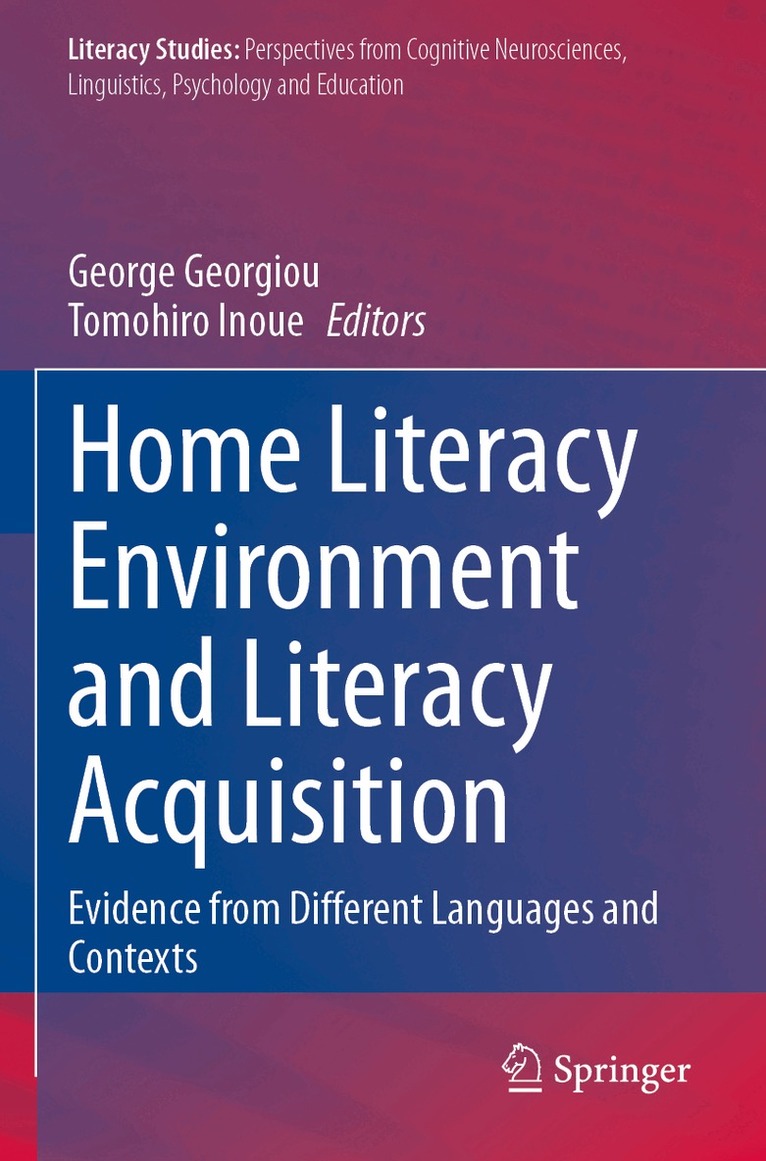
Del 26 - Literacy Studies
Home Literacy Environment and Literacy Acquisition
Evidence from Different Languages and Contexts
Inbunden, Engelska, 2025
1 651 kr
Skickas inom 10-15 vardagar
This book provides a comprehensive and up-to-date overview of the literature on home literacy environment and its association with literacy skills in different languages and contexts. Home literacy environment (HLE), an umbrella term that encompasses various activities parents engage in with their children, has been studied extensively by psychologists, linguists, behavioral geneticists, and educators. However, no systematic effort has been put into synthesizing this growing body of research in a coherent manner, making it difficult for researchers and various stakeholders to understand the key points of past research while keeping up with the latest research findings.To address this need, the first part of the book provides an overview of the current literature on conceptualizations of HLE, covering prominent theoretical models, the measurement of HLE, the potential extension and generalizability of models across contexts, the intersections between home learning environment in literacy, numeracy, and other domains, and the genetic and environmental etiology of literacy development The second section of the book hosts a wide variety of studies from all over the world, conducted in English-speaking countries (UK, U.S., Canada), Finland, Greece, Turkey, China, Japan, the Philippines and other Southeast Asian countries, and Chile and other Latin American and Caribbean countries, while it includes chapters with both typically-developing children and children at familial risk of dyslexia. The third section of this book offers a comprehensive collection of chapters on intervention studies examining the role of family literacy programs, dialogic reading, and onscreen digital access.Together, the 22 chapters of this book elucidate the complex nature of HLE and provide future research directions and instructional recommendations on how parents and policymakers can improve home literacy practices around the world. As such, this book is valuable for researchers, educators, and other professionals, and the readership ranges from graduate students and scholars to parents and policymakers.