George Gotsis - Böcker
Visar alla böcker från författaren George Gotsis. Handla med fri frakt och snabb leverans.
3 produkter
3 produkter
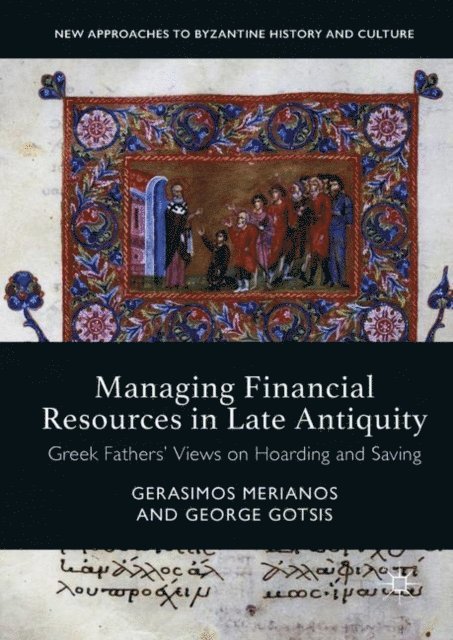
Managing Financial Resources in Late Antiquity
Greek Fathers' Views on Hoarding and Saving
Inbunden, Engelska, 2018
1 170 kr
Skickas inom 10-15 vardagar
This book examines the views of Greek Church Fathers on hoarding, saving, and management of economic surplus, and their development primarily in urban centres of the Eastern Mediterranean, from the late first to the fifth century.
Managing Financial Resources in Late Antiquity
Greek Fathers' Views on Hoarding and Saving
Häftad, Engelska, 2020
867 kr
Skickas inom 5-8 vardagar
This book examines the views of Greek Church Fathers on hoarding, saving, and management of economic surplus, and their development primarily in urban centres of the Eastern Mediterranean, from the late first to the fifth century.
623 kr
Skickas inom 10-15 vardagar
This book critically examines current workplace diversity management practices and explores a nuanced framework for undertaking, supporting, and implementing policies that equally favor all people. It presents critical perspectives that not only elevate respect for differences but also provide insights into the nature and dynamics of differences in view of an inclusive and truly participative organizational environment.The book first presents a brief overview of the connotations associated with workplace diversity and its effective management. Next, it focuses on the organizational appropriation of differences through the formation and mediation of various diversity discourses. It demonstrates the particular articulations of these discourses with inequality and oppressive structures that perpetuate structural disadvantage due to existing power disparity between dominant and unprivileged group members. The book then goes on to underscore the need of constructing relational and context-sensitive diversity management frameworks.Overall, the book outlines that current business cases for diversity focus solely on instrumental goals and tangible outcomes and, as a result, fail to fully capture the complexity as well as the particularity of the diversity phenomenon. The book underlines the necessity for a more inclusive paradigm, implying a progressive problem-shift in the dominant diversity research agenda from a market-driven business-oriented diversity management to one highly valuing, affirming, and respecting otherness.