George J. Sánchez - Böcker
Visar alla böcker från författaren George J. Sánchez. Handla med fri frakt och snabb leverans.
6 produkter
6 produkter
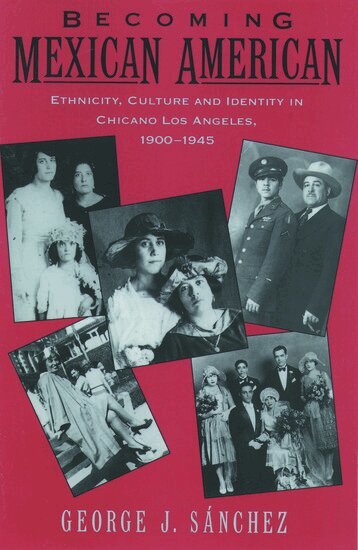
Becoming Mexican American
Ethnicity, Culture, and Identity in Chicano Los Angeles, 1900-1945
Häftad, Engelska, 1995
266 kr
Skickas inom 5-8 vardagar
Twentieth-century Los Angeles has been the locus of one of the most profound and complex interactions between variant cultures in American history. Yet this study is among the first to examine the relationship between ethnicity and identity among the largest immigrant group to that city. By focusing on Mexican immigrants to Los Angeles from 1900 to 1945, George J. Sánchez explores the process by which temporary sojourners altered their orientation to that of permanent residents, thereby laying the foundation for a new Mexican-American culture. Analyzing not only formal programs aimed at these newcomers by the United States and Mexico, but also the world created by these immigrants through family networks, religious practice, musical entertainment, and work and consumption patterns, Sánchez uncovers the creative ways Mexicans adapted their culture to life in the United States. When a formal repatriation campaign pushed thousands to return to Mexico, those remaining in Los Angeles launched new campaigns to gain civil rights as ethnic Americans through labor unions and New Deal politics. The immigrant generation, therefore, laid the groundwork for the emerging Mexican-American identity of their children.
352 kr
Skickas inom 7-10 vardagar
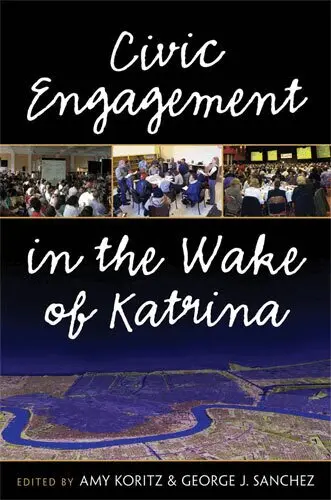
"Civic engagement has been underrated and overlooked. Koritz and Sanchez illuminate the power of what community engagement through art and culture revitalization can do to give voice to the voiceless and a sense of being to those displaced."---Sonia BasSheva Mañjon, Wesleyan University"This profound and eloquent collection describes and assesses the new coalitions bringing a city back to life. It's a powerful call to expand our notions of culture, social justice, and engaged scholarship. I'd put this on my 'must read' list."---Nancy Cantor, Syracuse University"Civic Engagement in the Wake of Katrina is a rich and compelling text for thinking about universities and the arts amid social crisis. Americans need to hear the voices of colleagues who were caught in Katrina's wake and who responded with commitment, creativity, and skill."---Peter Levine, CIRCLE (The Center for Information & Research on Civic Learning & Engagement)This collection of essays documents the ways in which educational institutions and the arts community responded to the devastation wrought by Hurricane Katrina. While firmly rooted in concrete projects, Civic Engagement in the Wake of Katrina also addresses the larger issues raised by committed public scholarship. How can higher education institutions engage with their surrounding communities? What are the pros and cons of "asset-based" and "outreach" models of civic engagement? Is it appropriate for the private sector to play a direct role in promoting civic engagement? How does public scholarship impact traditional standards of academic evaluation? Throughout the volume, this diverse collection of essays paints a remarkably consistent and persuasive account of arts-based initiatives' ability to foster social and civic renewal.Amy Koritz is Director of the Center for Civic Engagement and Professor of English at Drew University. George J. Sanchez is Professor of American Studies and Ethnicity and History at the University of Southern California. Front and rear cover designs, photographs, and satellite imagery processing by Richard Campanella.digitalculturebooks is an imprint of the University of Michigan Press and the Scholarly Publishing Office of the University of Michigan Library dedicated to publishing innovative and accessible work exploring new media and their impact on society, culture, and scholarly communication. Visit the website at www.digitalculture.org.
Del 59 - American Crossroads
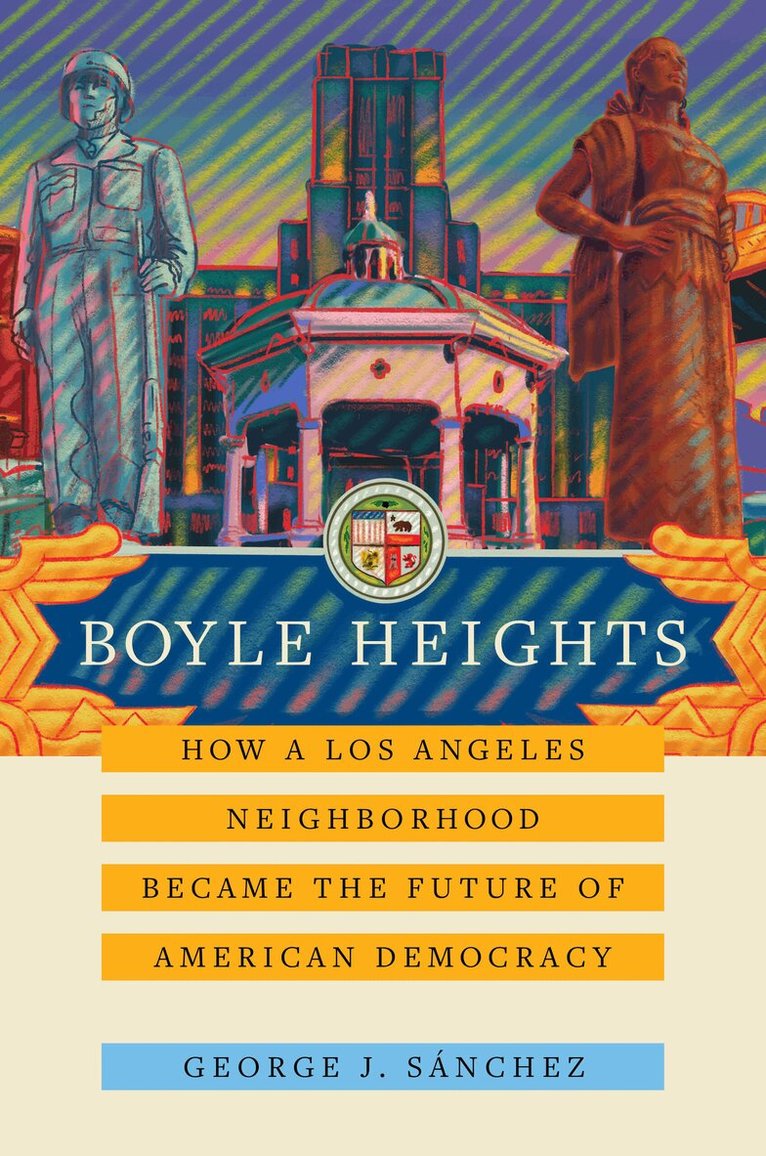
Boyle Heights
How a Los Angeles Neighborhood Became the Future of American Democracy
Inbunden, Engelska, 2021
251 kr
Skickas inom 7-10 vardagar
The radical history of a dynamic, multiracial American neighborhood.“When I think of the future of the United States, and the history that matters in this country, I often think of Boyle Heights.”—George J. SánchezThe vision for America’s cross-cultural future lies beyond the multicultural myth of the "great melting pot." That idea of diversity often imagined ethnically distinct urban districts—the Little Italys, Koreatowns, and Jewish quarters of American cities—built up over generations and occupying spaces that excluded one another. But the neighborhood of Boyle Heights shows us something altogether different: a dynamic, multiracial community that has forged solidarity through a history of social and political upheaval.Boyle Heights is an in-depth history of the Los Angeles neighborhood, showcasing the potent experiences of its residents, from early contact between Spanish colonizers and native Californians to the internment of Japanese Americans during World War II, the hunt for hidden Communists among the Jewish population, negotiating citizenship and belonging among Latino migrants and Mexican American residents, and beyond. Through each period and every struggle, the residents of Boyle Heights have maintained remarkable solidarity across racial and ethnic lines, acting as a unified polyglot community even as their tribulations have become more explicitly racial in nature. Boyle Heights is immigrant America embodied, and it can serve as the true beacon on a hill toward which the country can strive in a time when racial solidarity and civic resistance have never been in greater need.
Del 59 - American Crossroads
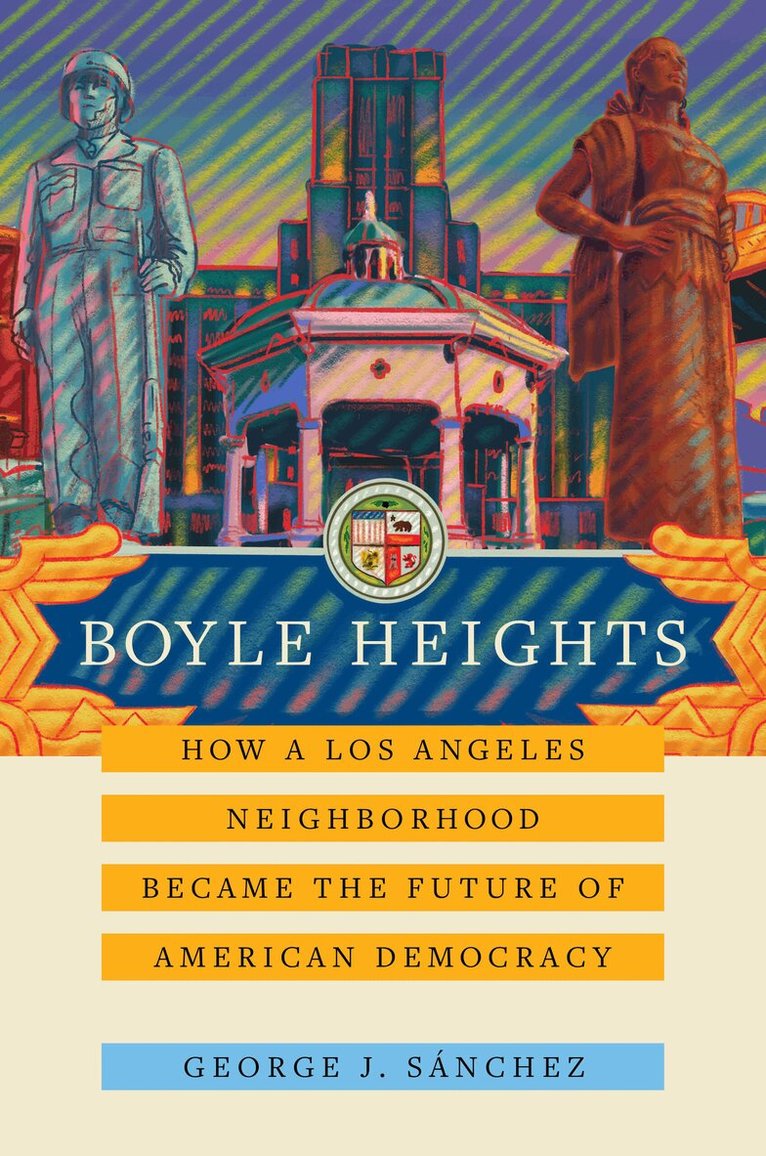
Boyle Heights
How a Los Angeles Neighborhood Became the Future of American Democracy
Häftad, Engelska, 2022
196 kr
Skickas
The radical history of a dynamic, multiracial American neighborhood.“When I think of the future of the United States, and the history that matters in this country, I often think of Boyle Heights.”—George J. SánchezThe vision for America’s cross-cultural future lies beyond the multicultural myth of the "great melting pot." That idea of diversity often imagined ethnically distinct urban districts—the Little Italys, Koreatowns, and Jewish quarters of American cities—built up over generations and occupying spaces that excluded one another. But the neighborhood of Boyle Heights shows us something altogether different: a dynamic, multiracial community that has forged solidarity through a history of social and political upheaval.Boyle Heights is an in-depth history of the Los Angeles neighborhood, showcasing the potent experiences of its residents, from early contact between Spanish colonizers and native Californians to the internment of Japanese Americans during World War II, the hunt for hidden Communists among the Jewish population, negotiating citizenship and belonging among Latino migrants and Mexican American residents, and beyond. Through each period and every struggle, the residents of Boyle Heights have maintained remarkable solidarity across racial and ethnic lines, acting as a unified polyglot community even as their tribulations have become more explicitly racial in nature. Boyle Heights is immigrant America embodied, and it can serve as the true beacon on a hill toward which the country can strive in a time when racial solidarity and civic resistance have never been in greater need.
248 kr
Tillfälligt slut
This special issue of American Quarterly focuses on Los Angeles as an emblematic site through which the scholarship of American studies can be examined. As a city shaped by eighteenth-century European colonization, nineteenth-century U.S. territorial expansion, and twentieth-century migration, Los Angeles has come to embody both the hopes and fears of Americans looking to the future. It is a city in which the local is deployed in complex practices of identity and community formation within the broader networks of globalization that continue to define and redefine what constitutes America. The articles in this volume address the complexities of the city's social geography across time, particularly since World War II. The collection reflects an exciting variety of cultural studies perspectives and reveals the synergistic possibilities of current Los Angeles studies and American studies in general. American Quarterly includes interdisciplinary scholarship that engages key issues in American studies.Publishing essays that examine American societies and cultures in global and local contexts, the journal contributes to the understanding of the United States, its diversity, and its impact on world politics and culture.
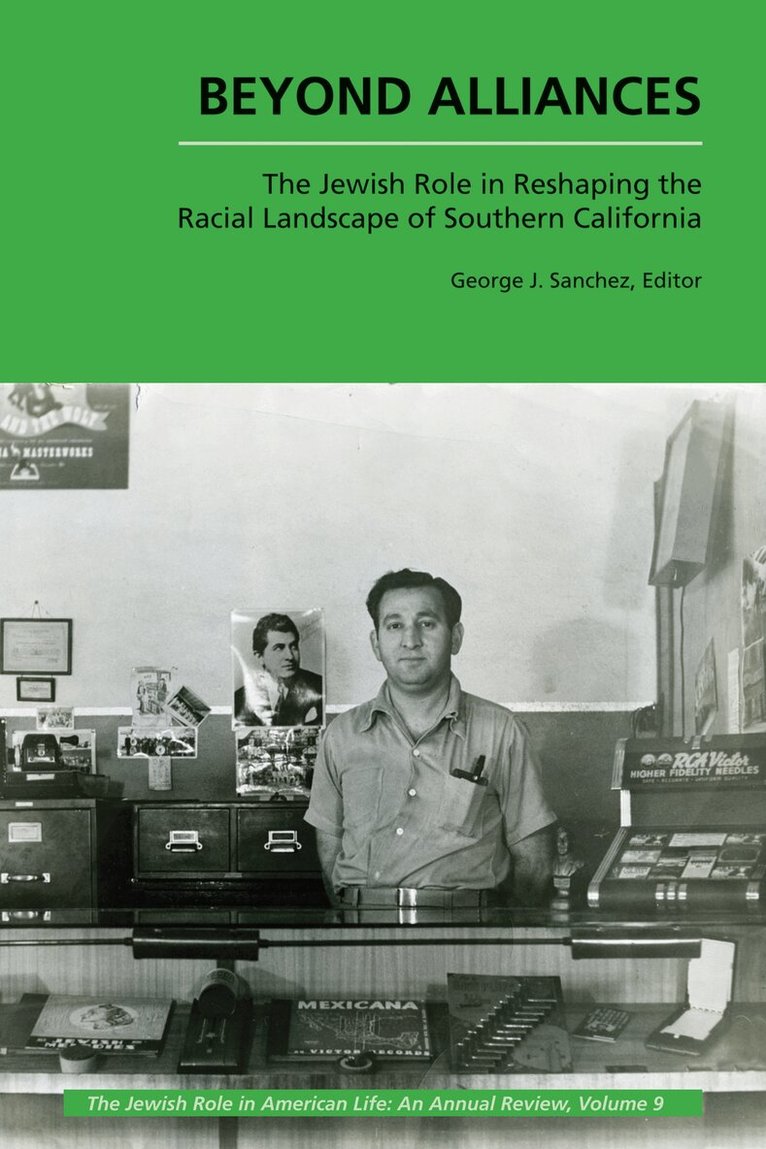
Beyond Alliances
The Jewish Role in Reshaping the Racial Landscape of Southern California
Häftad, Engelska, 2023
314 kr
Skickas inom 10-15 vardagar
This volume focuses on the special role that Jews played in reshaping the racial landscape of southern California in the twentieth century. Rather than considering this issue in terms of broad analyses of organizations or communities, each contribution instead approaches it by examining the activity of a single Jewish individual, and how he or she navigated the social terrain of a changing southern California. In particular, this volume is one of the first to take seriously the unique racial/ethnic makeup of southern California for Jewish activism, with a particular focus on the relationship between Jews and Mexican Americans in the area around Los Angeles. The Jewish individuals who are this volume's subjects represent a wide spectrum of backgrounds and perspectives, ranging from an elected official to an activist lawyer, and from a local businessman to a Democratic Party organizer. The volume culminates with an interview with one of the most beloved of local university rabbis, who has been operating in the ever-changing environment of higher education in Los Angeles over the past thirty years. While its overall message is one of optimism, the volume does not shy away from taking on some of the more vexed issues in the scholarship of racial/ethnic interaction. While Jewish activism in shaping local civil rights is thoroughly discussed, the specific and unequal dynamics of power within the civil rights community is also analyzed. The changing relationship of Jews to "whiteness" in southern California during the late twentieth century, in both geographic and political terms, shapes many of these ongoing relationships. Finally, the volume provides a unique historical perspective on our understanding of contemporary Los Angeles in all its ethnic complexity, and specifically in thinking through the future of Jewish role in urban southern California.