George N. Saridis - Böcker
Visar alla böcker från författaren George N. Saridis. Handla med fri frakt och snabb leverans.
6 produkter
6 produkter
1 578 kr
Skickas inom 10-15 vardagar
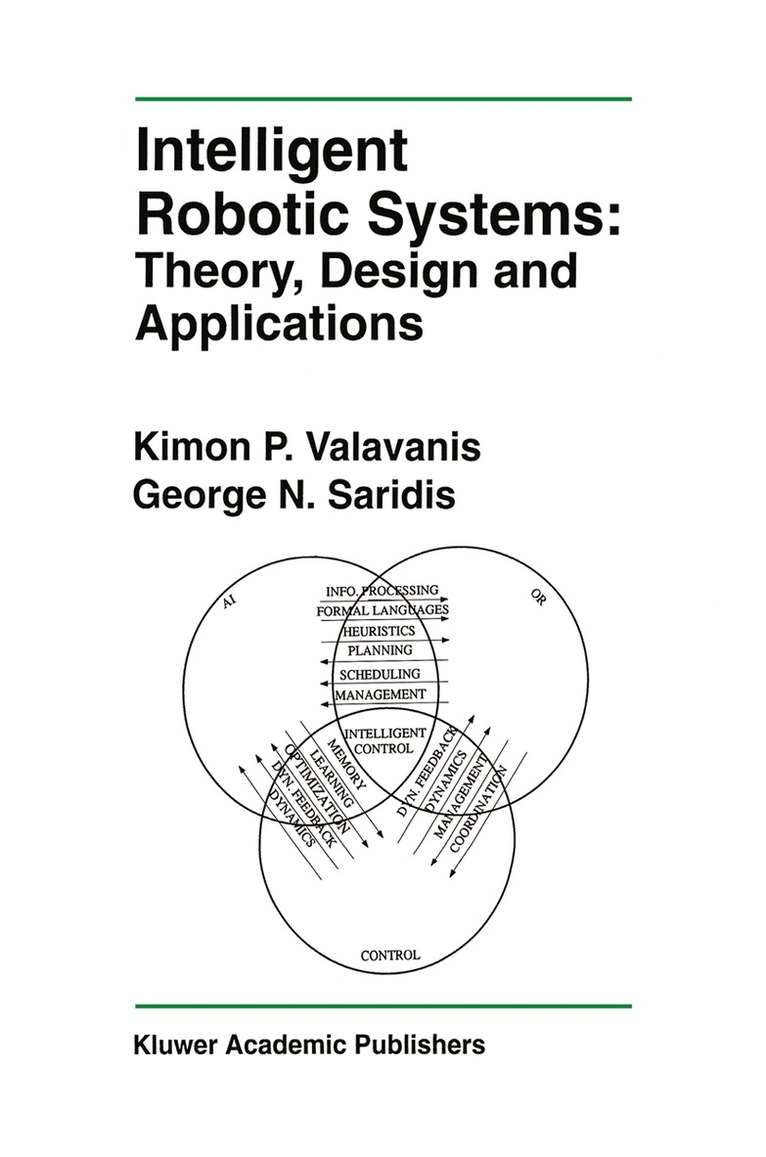
Since the late 1960s there has been a revolution in robotics and industrial automation, from the design of robots with no computing or sensory capabilities (first-generation), to the design of robots with limited computational power and feedback capabilities (second-generation), and the design of intelligent robots (third-generation), which possess diverse sensing and decision making capabilities. The development of the theory of intelligent machines has been developed in parallel to the advances in robot design. The theory is the natural outcome of research and development in classical control (1950s), adaptive and learning control (1960s), self-organizing control (1970s), and intelligent control systems (1980s). The theory of intelligent machines involves utilization and integration of concepts and ideas from the diverse disciplines of science, engineering and mathematics, and fields like artificial intelligence, system theory and operations research. The main focus and motivation is to bridge the gap between the diverse disciplines involved and bring under a common cover several generic methodologies pertaining to what has been defined as machine intelligence.Intelligent robotic systems are a specific application of intelligent machines. They are complex computer controlled robotic systems equipped with a diverse set of visual and non visual sensors and possess decision making and problem solving capabilities within their domain of operation. Their modelling and control is accomplished via analytical and heuristic methodologies and techniques pertaining to generalized system theory and artificial intelligence. "Intelligent Robotic Systems: Theory, Design and Applications" presents and justifies the fundamental concepts and ideas associated with the modelling and analysis of intelligent robotic systems. Appropriate for researchers and engineers in the general area of robotics and automation, "Intelligent Robotic Systems" is also intended for graduate-level courses in intelligent robotics/machines.
1 578 kr
Skickas inom 10-15 vardagar
Since the late 1960s, there has been a revolution in robots and industrial automation, from the design of robots with no computing or sensorycapabilities (first-generation), to the design of robots with limited computational power and feedback capabilities (second-generation), and the design of intelligent robots (third-generation), which possess diverse sensing and decision making capabilities. The development of the theory of intelligent machines has been developed in parallel to the advances in robot design. This theory is the natural outcome of research and development in classical control (1950s), adaptive and learning control (1960s), self-organizing control (1970s) and intelligent control systems (1980s). The theory of intelligent machines involves utilization and integration of concepts and ideas from the diverse disciplines of science, engineering and mathematics, and fields like artificial intelligence, system theory and operations research. The main focus and motivation is to bridge the gap between diverse disciplines involved and bring under a common cover several generic methodologies pertaining to what has been defined as machine intelligence. Intelligent robotic systems are a specific application of intelligent machines. They are complex computer controlled robotic systems equipped with a diverse set of visual and non visual sensors and possess decision making and problem solving capabilities within their domain of operation. Their modeling and control is accomplished via analytical and heuristic methodologies and techniques pertaining to generalized system theory and artificial intelligence. Intelligent Robotic Systems: Theory, Design and Applications, presents and justifies the fundamental concepts and ideas associated with the modeling and analysis of intelligent robotic systems. Appropriate for researchers and engineers in the general area of robotics and automation, Intelligent Robotic Systems is both a solid reference as well as a text for a graduate level course in intelligent robotics/machines.
Del 2 - Series In Intelligent Control And Intelligent Automation
Design Of Intelligent Control Systems Based On Hierarchical Stochastic Automata
Inbunden, Engelska, 1996
1 049 kr
Tillfälligt slut
In recent years works done by most researchers towards building autonomous intelligent controllers frequently mention the need for a methodology of design and a measure of how successful the final result is. This monograph introduces a design methodology for intelligent controllers based on the analytic theory of intelligent machines introduced by Saridis in the 1970s. The methodology relies on the existing knowledge about designing the different sub-systems composing an intelligent machine. Its goal is to provide a performance measure applicable to any of the sub-systems, and use that measure to learn on-line the best among the set of pre-designed alternatives, given the state of the environment where the machine operates. Different designs can be compared using this novel approach.
Del 1 - Series In Intelligent Control And Intelligent Automation
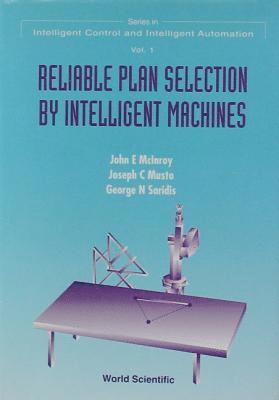
Reliable Plan Selection By Intelligent Machines
Inbunden, Engelska, 1996
790 kr
Tillfälligt slut
This book derives techniques which allow reliable plans to be automatically selected by Intelligent Machines. It concentrates on the uncertainty analysis of candidate plans so that a highly reliable candidate may be identified and used. For robotic components, such as a particular vision algorithm for pose estimation or a joint controller, methods are explained for directly calculating the reliability. However, these methods become excessively complex when several components are used together to complete a plan. Consequently, entropy minimization techniques are used to estimate which complex tasks will perform reliably. The book first develops tools for directly calculating the reliability of sub-systems, and methods of using entropy minimization to greatly facilitate the analysis are explained. Since these sub-systems are used together to accomplish complex tasks, the book then explains how complex tasks can be efficiently evaluated.
Del 12 - Series In Intelligent Control And Intelligent Automation
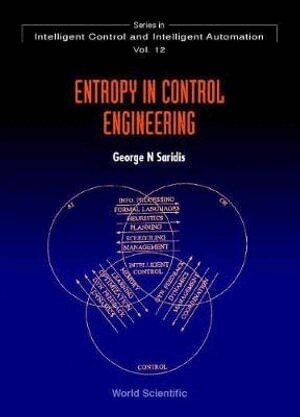
Entropy In Control Engineering
Inbunden, Engelska, 2001
1 083 kr
Tillfälligt slut
This book attempts to couple control engineering with modern developments in science, through the concept of entropy. Such disciplines as intelligent machines, economics, manufacturing, environmental systems, waste etc. can be favorably affected and their performance can be improved or their catastrophic effects minimized. Entropy is used as the unifying measure of the various, seemingly disjoint, disciplines to represent the cost of producing work that improves the standard of living, both in engineering and in science. Modeling is done through probabilistic methods, thus establishing the irreversibility of the processes involved. This is in accordance with the modern view of science. In addition, the behavior of control for an arbitrary but fixed controller away from the optimal (equilibrium) has been obtained, the analytic expression of which should lead to chaotic solutions. The control activity is explained, based on the principle that control is making a system do what we want it to do. This helps to relate control theory with the sciences.
832 kr
Tillfälligt slut
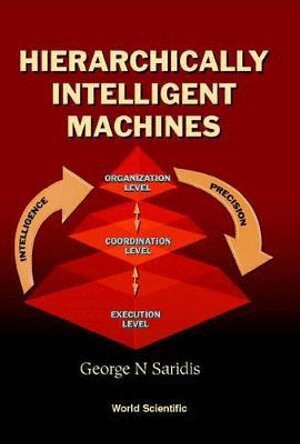
This book presents the result of 30 years' work on the original material related to “thinking machines”, a subject initiated by the author and his colleagues. It is based on the ability of the computer to represent the hierarchical procedure of task conception and execution found in human beings. It is arranged in three levels representing the structure of organizational systems: organization, coordination and execution. Hierarchically Intelligent Machines can serve as a guide to modern intelligent robots.