George P. Knight - Böcker
Visar alla böcker från författaren George P. Knight. Handla med fri frakt och snabb leverans.
2 produkter
2 produkter
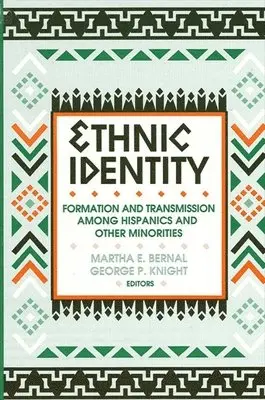
Ethnic Identity
Formation and Transmission among Hispanics and Other Minorities
Häftad, Engelska, 1993
594 kr
Skickas inom 3-6 vardagar
This book provides broad coverage of the various research approaches that have been used to study the development of ethnic identity in children and adolescents and the transmission of ethnic identity across generations. The authors address topics of acculturation and the development and socialization of ethnic minorities-particularly Mexican-Americans. They stress the roles of social and behavioral scientists in government multicultural policies, and the nature of possible ethnic group responses to such policies for cultural maintenance and adaptation.
Studying Ethnic Minority and Economically Disadvantaged Populations
Methodological Challenges and Best Practices
Inbunden, Engelska, 2009
427 kr
Tillfälligt slut
Ethnic minority and economically disadvantaged populations have been historically underrepresented in social science research, and despite improvements in recent years, this trend continues today. Given the rapidly changing demographics of the United States, there is an acute need for more targeted research on these populations, which requires an understanding of diversity and a more nuanced understanding of human behavior and outcomes. Unfortunately, there is a relative dearth of information in standard research texts regarding the unique methodological challenges associated with conducting research with these populations. George P. Knight, Mark W. Roosa, and Adriana J. Umana-Taylor have filled that gap with a book that identifies strategies for overcoming the obstacles social scientists routinely face in these situations. In this volume, the authors: discuss strategies for resolving typical problems in sampling, recruitment and retention; address ethical issues associated with researching these populations; examine issues associated with measurement and the importance of measurement equivalence; describe potential linguistic problems with translated measures and provide solutions to maintain the credibility of scientific inferences based on those measures, and; present strategies for adapting previously published preventive interventions for use with ethnic minority and low-income populations. Throughout, the authors combine firsthand experience with a thorough and incisive understanding of the literature. The result is a vital, comprehensive resource that will be a great help for students and experienced researchers alike.