George P. Smith - Böcker
Visar alla böcker från författaren George P. Smith. Handla med fri frakt och snabb leverans.
5 produkter
5 produkter
1 009 kr
Skickas inom 10-15 vardagar
Beset by socio-legal challenges, medical, and scientific advances in reproduction, feminist philosophies and complex questions regarding its contemporary relevance, the family—together with the core values that have sustained over the years—is being tested, re-evaluated, and redesigned. This book directs its focus to the current national debate on family values providing a strong and practical framework for decisionmaking in topical problem areas which integrate the social sciences, law, medicine, political science, economics, ethics, philosophy, and religion.This book analyzes both from a practical and scholastic perspective, nine areas of central focus or challenge to mainstream notions of the family. Feminist perspectives on reproductive rights and responsibilities, domestic partnerships and same-sex relationships, and new assisted reproductive technologies (such as organ harvesting and child abuse) are just some of the issues discussed as they relate to individuals and to the family and the values that have been the backbone of American life. The author suggests an ethical ordering that balances traditional strengths of American life with accomodation for new normative standards.
2 117 kr
Skickas inom 5-8 vardagar
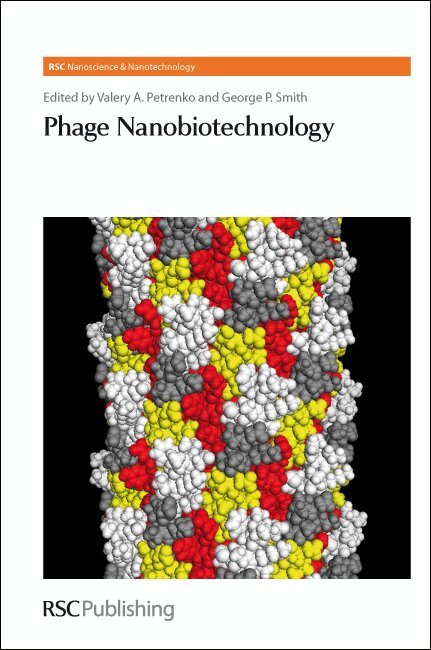
Several books and many papers have been published during the last decade on the design and the use of new nanomaterials in medicine and technology, which describe major concepts of nanotechnology. Meanwhile, a new promising type of nanomaterials-bacteriophages-emerged recently as a result of the evolution of phage display technique. Bacteriophages have a unique feature - completely the opposite of other nanomaterials -their structure and function are encrypted in their genomic DNA, which can be intentionally modified or even rewritten using routine genetic engineering techniques. In particular, a paradigm of landscape phage with multivalently displayed foreign peptides evolved, which allows constructing phage with unique surface architectures and emerged properties. Recently, phage, as a new kind of nanomaterials attracted the attention of specialists working in peripheral, and even very diverse areas from genetics and molecular biology, such as pharmaceutical science, material science, microelectronics, biosensors, detection, environmental sciences, etc. Penetration of the phage technology into these new disciplines required the development of a new instructive concept, which resulted in this publication. This comprehensive book, of value to researchers as well as scientists, introduces readers into this hot new area of phage nanobiotechnology. It summarises the existing data on the phage nanomaterials and discusses their use in different areas of medicine, science and technology. With contributions by top level experts and pioneers in phage display, the major goal of this book is to bring the phage display technique closer to specialists in these diverse areas of medicine, science and technology, where phage-derived nanomaterials can be most beneficial.
1 064 kr
Skickas inom 10-15 vardagar
Religion is a dominant force in the lives of many Americans. It animates, challenges, directs and shapes, as well, the legal, political, and scientific agendas of the new Age of Biotechnology. In a very real way, religion, biomedical technology and law are - epistemologically - different. Yet, they are equal vectors of force in defining reality and approaching an understanding of it. Indeed, all three share a synergetic relationship, for they seek to understand and improve the human condition.This book strikes a rich balance between thorough analysis (in the body), anchored in sound references to religion, law and medical scientific analysis, and a strong scholarly direction in the end notes. It presents new insights into the decision-making processes of the new Age of Biotechnology and shows how religion, law and medical science interact in shaping, directing and informing the political processes.This volume will be of interest to both scholars and practitioners in the fields of religion and theology, philosophy, ethics, (family) law, science, medicine, political science and public policy, and gender studies. It will serve as a reference source and can be used in graduate and undergraduate courses in law, medicine and religion.
473 kr
Skickas inom 10-15 vardagar
Dignity is seen, commonly, as an ethical obligation owed to human persons. The dimensions of this obligation are subject to wide discussion and defy universal agreement. Dignity is seen, commonly, as an ethical obligation owed to human persons. Dignity as a Human Right? examines dignity within the prism of death, and more particularly, its humane and dignified management. Although there is no domestic or international right to die with dignity, within the right to life should, arguably, be a right to dignity and self-determination especially at its end-stage; for, a powerful interface exists between the right to human dignity and the very right to life, to love and humanity as well as compassion at its conclusion. Legislative efforts--nationally and internationally--have begun to recognize a right to die with dignity when a condition of medical futility exists. There are presently five states and the District of Columbia, together with a judicial interpretation from the Montana Supreme Court, which recognize death assistance for the terminally ill. Internationally, Canada, Belgium, the Netherlands, and Switzerland are seen as leaders in this recognition. The United Nations has played a significant role in framing end-of-life decision making within the ambit of human rights protection. The UN Charter states unequivocally that the dignity and worth of the human person must be protected and safeguarded. Similarly, among other instruments, the Universal Declaration on Human Rights acknowledges that all human beings are born free and equal in dignity and rights.
1 064 kr
Skickas inom 10-15 vardagar
Religion is a dominant force in the lives of many Americans. It animates, challenges, directs and shapes, as well, the legal, political, and scientific agendas of the new Age of Biotechnology. In a very real way, religion, biomedical technology and law are - epistemologically - different. Yet, they are equal vectors of force in defining reality and approaching an understanding of it. Indeed, all three share a synergetic relationship, for they seek to understand and improve the human condition.This book strikes a rich balance between thorough analysis (in the body), anchored in sound references to religion, law and medical scientific analysis, and a strong scholarly direction in the end notes. It presents new insights into the decision-making processes of the new Age of Biotechnology and shows how religion, law and medical science interact in shaping, directing and informing the political processes.This volume will be of interest to both scholars and practitioners in the fields of religion and theology, philosophy, ethics, (family) law, science, medicine, political science and public policy, and gender studies. It will serve as a reference source and can be used in graduate and undergraduate courses in law, medicine and religion.