Georges Rey - Böcker
Visar alla böcker från författaren Georges Rey. Handla med fri frakt och snabb leverans.
6 produkter
6 produkter
1 430 kr
Skickas inom 5-8 vardagar
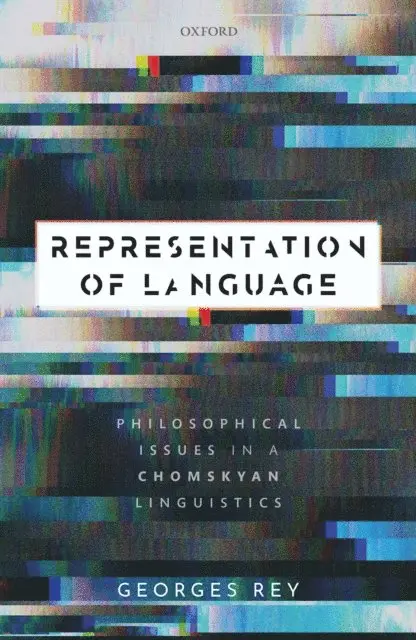
This book is a defense of a Chomskyan conception of language against philosophical objectionsthat have been raised against it. It also provides, however, a critical examination of some of the glosses on the theory: the assimilation of it to traditional Rationalism; a supposed conflict between being innate and learned; an unclear ontology and the need of a "representational pretense" with regard to it; and, most crucially, a rejection of Chomsky's eliminativism about the role of intentionality not only in his own theories, but in any serious science at all. This last is a fundamentally important issue for linguistics, psychology, and philosophy that an examination of a theory as rich and promising as a Chomskyan linguistics should help illuminate. The book ends with a discussion of some further issues that Chomsky misleadingly associates with his theory: an anti-realism about ordinary thought and talk, and a dismissal of the mind/body problem(s), towards the solution of some of which his theory in fact makes an important contribution.
484 kr
Skickas inom 7-10 vardagar
Even in the eyes of many of his critics, Fodor is widely regarded as the most important philosopher of psychology of his generation. With Noam Chomsky at MIT in the 1960s he mounted a strenuous attack on the behaviourism that then dominated psychology and most philosophy of mind, and since then, he has articulated and defended in considerable richness and detail a computational theory of intentional causation that is central to the emerging cognitive sciences. This theory provides a framework both for the resolution of many traditional problems in the philosophy of mind and language, and for actual psychological research and experimentation. The present volume contains 16 contributions by philosophers and cognitive scientists who have been critical of this theory, followed by replies Fodor makes to each of them. There is alos a lengthy introduction that provides an overview of Fodor's views and their relation to this critical discussion.
1 492 kr
Skickas inom 7-10 vardagar
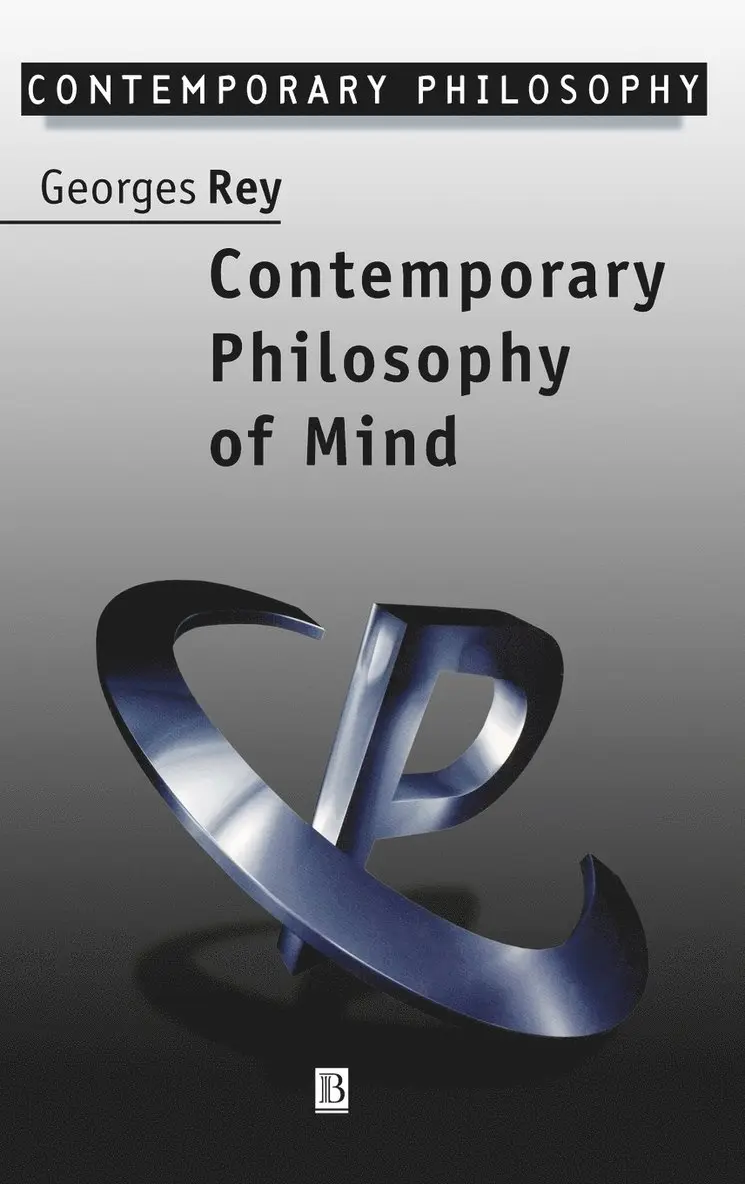
This volume is an introduction to contemporary debates in the philosophy of mind. In particular, the author focuses on the controversial "eliminativist" and "instrumentalist" attacks - from philosophers such as of Quine, Dennett, and the Churchlands - on our ordinary concept of mind. In so doing, Rey offers an explication and defense of "mental realism", and shows how Fodor's representational theory of mind affords a compelling account of much of our ordinary mental talk of beliefs, hopes, and desires.
506 kr
Skickas inom 7-10 vardagar
This volume is an introduction to contemporary debates in the philosophy of mind. In particular, the author focuses on the controversial "eliminativist" and "instrumentalist" attacks - from philosophers such as of Quine, Dennett, and the Churchlands - on our ordinary concept of mind. In so doing, Rey offers an explication and defense of "mental realism", and shows how Fodor's representational theory of mind affords a compelling account of much of our ordinary mental talk of beliefs, hopes, and desires.
1 984 kr
Skickas inom 7-10 vardagar
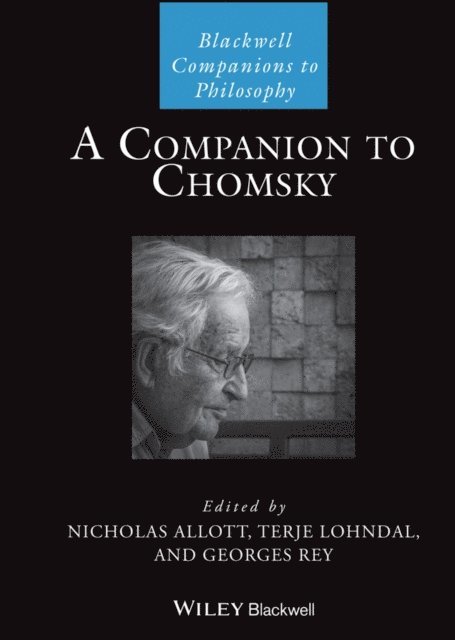
Widely considered to be one of the most important public intellectuals of our time, Noam Chomsky has revolutionized modern linguistics. His thought has had a profound impact upon the philosophy of language, mind, and science, as well as the interdisciplinary field of cognitive science which his work helped to establish. Now, in this new Companion dedicated to his substantial body of work and the range of its influence, an international assembly of prominent linguists, philosophers, and cognitive scientists reflect upon the interdisciplinary reach of Chomsky’s intellectual contributions. Balancing theoretical rigor with accessibility to the non-specialist, the Companion is organized into eight sections—including the historical development of Chomsky’s theories and the current state of the art, comparison with rival usage-based approaches, and the relation of his generative approach to work on linguistic processing, acquisition, semantics, pragmatics, and philosophy of language. Later chapters address Chomsky’s rationalist critique of behaviorism and related empiricist approaches to psychology, as well as his insistence upon a “Galilean” methodology in cognitive science. Following a brief discussion of the relation of his work in linguistics to his work on political issues, the book concludes with an essay written by Chomsky himself, reflecting on the history and character of his work in his own words. A significant contribution to the study of Chomsky’s thought, A Companion to Chomsky is an indispensable resource for philosophers, linguists, psychologists, advanced undergraduate and graduate students, and general readers with interest in Noam Chomsky’s intellectual legacy as one of the great thinkers of the twentieth century.
468 kr
Skickas inom 7-10 vardagar
Widely considered to be one of the most important public intellectuals of our time, Noam Chomsky has revolutionized modern linguistics. His thought has had a profound impact upon the philosophy of language, mind, and science, as well as the interdisciplinary field of cognitive science which his work helped to establish. Now, in this new Companion dedicated to his substantial body of work and the range of its influence, an international assembly of prominent linguists, philosophers, and cognitive scientists reflect upon the interdisciplinary reach of Chomsky’s intellectual contributions. Balancing theoretical rigor with accessibility to the non-specialist, the Companion is organized into eight sections—including the historical development of Chomsky’s theories and the current state of the art, comparison with rival usage-based approaches, and the relation of his generative approach to work on linguistic processing, acquisition, semantics, pragmatics, and philosophy of language. Later chapters address Chomsky’s rationalist critique of behaviorism and related empiricist approaches to psychology, as well as his insistence upon a “Galilean” methodology in cognitive science. Following a brief discussion of the relation of his work in linguistics to his work on political issues, the book concludes with an essay written by Chomsky himself, reflecting on the history and character of his work in his own words. A significant contribution to the study of Chomsky’s thought, A Companion to Chomsky is an indispensable resource for philosophers, linguists, psychologists, advanced undergraduate and graduate students, and general readers with interest in Noam Chomsky’s intellectual legacy as one of the great thinkers of the twentieth century.