Georgia L. Irby-Massie - Böcker
Visar alla böcker från författaren Georgia L. Irby-Massie. Handla med fri frakt och snabb leverans.
4 produkter
4 produkter
1 742 kr
Skickas inom 10-15 vardagar
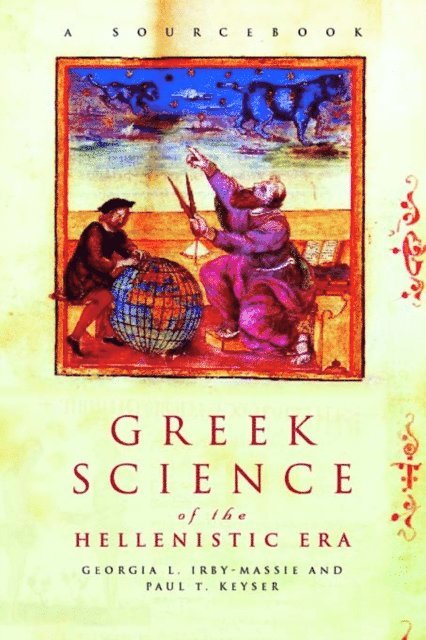
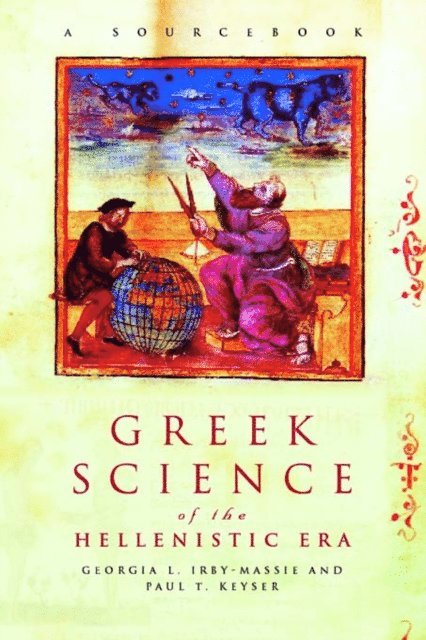
We all want to understand the world around us, and the ancient Greeks were the first to try and do so in a way we can properly call scientific. Their thought and writings laid the essential foundations for the revivals of science in medieval Baghdad and renaissance Europe. Now their work is accessible to all, with this invaluable introduction to c.100 scientific authors active from 320 BCE to 230 CE.The book begins with an outline of a new socio-political model for the development and decline of Greek science, followed by eleven chapters that cover the main disciplines:* the science which the Greeks saw as fundamental - mathematics* astronomy* astrology and geography* mechanics* optics and pneumatics* the non-mathematical sciences of alchemy, biology, medicine and 'psychology'.Each chapter contains an accessible introduction on the origins and development of the topic in question, and all the authors are set in context with brief biographies.
646 kr
Skickas inom 10-15 vardagar
We all want to understand the world around us, and the ancient Greeks were the first to try and do so in a way we can properly call scientific. Their thought and writings laid the essential foundations for the revivals of science in medieval Baghdad and renaissance Europe. Now their work is accessible to all, with this invaluable introduction to c.100 scientific authors active from 320 BCE to 230 CE.The book begins with an outline of a new socio-political model for the development and decline of Greek science, followed by eleven chapters that cover the main disciplines:* the science which the Greeks saw as fundamental - mathematics* astronomy* astrology and geography* mechanics* optics and pneumatics* the non-mathematical sciences of alchemy, biology, medicine and 'psychology'.Each chapter contains an accessible introduction on the origins and development of the topic in question, and all the authors are set in context with brief biographies.
Encyclopedia of Ancient Natural Scientists
The Greek Tradition and its Many Heirs
Inbunden, Engelska, 2008
5 420 kr
Skickas inom 10-15 vardagar
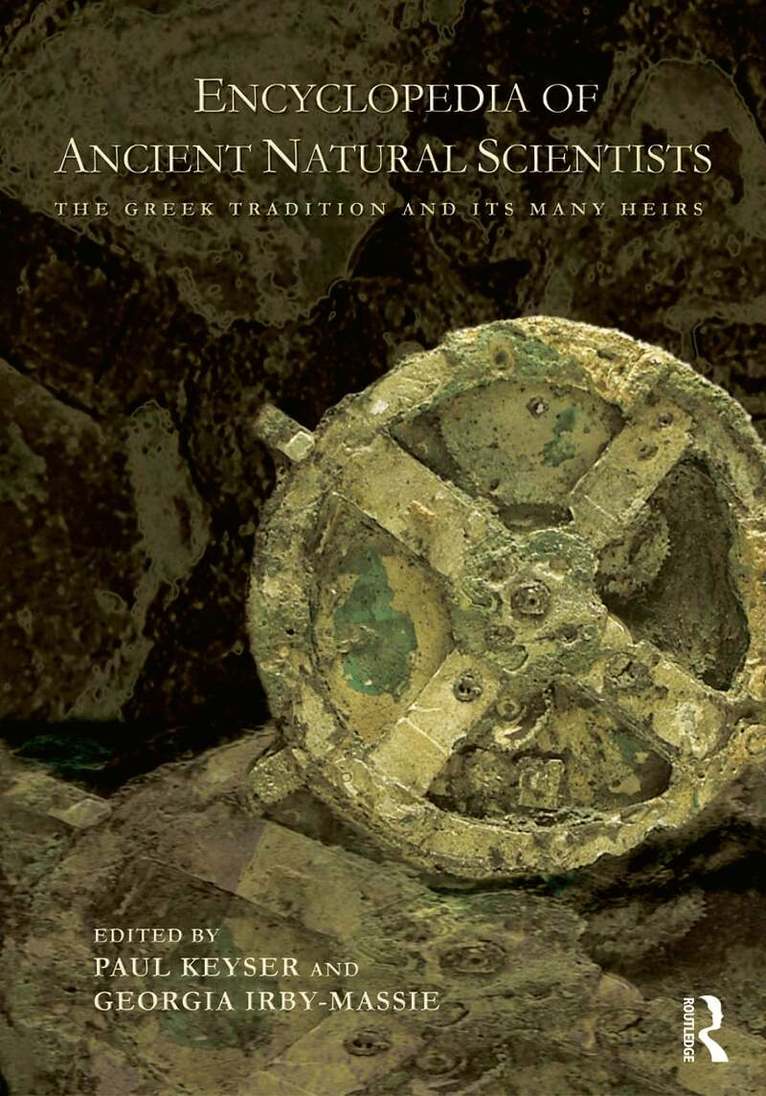
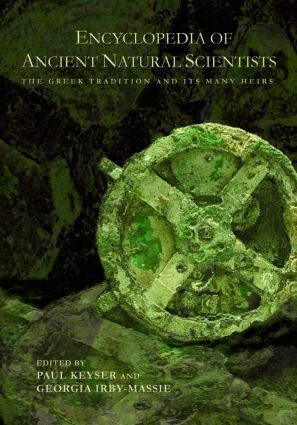
The Encyclopedia of Ancient Natural Scientists is the first comprehensive English language work to provide a survey of all ancient natural science, from its beginnings through the end of Late Antiquity. A team of over 100 of the world’s experts in the field have compiled this Encyclopedia, including entries which are not mentioned in any other reference work – resulting in a unique and hugely ambitious resource which will prove indispensable for anyone seeking the details of the history of ancient science.Additional features include a Glossary, Gazetteer, and Time-Line. The Glossary explains many Greek (or Latin) terms difficult to translate, whilst the Gazetteer describes the many locales from which scientists came. The Time-Line shows the rapid rise in the practice of science in the 5th century BCE and rapid decline after Hadrian, due to the centralization of Roman power, with consequent loss of a context within which science could flourish.
Encyclopedia of Ancient Natural Scientists
The Greek Tradition and its Many Heirs
Häftad, Engelska, 2011
951 kr
Skickas inom 10-15 vardagar
The Encyclopedia of Ancient Natural Scientists is the first comprehensive English language work to provide a survey of all ancient natural science, from its beginnings through the end of Late Antiquity. A team of over 100 of the world’s experts in the field have compiled this Encyclopedia, including entries which are not mentioned in any other reference work – resulting in a unique and hugely ambitious resource which will prove indispensable for anyone seeking the details of the history of ancient science.Additional features include a Glossary, Gazetteer, and Time-Line. The Glossary explains many Greek (or Latin) terms difficult to translate, whilst the Gazetteer describes the many locales from which scientists came. The Time-Line shows the rapid rise in the practice of science in the 5th century BCE and rapid decline after Hadrian, due to the centralization of Roman power, with consequent loss of a context within which science could flourish.