Gerald Brisch - Böcker
Visar alla böcker från författaren Gerald Brisch. Handla med fri frakt och snabb leverans.
5 produkter
5 produkter
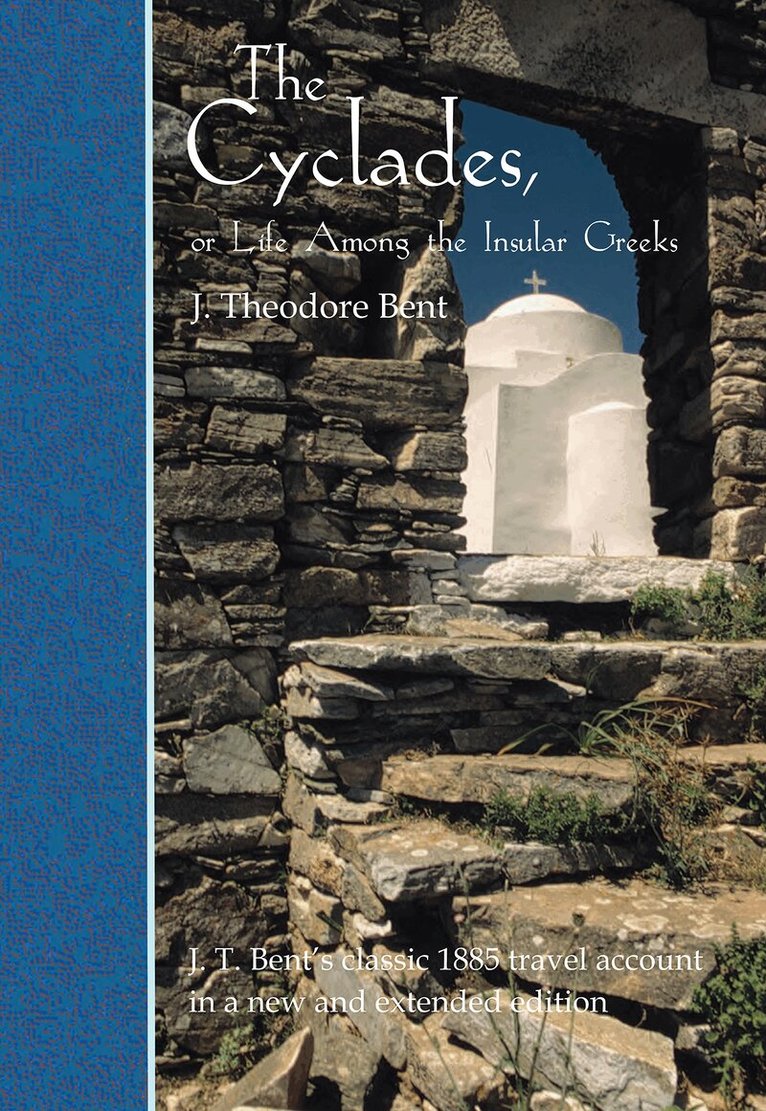
Cyclades, or Life Among the Insular Greeks
First Published in 1885, a revised edition with additional material
Häftad, Engelska, 2002
232 kr
Skickas
James Theodore Bent (1852-1897) was an Oxford-educated archaeologist, historian and explorer who dedicated his short life to researches in the Levant and Africa. In the winters of 1882-84 he and his wife, Mabel Hall-Dare, made extended tours of the Cycladic islands and in 1885 Bent published what has become a classic account of their wanderings and discoveries in what is now one of the best-loved regions of Greece. His island-by-island journals are a fascinating insight into Greek community living at the turn of the 19th century, and the work established Bent as a traveller of note. As might be expected, most of the major sites and sights are detailed, as well as references to customs and costumes, hospitality and hardship, history, folklore and myth. No account in English, then or since, has come close in terms of scope and achievement. (On a scholarly level, Bent was the first English archaeologist to undertake serious excavation work in the region and his findings on the small island of Antiparos (included here) are still referred to in current bibliographies.) As far as the publishers are aware, no English language edition of Bent’s Cyclades is currently easily available. This new edition of Bent’s 1885 work is accompanied by a newly commissioned biographical introduction and a series of notes including route-planner, and historical and archaeological summaries. ‘Tozer of Oxford sends me a charming book…by Theodore Bent…all about the Cyclades. (Dearly beloved child let me announce to you that this word is pronounced ‘Sick Ladies,’ – howsomdever certain Britishers call it ‘Sigh-claides.’)…’ (Edward Lear writes to Chichester Fortescue, Lord Carlingford [30 April 1885, San Remo])
232 kr
Skickas
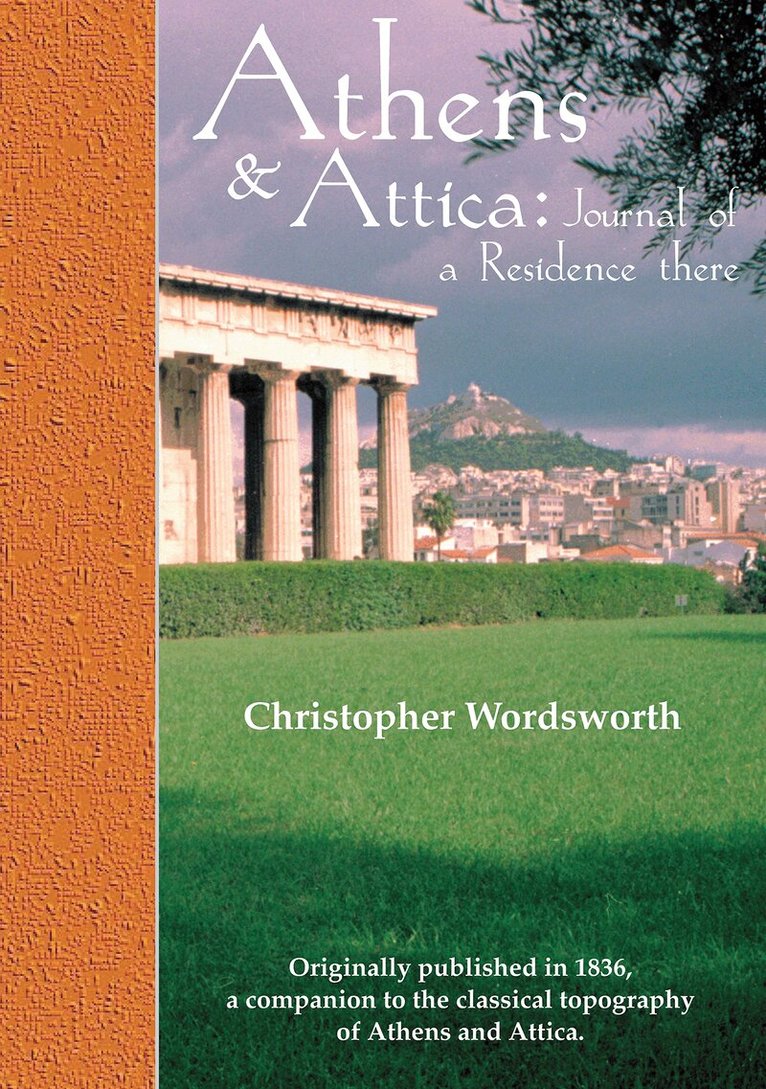
Christopher Wordsworth (1807-85), the “Great Christopher” of Winchester and Trinity College, Cambridge, was a nephew of William the poet, and brother to the student who launched the University Boat Race. In 1832 he took a gap-year, after his brilliant studies in ancient Greek and Latin classics, to travel back in time over two thousand years to Pericles’ Athens. The account of his tour, Athens and Attica (1836), is still the perfect scholarly companion to the history, topography, and myths of an area compact in dimension yet vast in terms of its contribution to Western civilization. “The Bazaar or Market at Athens is a long street. Looking up you command a view of the commodities. Barrels of black caviar, small pocket-looking-glasses in red pasteboard cases, onions, tobacco piled up in brown heaps, black olives, figs strung together upon a rush, pipes with amber mouthpieces and brown clay bowls, silver-chased pistols, dirks, belts, and embroidered waistcoats. Such is the present state of Athens…a few Turks still doze in the archways of the Acropolis, or recline while smoking their pipes, and leaning with their backs against the rusty cannon. A few days ago the cannon of the Acropolis fired the signal of the conclusion of the Turkish Ramazam – the last which will ever be celebrated in Athens.” – Christopher Wordsworth, 1832
Del 1 - The Travel Chronicles of Mrs J. Theodore Bent
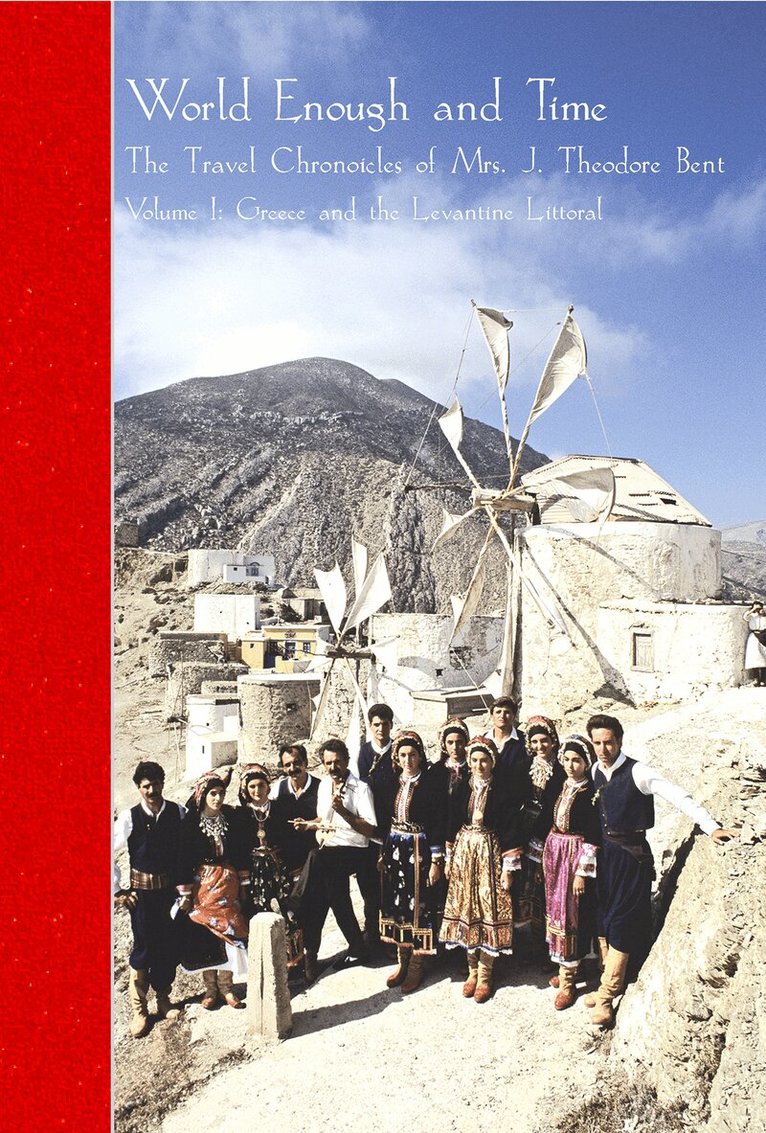
Travel Chronicles of Mrs J. Theodore Bent. Volume I: Greece and the Levantine Littoral
Mabel Bent's diaries of 1883-1898, from the archive of the Joint Library of the Hellenic and Roman Societies, London
Häftad, Engelska, 2006
438 kr
Skickas
“Then we went to the other bath. Here I found I was being again taken to the men’s place, so I said, ‘I’m not going in here’. But a great outcry was raised and loud exclamations of invitation and constant assurances that there was nobody naked, so when T said fiercely, ‘Come in and don’t make a fuss. They all wish it’, I entered a large hall with the raised divans peopled by gentry in cloaks and turbans of towels. There was fortunately no one in the hot bath as it deserved a careful examination. The wide platform round the tanks was inlaid with beautiful marbles and there were recesses with pumps, etc., also inlaid…” (Bursa, February 1888)On August 2nd 1877, the English explorer and archaeologist James Theodore Bent married an extraordinary Irishwoman, Mabel Virginia Anna Hall-Dare, the second of the four daughters born to Mr Robert Westley Hall-Dare of Co. Wexford and Essex. Mabel was 31, Theodore 25, and within a few months they had embarked on their pattern of annual travels that continued until his early death in 1897. Their trips began fairly close to home, visiting northern Italy, but by 1883 they were in the Eastern Mediterranean (in modern Greece and Turkey), searching out the antiquities, landscapes and lifestyles of a region that was to captivate them for the next fifteen years. Their researches led to a number of highly regarded monographs, papers and articles (such as Theodore’s 'The Cyclades, or Life Among the Insular Greeks', 1885, and the many publications of their various discoveries in locations such as ‘Rugged Cilicia’, the island of Thassos, and elsewhere) that were to place the couple securely amongst the foremost British travellers of the latter half of the 19th century.The publication, therefore, of Mabel Bent’s personal notebooks from the archive of the Joint Library of the Hellenic and Roman Societies, London, represents the discovery of a lost and notable milestone for scholars and travel enthusiasts of all kinds. This series of volumes begins with Mabel’s account of the couple’s adventures around the Aegean and beyond, extracted from her fifteen-year sequence of notebooks and presented chronologically. Specifically, we follow Mabel and Theodore to the Greek mainland and the islands known now as the Cyclades and the Dodecanese, as well as the northern Aegean islands; their journeys along the Turkish littoral lead them from bustling Istanbul to provincial Mersin in the far south-west. Contents include: Chapter 1) 1883-1884: The Cyclades – Mabel’s own accounts of the couple’s two tours of the Cyclades. Theodore relied on these Chronicles for the writing up of his classic travelogue ‘The Cyclades; or Life Among the Insular Greeks’ of 1885; Chapter 2) 1885: The Dodecanese – including Rhodes, Tilos and Karpathos; Chapter 3) 1886: The Eastern Aegean – including Samos, Patmos, Kalymnos and Astypalea; Chapter 4) 1887: The Northern Aegean – including Meteora, Thessaloniki, Thassos and Samothraki; Chapter 5) 1888: The Turkish Coast – from Istanbul to Kastellorizo; Chapter 6) 1890: ‘Rough Cilicia’ – extensive explorations around south-west Turkey.
Del 3 - The Travel Chronicles of Mrs J. Theodore Bent
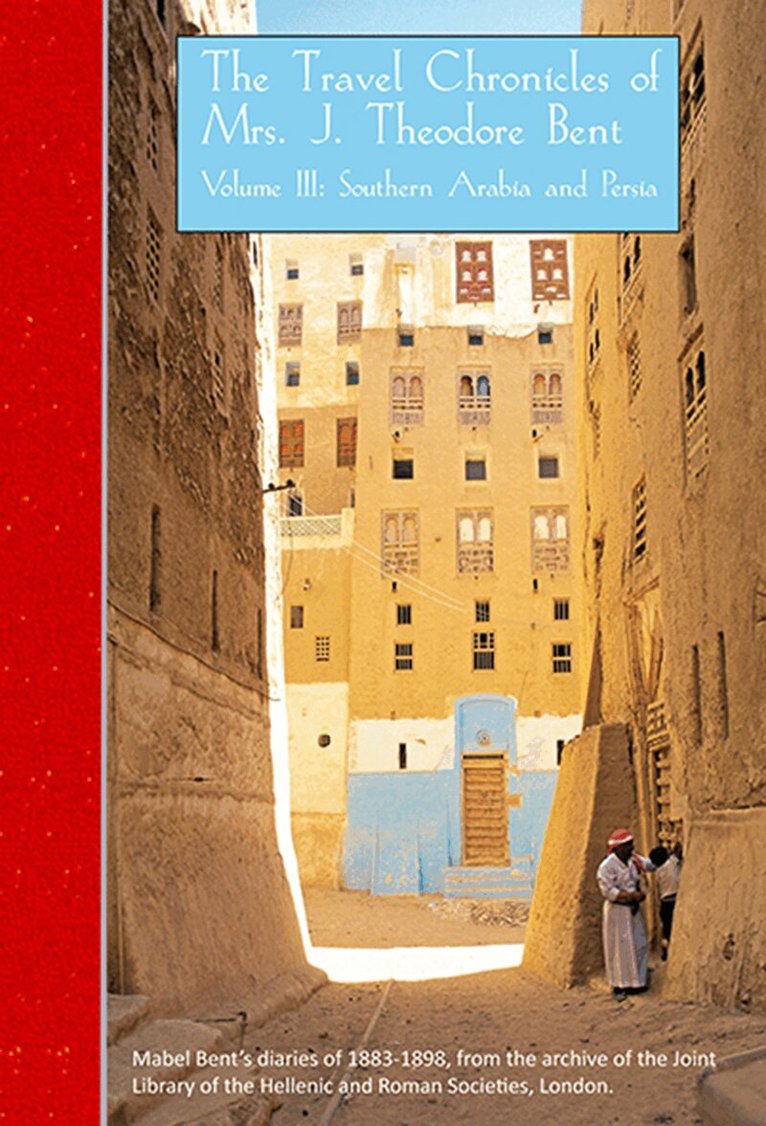
Travel Chronicles of Mrs J. Theodore Bent. Volume III: Southern Arabia and Persia
Mabel Bent's diaries of 1883-1898, from the archive of the Joint Library of the Hellenic and Roman Societies, London
Häftad, Engelska, 2010
449 kr
Skickas
“If my fellow-traveller had lived, he intended to have put together in book form such information as we had gathered about Southern Arabia. Now, as he died four days after our return from our last journey there, I have had to undertake the task myself. It has been very sad to me, but I have been helped by knowing that, however imperfect this book may be, what is written here will surely be a help to those who, by following in our footsteps, will be able to get beyond them, and to whom I so heartily wish success and a Happy Home-coming, the best wish a traveller may have.” So Mabel Bent (Mrs J. Theodore Bent) begins her Preface to Southern Arabia, one of the classic travel books written in English about this ever-fascinating region, in which she details the couple’s travels over a ten-year period. A testimony to the book’s high regard is that, since publication in 1900, it has rarely been out-of-print. Mabel Bent continues in her Preface to inform the reader that her volume is drawn in part from the note-books of her husband, her fellow-traveller, the redoubtable J. Theodore Bent (1852-97), and also “…from the ‘Chronicles’ that I always wrote during our journeys”. After more than a hundred years, and for the first time, these personal Chronicles on ‘South Arabia’ are published in World Enough, and Time: The Chronicles of Mabel Bent. Vol. III and are of significant interest to Arabists and those enthusiasts who will want to have Mabel’s on-the-spot account of their adventures and archaeological and ethnographical discoveries. Also included in this present volume is Mabel Bent’s previously unpublished Chronicle of their long journey through Persia, from south to north in 1889. Contents: Bahrein and Persia, 1889: The Hadhramaut, 1893–5; Socotra and the lands of the Fadhli and Yafai, 1896–7. Personal letters, documents, maps, and Mabel Bent’s own photographs contribute to this important insight into the lives of two of the great British travellers of the nineteenth century.
Del 2 - The Travel Chronicles of Mrs J. Theodore Bent
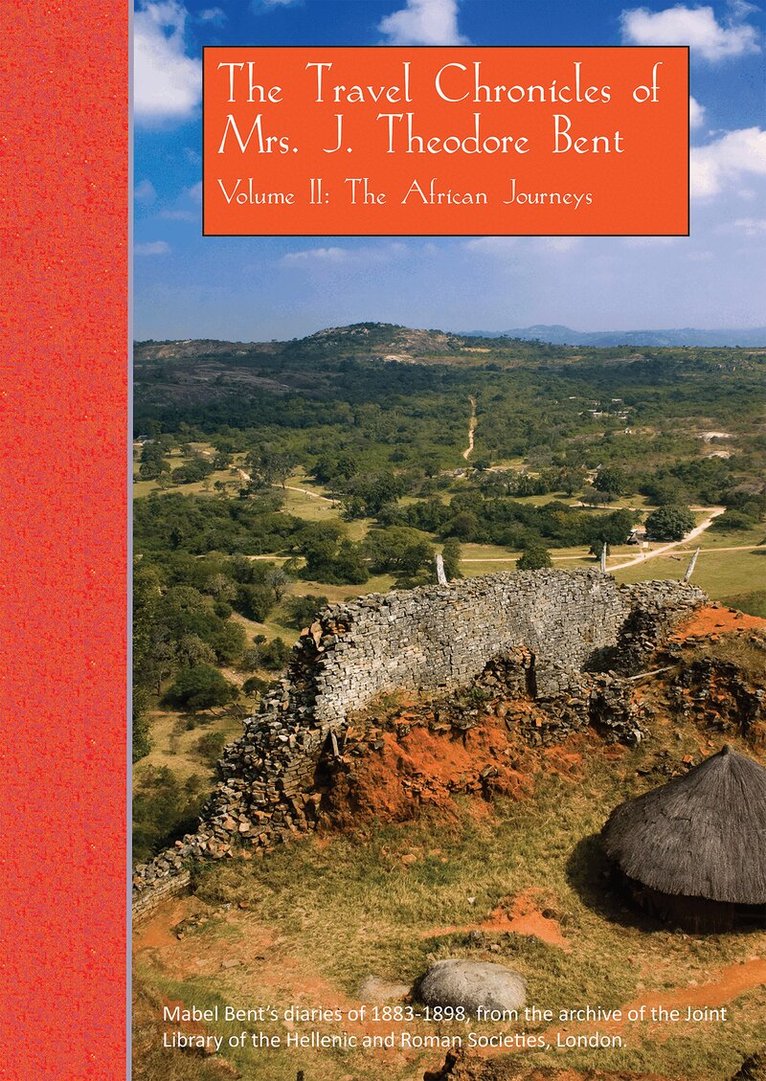
Travel Chronicles of Mrs. J. Theodore Bent. Volume II: The African Journeys
Mabel Bent's diaries of 1883-1898, from the archive of the Joint Library of the Hellenic and Roman Societies, London
Häftad, Engelska, 2012
419 kr
Skickas
“At last we reached a circular enclosure among the grass and scanty trees. We rushed in and it was like getting into a tropical greenhouse with the roof off. There were tall trees and long creepers making monkey ropes, large flowers hanging, great cactus trees, aloes and all sorts of beautiful things crowded together, so that one could hardly squeeze through. I should have liked to stop and stare at the vegetation but on we rushed, over walls and to the tower we had heard of, which is close to the outer wall. We did not stay even to walk round the tower but out we rushed again, like people who were taking a stolen look into an enchanted garden and were afraid of being bewitched if we remained… It was quite dark and we had to be guided by shouts to our camp and got home in a state of great wonder and delight and hope of profitable work and full assurance of the great antiquity of the ruins. Theodore was not very well and had to take quinine.” [M.V.A. Bent, 4 June 1891] Thus a few lines from Mabel (Mrs J. Theodore) Bent’s 1891 African travel diary on her arrival at ‘Great Zimbabwe’ (in present-day Zimbabwe), written for her family, serve to evoke the romance and hardships of colonial exploration for a Victorian audience. Of particular importance are Mabel’s previously unpublished notebooks covering the couple’s arduous wagon trek to these famous ruins, in part sponsored by the ambitious Cecil Rhodes. Theodore Bent’s interpretations of these wonderful monuments sparked a controversy (one of several this maverick archaeologist was involved in over his short career) that still divides scholars today. Mabel Bent was probably the first woman to visit there and help document this major site. As tourists in Egypt and explorers in the Sudan, Ethiopia, and Southern Africa, anyone interested in 19th-century travel will want to follow the wagon tracks and horse trails of the Bents across hundreds of miles of untouched African landscape. Contents: Personal diaries, travel accounts and letters relating to the Bents’ travels and explorations in: Egypt (1885); Zimbabwe (1891); Ethiopia (1893); Sudan (1896); Egypt (1898). Includes extended contributions on the archaeological background to ‘Great Zimbabwe’ by Innocent Pikirayi, and ‘The Stone Birds of Great Zimbabwe’ by William J. Dewey. Additional documents, maps, and Mabel Bent’s own photographs contribute to this important insight into the lives of two of the great British travellers of the nineteenth century. The Travel Chronicles of Mrs J. Theodore Bent. Mabel Bent's diaries of 1883-1898, from the archive of the Joint Library of the Hellenic and Roman Societies, London. Published in three volumes: Volume I – Greece and the Levantine Littoral (2006); Volume II: The African Journeys (2012); Vol III – Southern Arabia and Persia (2010). "...Brisch and Archaeopress have done a major service by reproducing these hidden gems and rescuing Mabel Bent from relative obscurity. This collection is a valuable primary source and will be of immense interest to those interested in female travelogues, historical archaeology, or the daily experiences of European women in colonial Africa." (Reviewed in 'Journal of African History', Vol. 55/2, 2014, 296-298)