Gerald Jay Sussman – författare
Visar alla böcker från författaren Gerald Jay Sussman. Handla med fri frakt och snabb leverans.
8 produkter
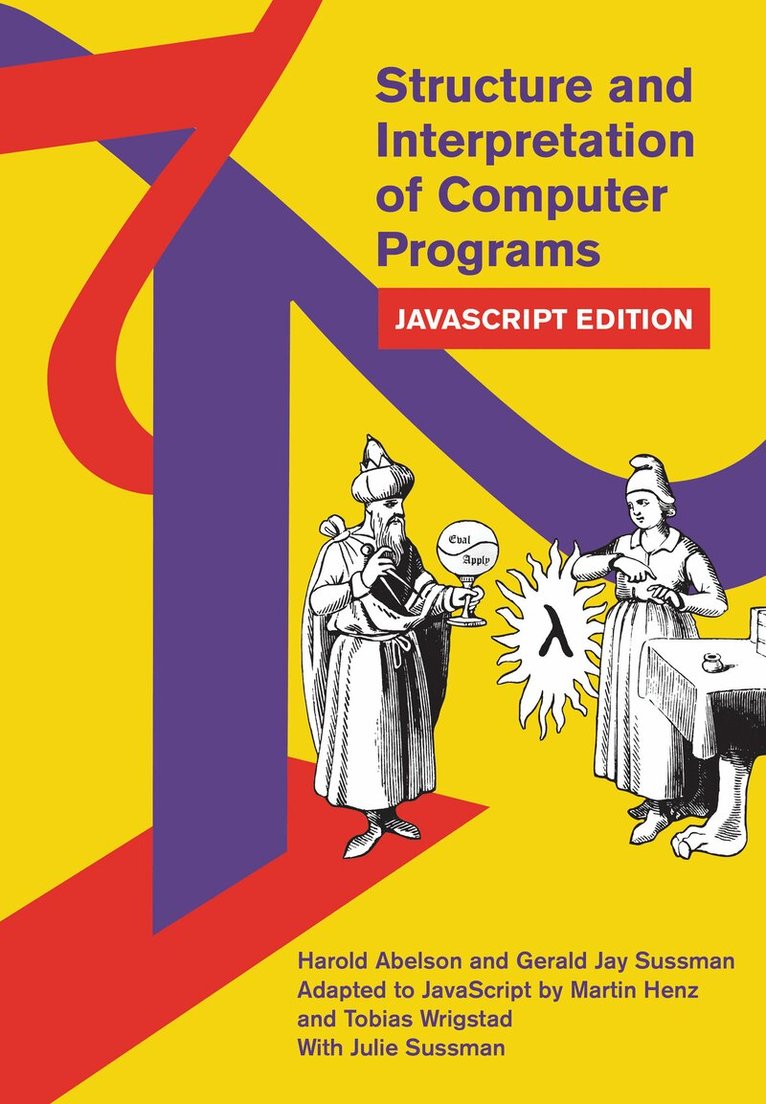
Structure and Interpretation of Computer Programs
Av Harold Abelson, Gerald Jay Sussman
Häftad, 2022
959 kr
Lägg i varukorg
A new version of the classic and widely used text adapted for the JavaScript programming language. Since the publication of its first edition in 1984 and its second edition in 1996, Structure and Interpretation of Computer Programs ( SICP ) has influenced computer science curricula around the …
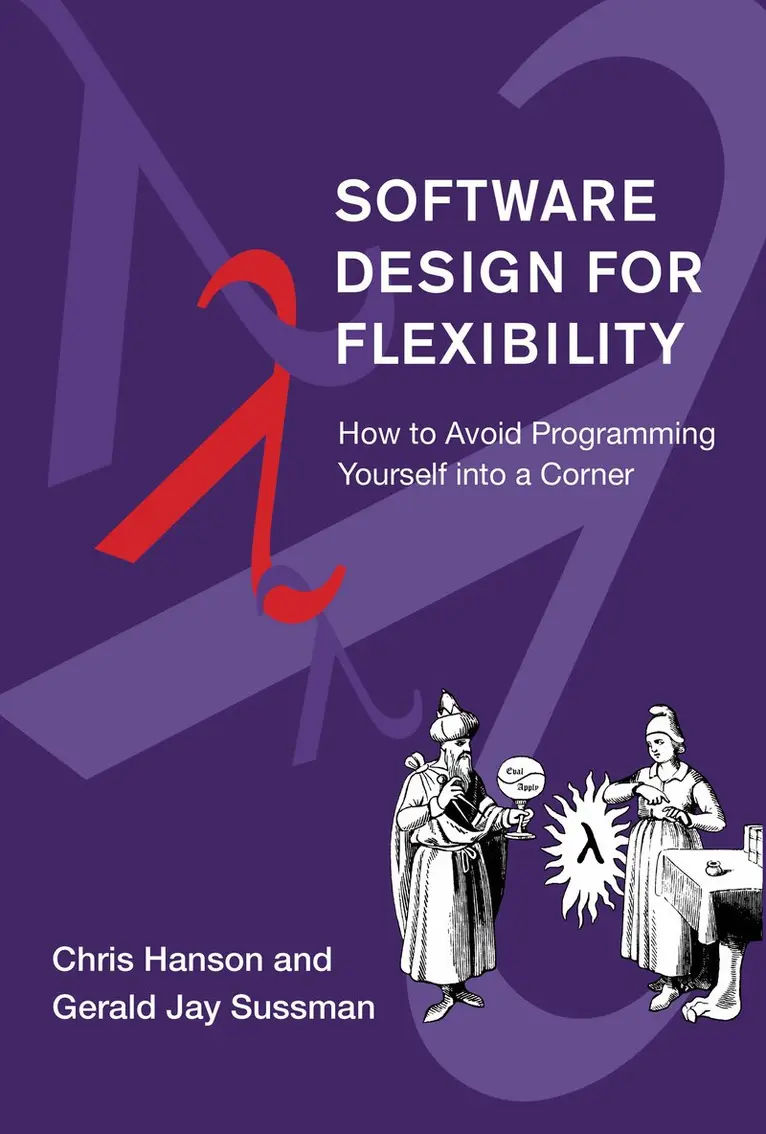
Software Design for Flexibility
How to Avoid Programming Yourself into a Corner
Av Chris Hanson, Gerald Jay Sussman
Inbunden, 2021
695 kr
Lägg i varukorg
Strategies for building large systems that can be easily adapted for new situations with only minor programming modifications. Time pressures encourage programmers to write code that works well for a narrow purpose, with no room to grow. But the best systems are evolvable; they can be adapted for …
Structure and Interpretation of Computer Programs
Av Harold Abelson, Gerald Jay Sussman
Häftad, 1996
1012 kr
Lägg i varukorg
Structure and Interpretation of Computer Programs has had a dramatic impact on computer science curricula over the past decade. This long-awaited revision contains changes throughout the text. There are new implementations of most of the major programming systems in the book, including the …
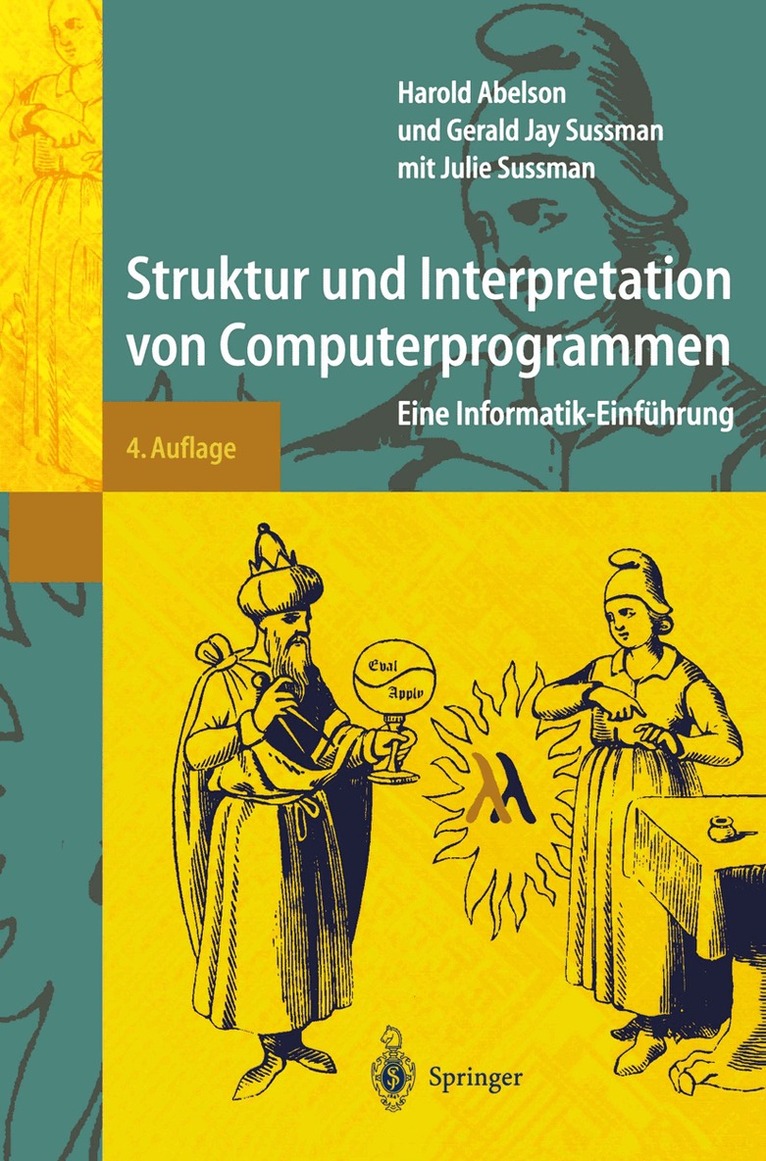
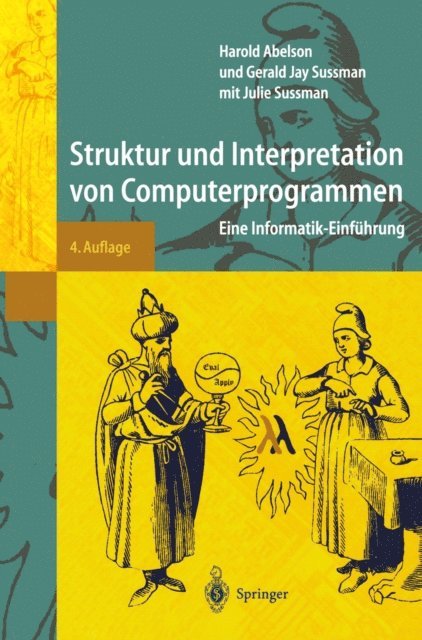
Struktur und Interpretation von Computerprogrammen
Eine Informatik-Einführung
Av Harold Abelson, Gerald Jay Sussman
Häftad, 2001
478 kr
Lägg i varukorg
Die Übersetzung der bewährten Einführung in die Informatik, entstanden am Massachusetts Institute of Technology (MIT), wird seit Jahren erfolgreich in der Lehre eingesetzt. Schritt für Schritt werden Konstruktion und Abstraktion von Daten und Prozeduren dargestellt. Von der Modularisierung bis zum …
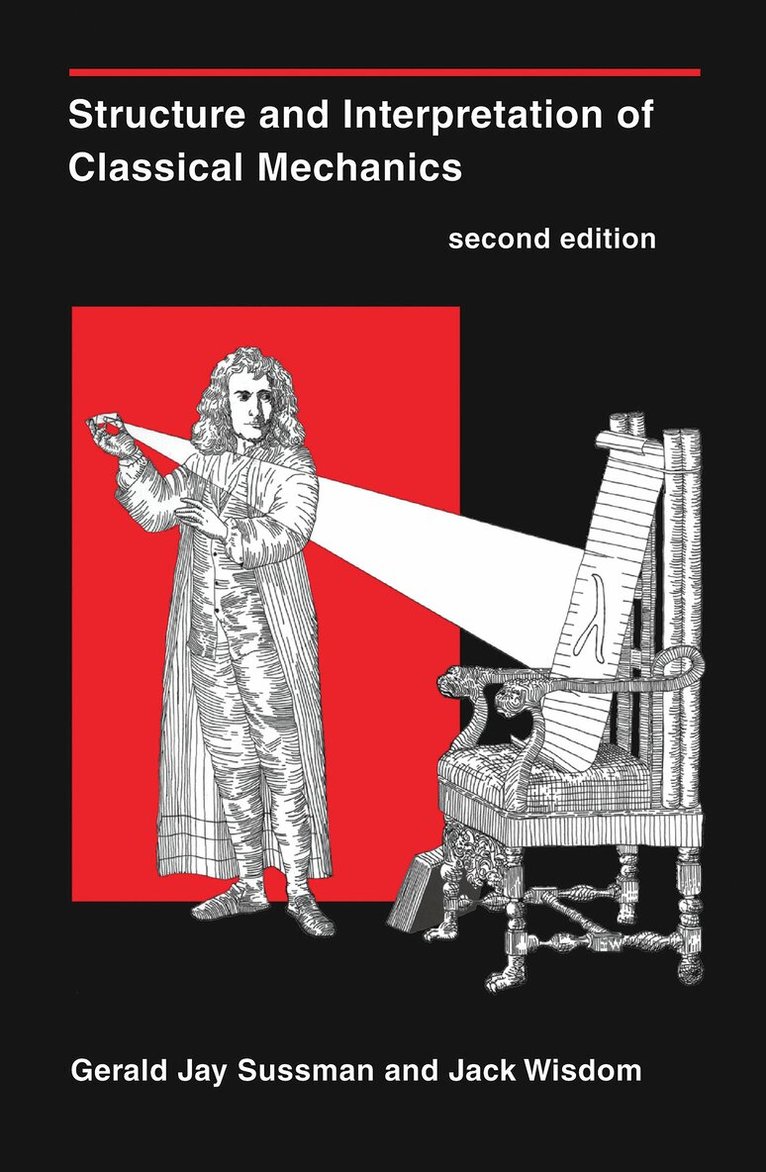
Structure and Interpretation of Classical Mechanics, second edition
Av Gerald Jay Sussman, Jack Wisdom
Häftad, 2024
1500 kr
Lägg i varukorg
Struktur und Interpretation von Computerprogrammen
Eine Informatik-Einführung
Av Gerald Jay Sussman, Harold Abelson
E-bok, 2013
504 kr
Lägg i varukorg
Die Übersetzung der bewährten Einführung in die Informatik, entstanden am Massachusetts Institute of Technology (MIT), wird seit Jahren erfolgreich in der Lehre eingesetzt. Schritt für Schritt werden Konstruktion und Abstraktion von Daten und Prozeduren dargestellt. Von der Modularisierung bis zum …
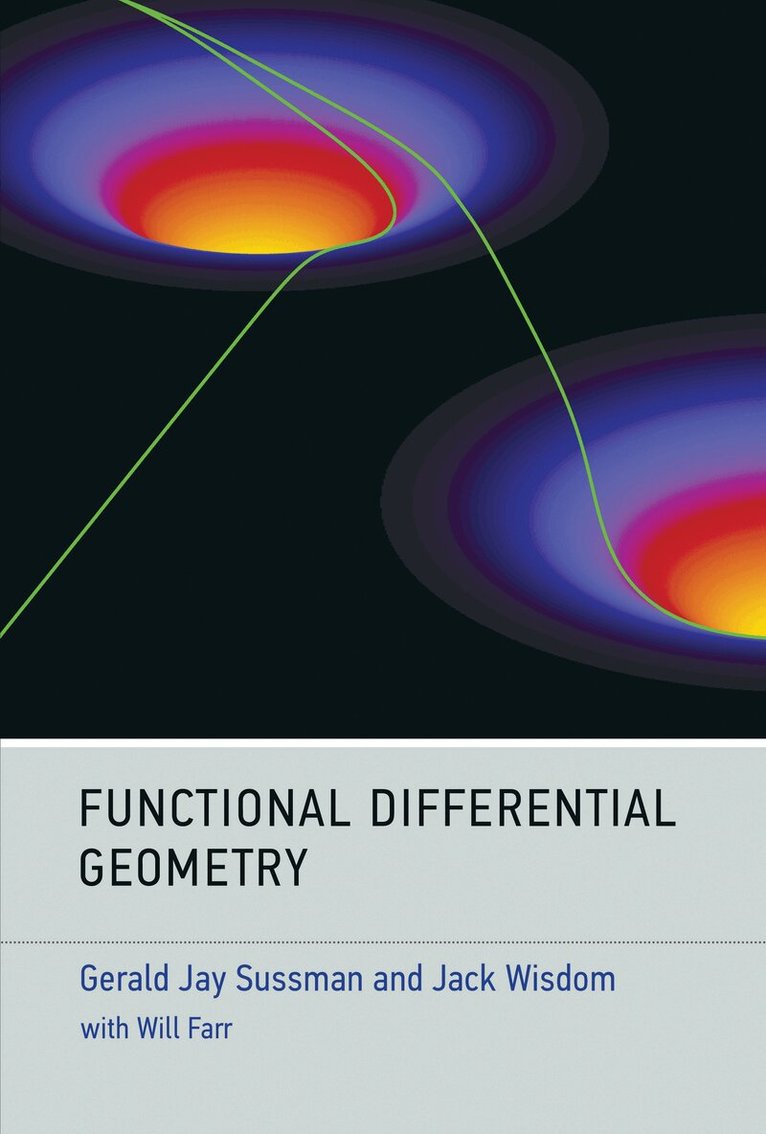
Functional Differential Geometry
Av Gerald Jay Sussman, Jack Wisdom
Inbunden, 2013
611 kr
Tillfälligt slut