266 kr
Läs direkt efter köp
266 kr
Läs direkt efter köp
552 kr
Skickas inom 10-15 vardagar
1 664 kr
Läs direkt efter köp
1 491 kr
Läs direkt efter köp
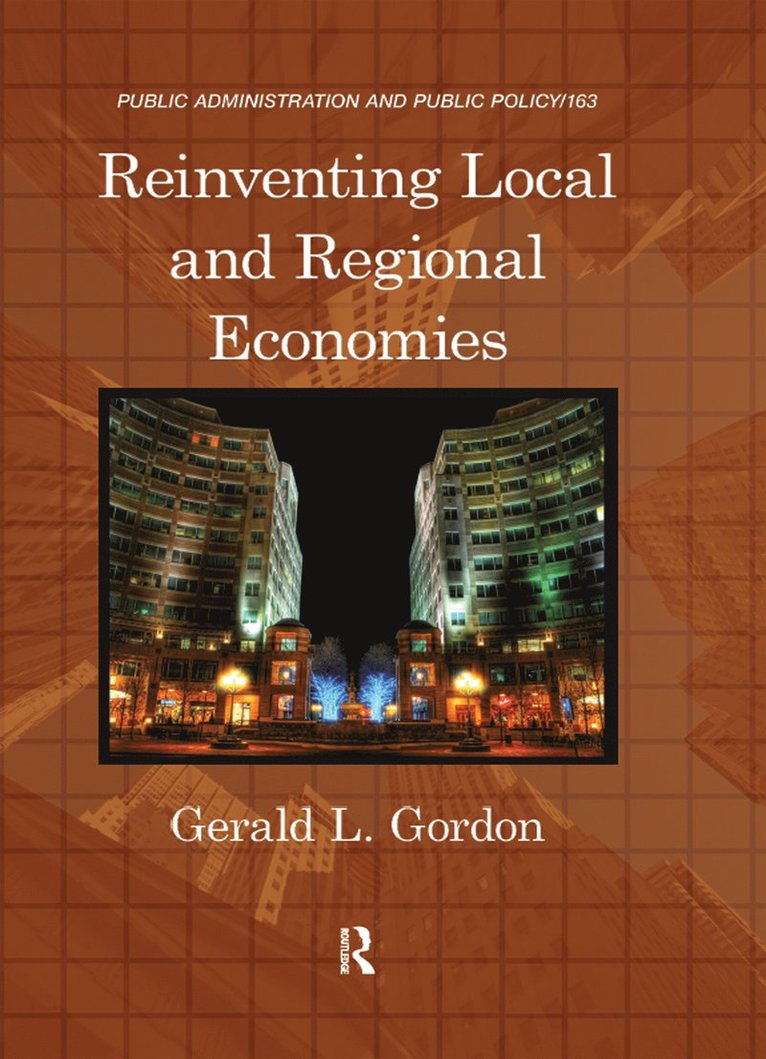
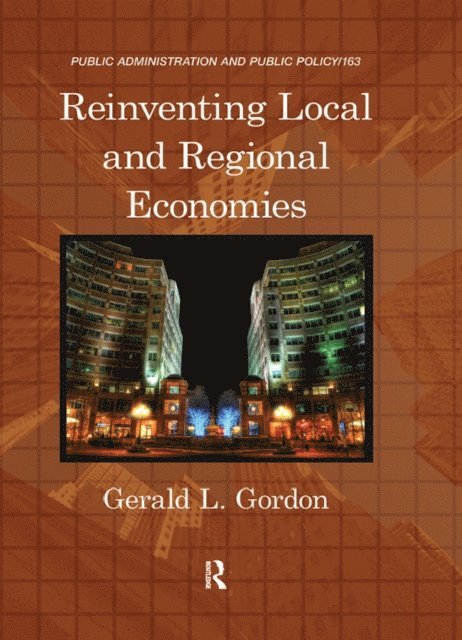
Recent US economic history is rife with examples of cities and regions that have experienced significant decline. Many of those localities began to slide after decades, even generations, of feeling immune to economic disaster. Boeing and Kodak, the steel industry in Pittsburg, and the automotive industry in Detroit all expected to make it golden into the distant future. Tapping into the available body of knowledge as well as- through nearly 70 interviews—the experiences of those who lived and worked in those times in cities around the United States—to identify the most effective strategies, Reinventing Local and Regional Economies delineates the dos and don’ts to observe in order to sustain economic vitality in any community.
Written by Dr. Gerald Gordon, president and chief executive officer of the Economic Development Authority in Fairfax County, Virginia, the book explores lessons learned and examines the messages communities must be mindful of in order to ensure future economic stability. Drawing on more than 30 years of experience, Gordon identifies a set of foundational lessons that, while they are not guarantees of success, certainly portend failure if ignored by local planners. Each chapter explores a different prerequisite and then applies it to several case studies of the reinvention of local and regional economies. Each of these basic components of economic growth will then be examined against the backgrounds of the many communities studied, thus permitting comparisons and contrasts to be drawn.
A comparative analysis of results from one community to another across a wide range of case studies, this book puts into clear context the observations about what works not only in one locale but in communities with common features facing common issues and getting similar results. Using case studies and real world examples of successes and failures, Dr. Gordon provides the tools to develop a proactive strategy that positions your community for surviving and thriving regardless of external stresses and adverse economic conditions that may be out of your control.
1 101 kr
Läs direkt efter köp
1 491 kr
Läs direkt efter köp
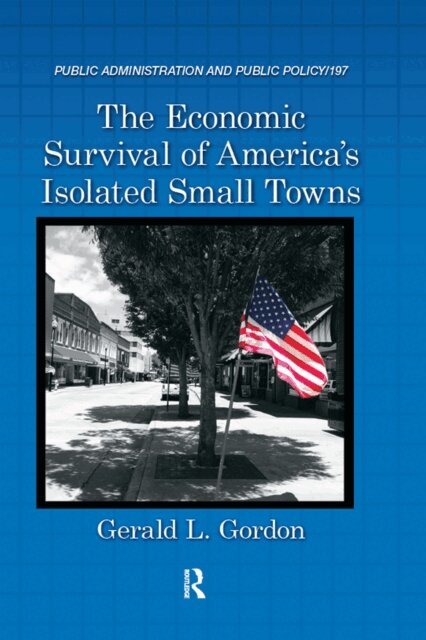
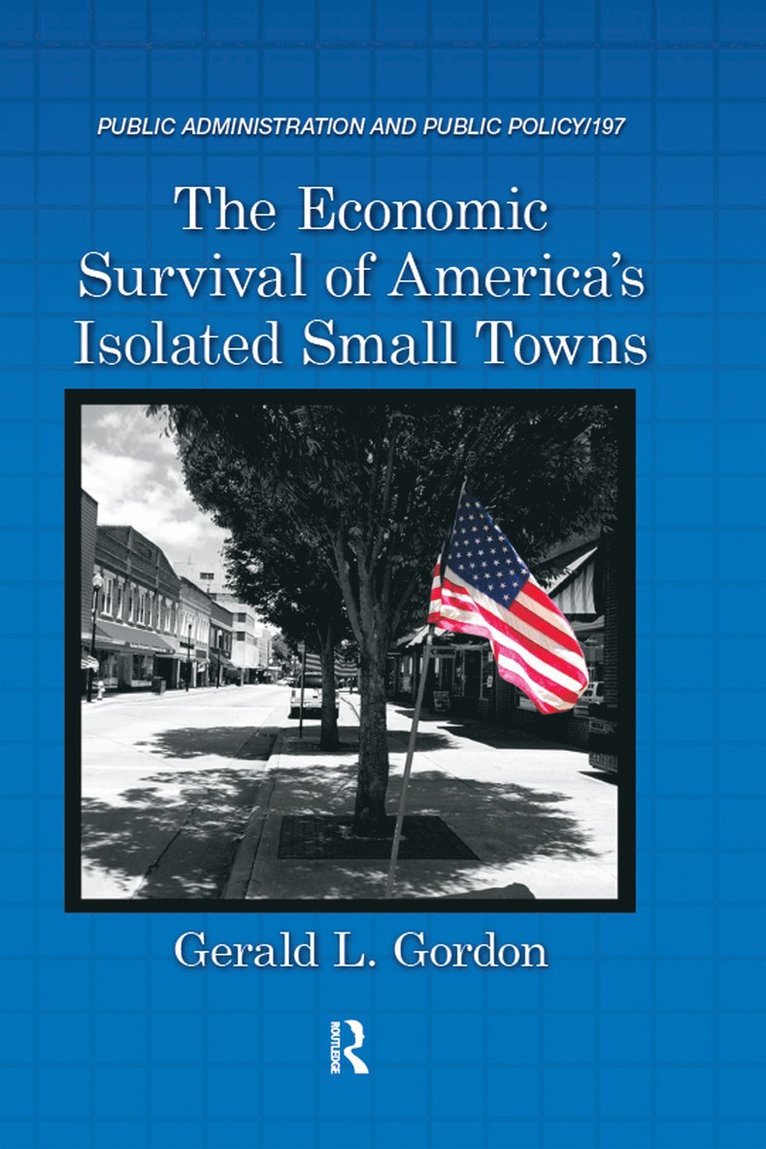
The economic history of the recent decade has been volatile at best, and devastating at its worst. The effects have tended to be most severe in the small, isolated towns of America. The Economic Survival of America''s Isolated Small Towns presents a detailed discussion of the economic challenges facing these small towns, looking at why some have survived, while others have not. Through 51 case studies, this book gives a voice to the real, living realities and administrative strategies of small-town America.
The Economic Survival of America''s Isolated Small Towns focuses on towns that have fewer than 10,000 residents and are further than 50 miles from another larger city. Based on interviews with the leaders of 51 small towns, the author shows how to plan and implement economic growth strategies, equally applicable to those communities that are trying to retain their strength as to those that are trying to rebuild following a downturn. The case studies convey, from one town leader to the other, which actions fail and which succeed.
Following the case studies, the author presents concluding thoughts, looking at topics such as:
Relevance of lessons learned in micropolitan cities (population 10,000–50,000) to small, isolated towns Impact of enabling technologies on small-town survival Advantages to employers in small, isolated towns Feasibility for small towns to build the required facilities and infrastructure that might attract potential employers Whether it is beneficial for the US to prop up struggling small towns artificiallyThe Economic Survival of America''s Isolated Small Towns presents basic lessons learned by these small-town leaders that can benefit leaders in other towns as they confront similar issues and situations. Those charged with establishing public policy—either at the federal or state levels—should find the conclusions valuable as they plan for the next generation of public economic policies.
2 473 kr
Skickas inom 10-15 vardagar
644 kr
Läs direkt efter köp
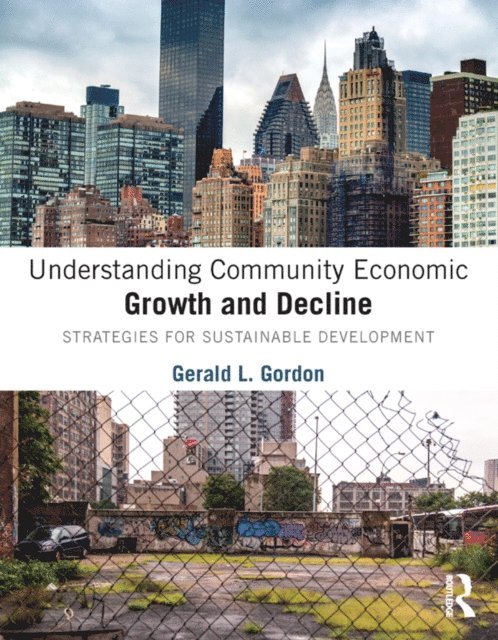
This book presents a fully comprehensive look at what all communities—large and small, urban and rural—can do to grow and sustain their local economic bases. It examines the causes of economic decline for localities as well as the economic “product” being marketed to employers, the process of growth, and the means of sustaining economic growth over time. Drawing on the experiences of hundreds of communities and hundreds of leaders around the United States, Understanding Community Economic Growth and Decline outlines the various strategies that have or have not worked to enable or support a general local economic recovery. Exploring many facets of growth and re-growth following periods of economic decline, and offering practical, real-life tactics that have been successfully employed in local and regional economies across the US, this book is required reading for community planners and administrators, those currently working in public administration, and students studying regional planning or economic development.
644 kr
Läs direkt efter köp
This book presents a fully comprehensive look at what all communities—large and small, urban and rural—can do to grow and sustain their local economic bases. It examines the causes of economic decline for localities as well as the economic “product” being marketed to employers, the process of growth, and the means of sustaining economic growth over time. Drawing on the experiences of hundreds of communities and hundreds of leaders around the United States, Understanding Community Economic Growth and Decline outlines the various strategies that have or have not worked to enable or support a general local economic recovery. Exploring many facets of growth and re-growth following periods of economic decline, and offering practical, real-life tactics that have been successfully employed in local and regional economies across the US, this book is required reading for community planners and administrators, those currently working in public administration, and students studying regional planning or economic development.
1 247 kr
Skickas inom 10-15 vardagar
1 101 kr
Läs direkt efter köp
1 542 kr
Skickas inom 10-15 vardagar
1 491 kr
Läs direkt efter köp
Recent US economic history is rife with examples of cities and regions that have experienced significant decline. Many of those localities began to slide after decades, even generations, of feeling immune to economic disaster. Boeing and Kodak, the steel industry in Pittsburg, and the automotive industry in Detroit all expected to make it golden into the distant future. Tapping into the available body of knowledge as well as- through nearly 70 interviews—the experiences of those who lived and worked in those times in cities around the United States—to identify the most effective strategies, Reinventing Local and Regional Economies delineates the dos and don’ts to observe in order to sustain economic vitality in any community.
Written by Dr. Gerald Gordon, president and chief executive officer of the Economic Development Authority in Fairfax County, Virginia, the book explores lessons learned and examines the messages communities must be mindful of in order to ensure future economic stability. Drawing on more than 30 years of experience, Gordon identifies a set of foundational lessons that, while they are not guarantees of success, certainly portend failure if ignored by local planners. Each chapter explores a different prerequisite and then applies it to several case studies of the reinvention of local and regional economies. Each of these basic components of economic growth will then be examined against the backgrounds of the many communities studied, thus permitting comparisons and contrasts to be drawn.
A comparative analysis of results from one community to another across a wide range of case studies, this book puts into clear context the observations about what works not only in one locale but in communities with common features facing common issues and getting similar results. Using case studies and real world examples of successes and failures, Dr. Gordon provides the tools to develop a proactive strategy that positions your community for surviving and thriving regardless of external stresses and adverse economic conditions that may be out of your control.
1 498 kr
Skickas inom 10-15 vardagar
1 498 kr
Skickas inom 10-15 vardagar
1 475 kr
Läs direkt efter köp
The economic history of the recent decade has been volatile at best, and devastating at its worst. The effects have tended to be most severe in the small, isolated towns of America. The Economic Survival of America''s Isolated Small Towns presents a detailed discussion of the economic challenges facing these small towns, looking at why some have survived, while others have not. Through 51 case studies, this book gives a voice to the real, living realities and administrative strategies of small-town America.
The Economic Survival of America''s Isolated Small Towns focuses on towns that have fewer than 10,000 residents and are further than 50 miles from another larger city. Based on interviews with the leaders of 51 small towns, the author shows how to plan and implement economic growth strategies, equally applicable to those communities that are trying to retain their strength as to those that are trying to rebuild following a downturn. The case studies convey, from one town leader to the other, which actions fail and which succeed.
Following the case studies, the author presents concluding thoughts, looking at topics such as:
Relevance of lessons learned in micropolitan cities (population 10,000–50,000) to small, isolated towns Impact of enabling technologies on small-town survival Advantages to employers in small, isolated towns Feasibility for small towns to build the required facilities and infrastructure that might attract potential employers Whether it is beneficial for the US to prop up struggling small towns artificiallyThe Economic Survival of America''s Isolated Small Towns presents basic lessons learned by these small-town leaders that can benefit leaders in other towns as they confront similar issues and situations. Those charged with establishing public policy—either at the federal or state levels—should find the conclusions valuable as they plan for the next generation of public economic policies.
266 kr
Läs direkt efter köp
552 kr
Skickas inom 10-15 vardagar
1 664 kr
Läs direkt efter köp
1 491 kr
Läs direkt efter köp
Recent US economic history is rife with examples of cities and regions that have experienced significant decline. Many of those localities began to slide after decades, even generations, of feeling immune to economic disaster. Boeing and Kodak, the steel industry in Pittsburg, and the automotive industry in Detroit all expected to make it golden into the distant future. Tapping into the available body of knowledge as well as- through nearly 70 interviews—the experiences of those who lived and worked in those times in cities around the United States—to identify the most effective strategies, Reinventing Local and Regional Economies delineates the dos and don’ts to observe in order to sustain economic vitality in any community.
Written by Dr. Gerald Gordon, president and chief executive officer of the Economic Development Authority in Fairfax County, Virginia, the book explores lessons learned and examines the messages communities must be mindful of in order to ensure future economic stability. Drawing on more than 30 years of experience, Gordon identifies a set of foundational lessons that, while they are not guarantees of success, certainly portend failure if ignored by local planners. Each chapter explores a different prerequisite and then applies it to several case studies of the reinvention of local and regional economies. Each of these basic components of economic growth will then be examined against the backgrounds of the many communities studied, thus permitting comparisons and contrasts to be drawn.
A comparative analysis of results from one community to another across a wide range of case studies, this book puts into clear context the observations about what works not only in one locale but in communities with common features facing common issues and getting similar results. Using case studies and real world examples of successes and failures, Dr. Gordon provides the tools to develop a proactive strategy that positions your community for surviving and thriving regardless of external stresses and adverse economic conditions that may be out of your control.
1 101 kr
Läs direkt efter köp
1 491 kr
Läs direkt efter köp
The economic history of the recent decade has been volatile at best, and devastating at its worst. The effects have tended to be most severe in the small, isolated towns of America. The Economic Survival of America''s Isolated Small Towns presents a detailed discussion of the economic challenges facing these small towns, looking at why some have survived, while others have not. Through 51 case studies, this book gives a voice to the real, living realities and administrative strategies of small-town America.
The Economic Survival of America''s Isolated Small Towns focuses on towns that have fewer than 10,000 residents and are further than 50 miles from another larger city. Based on interviews with the leaders of 51 small towns, the author shows how to plan and implement economic growth strategies, equally applicable to those communities that are trying to retain their strength as to those that are trying to rebuild following a downturn. The case studies convey, from one town leader to the other, which actions fail and which succeed.
Following the case studies, the author presents concluding thoughts, looking at topics such as:
Relevance of lessons learned in micropolitan cities (population 10,000–50,000) to small, isolated towns Impact of enabling technologies on small-town survival Advantages to employers in small, isolated towns Feasibility for small towns to build the required facilities and infrastructure that might attract potential employers Whether it is beneficial for the US to prop up struggling small towns artificiallyThe Economic Survival of America''s Isolated Small Towns presents basic lessons learned by these small-town leaders that can benefit leaders in other towns as they confront similar issues and situations. Those charged with establishing public policy—either at the federal or state levels—should find the conclusions valuable as they plan for the next generation of public economic policies.
2 473 kr
Skickas inom 10-15 vardagar
644 kr
Läs direkt efter köp
This book presents a fully comprehensive look at what all communities—large and small, urban and rural—can do to grow and sustain their local economic bases. It examines the causes of economic decline for localities as well as the economic “product” being marketed to employers, the process of growth, and the means of sustaining economic growth over time. Drawing on the experiences of hundreds of communities and hundreds of leaders around the United States, Understanding Community Economic Growth and Decline outlines the various strategies that have or have not worked to enable or support a general local economic recovery. Exploring many facets of growth and re-growth following periods of economic decline, and offering practical, real-life tactics that have been successfully employed in local and regional economies across the US, this book is required reading for community planners and administrators, those currently working in public administration, and students studying regional planning or economic development.
644 kr
Läs direkt efter köp
This book presents a fully comprehensive look at what all communities—large and small, urban and rural—can do to grow and sustain their local economic bases. It examines the causes of economic decline for localities as well as the economic “product” being marketed to employers, the process of growth, and the means of sustaining economic growth over time. Drawing on the experiences of hundreds of communities and hundreds of leaders around the United States, Understanding Community Economic Growth and Decline outlines the various strategies that have or have not worked to enable or support a general local economic recovery. Exploring many facets of growth and re-growth following periods of economic decline, and offering practical, real-life tactics that have been successfully employed in local and regional economies across the US, this book is required reading for community planners and administrators, those currently working in public administration, and students studying regional planning or economic development.
1 247 kr
Skickas inom 10-15 vardagar
1 101 kr
Läs direkt efter köp
1 542 kr
Skickas inom 10-15 vardagar
1 491 kr
Läs direkt efter köp
Recent US economic history is rife with examples of cities and regions that have experienced significant decline. Many of those localities began to slide after decades, even generations, of feeling immune to economic disaster. Boeing and Kodak, the steel industry in Pittsburg, and the automotive industry in Detroit all expected to make it golden into the distant future. Tapping into the available body of knowledge as well as- through nearly 70 interviews—the experiences of those who lived and worked in those times in cities around the United States—to identify the most effective strategies, Reinventing Local and Regional Economies delineates the dos and don’ts to observe in order to sustain economic vitality in any community.
Written by Dr. Gerald Gordon, president and chief executive officer of the Economic Development Authority in Fairfax County, Virginia, the book explores lessons learned and examines the messages communities must be mindful of in order to ensure future economic stability. Drawing on more than 30 years of experience, Gordon identifies a set of foundational lessons that, while they are not guarantees of success, certainly portend failure if ignored by local planners. Each chapter explores a different prerequisite and then applies it to several case studies of the reinvention of local and regional economies. Each of these basic components of economic growth will then be examined against the backgrounds of the many communities studied, thus permitting comparisons and contrasts to be drawn.
A comparative analysis of results from one community to another across a wide range of case studies, this book puts into clear context the observations about what works not only in one locale but in communities with common features facing common issues and getting similar results. Using case studies and real world examples of successes and failures, Dr. Gordon provides the tools to develop a proactive strategy that positions your community for surviving and thriving regardless of external stresses and adverse economic conditions that may be out of your control.
1 498 kr
Skickas inom 10-15 vardagar
1 498 kr
Skickas inom 10-15 vardagar
1 475 kr
Läs direkt efter köp
The economic history of the recent decade has been volatile at best, and devastating at its worst. The effects have tended to be most severe in the small, isolated towns of America. The Economic Survival of America''s Isolated Small Towns presents a detailed discussion of the economic challenges facing these small towns, looking at why some have survived, while others have not. Through 51 case studies, this book gives a voice to the real, living realities and administrative strategies of small-town America.
The Economic Survival of America''s Isolated Small Towns focuses on towns that have fewer than 10,000 residents and are further than 50 miles from another larger city. Based on interviews with the leaders of 51 small towns, the author shows how to plan and implement economic growth strategies, equally applicable to those communities that are trying to retain their strength as to those that are trying to rebuild following a downturn. The case studies convey, from one town leader to the other, which actions fail and which succeed.
Following the case studies, the author presents concluding thoughts, looking at topics such as:
Relevance of lessons learned in micropolitan cities (population 10,000–50,000) to small, isolated towns Impact of enabling technologies on small-town survival Advantages to employers in small, isolated towns Feasibility for small towns to build the required facilities and infrastructure that might attract potential employers Whether it is beneficial for the US to prop up struggling small towns artificiallyThe Economic Survival of America''s Isolated Small Towns presents basic lessons learned by these small-town leaders that can benefit leaders in other towns as they confront similar issues and situations. Those charged with establishing public policy—either at the federal or state levels—should find the conclusions valuable as they plan for the next generation of public economic policies.