Gerardo Damonte – författare
Visar alla böcker från författaren Gerardo Damonte. Handla med fri frakt och snabb leverans.
4 produkter
4 produkter
Inbunden, Engelska, 2021
2 182 kr
Skickas inom 10-15 vardagar
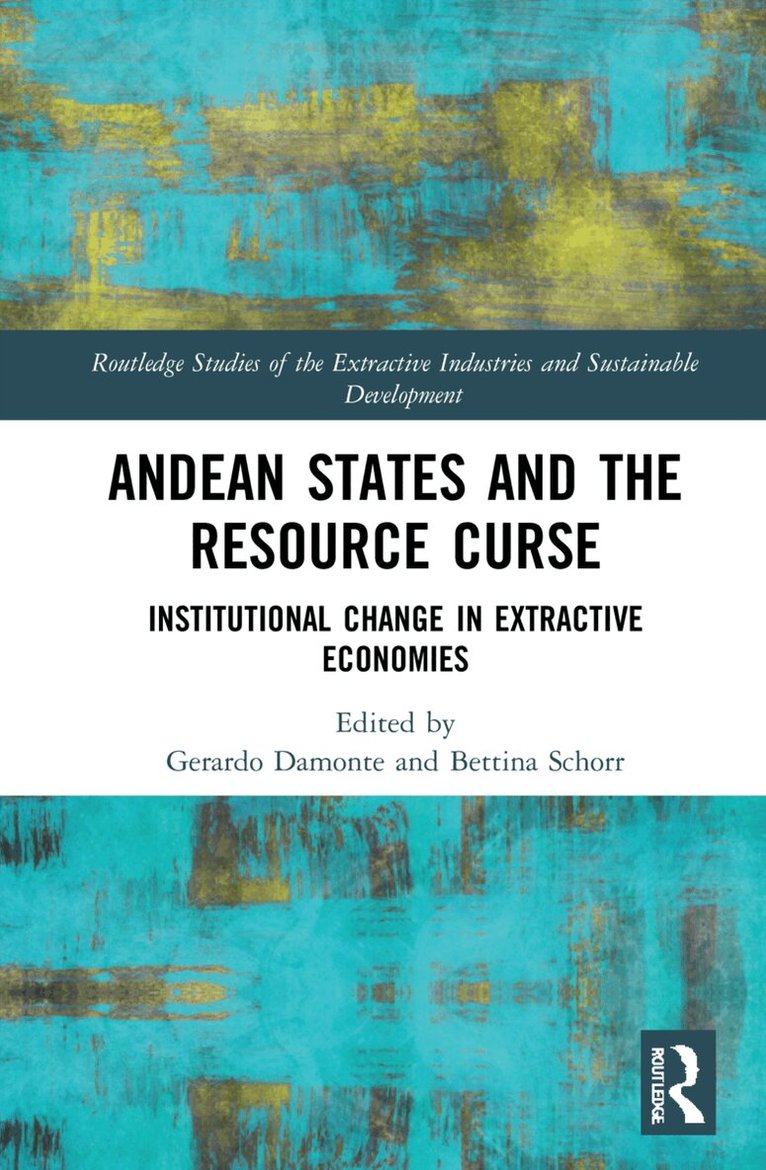
This volume explores institutional change and performance in the resource-rich Andean countries during the last resource boom and in the early post-boom years. The latest global commodity boom has profoundly marked the face of the resource-rich Andean region, significantly contributing to economic growth and notable reductions of poverty and income inequality. The boom also constituted a period of important institutional change, with these new institutions sharing the potential of preventing or mitigating the maladies extractive economies tend to suffer from, generally denominated as the “resource curse”. This volume explores these institutional changes in the Andean region to identify the factors that have shaped their emergence and to assess their performance. The interdisciplinary and comparative perspective of the chapters in this book provide fine-grained analyses of different new institutions introduced in the Andean countries and discusses their findings in the light of the resource curse approach. They argue that institutional change and performance depend upon a much larger set of factors than those generally identified by the resource curse literature. Different, domestic and external, economic, political and cultural factors such as ideological positions of decision-makers, international pressure or informal practices have shaped institutional dynamics in the region. Altogether, these findings emphasize the importance of nuanced and contextualized analysis to better understand institutional dynamics in the context of extractive economies. This book will be of great interest to students and scholars of the extractive industries, natural resource management, political economics, Latin American studies and sustainable development.The Open Access version of this book, available at www.taylorfrancis.com, has been made available under a Creative Commons Attribution-Non Commercial-No Derivatives 4.0 license.
Häftad, Engelska, 2023
638 kr
Skickas inom 10-15 vardagar
This volume explores institutional change and performance in the resource-rich Andean countries during the last resource boom and in the early post-boom years. The latest global commodity boom has profoundly marked the face of the resource-rich Andean region, significantly contributing to economic growth and notable reductions of poverty and income inequality. The boom also constituted a period of important institutional change, with these new institutions sharing the potential of preventing or mitigating the maladies extractive economies tend to suffer from, generally denominated as the “resource curse”. This volume explores these institutional changes in the Andean region to identify the factors that have shaped their emergence and to assess their performance. The interdisciplinary and comparative perspective of the chapters in this book provide fine-grained analyses of different new institutions introduced in the Andean countries and discusses their findings in the light of the resource curse approach. They argue that institutional change and performance depend upon a much larger set of factors than those generally identified by the resource curse literature. Different, domestic and external, economic, political and cultural factors such as ideological positions of decision-makers, international pressure or informal practices have shaped institutional dynamics in the region. Altogether, these findings emphasize the importance of nuanced and contextualized analysis to better understand institutional dynamics in the context of extractive economies. This book will be of great interest to students and scholars of the extractive industries, natural resource management, political economics, Latin American studies and sustainable development.The Open Access version of this book, available at www.taylorfrancis.com, has been made available under a Creative Commons Attribution-Non Commercial-No Derivatives 4.0 license.
E-bok
Spanska, 2014125 kr
Läs direkt efter köp
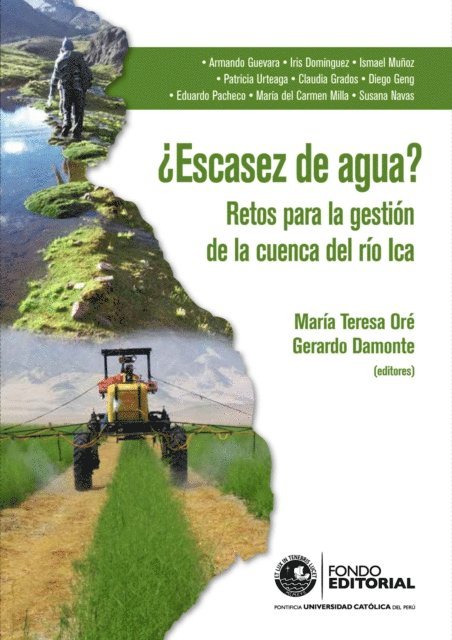
Seis artículos que abordan diferentes aspectos y problemáticas de la gestión del agua superficial y subterránea de la cuenca del río Ica.Actualmente, el Perú se encuentra ante una crisis de gobernabilidad en la gestión del agua, pues la demanda de este recurso ha aumentado, pero la oferta sigue siendo la misma o ha disminuido por la contaminación o el impacto del cambio climático en las cuencas. Este libro contiene seis artículos interdisciplinarios que determinan cuáles son las problemáticas de la gestión del agua del río Ica y su impacto político, económico y social en la región. La preocupación por la escasez del agua ha adquirido relevancia internacional debido a los efectos del cambio climático y a las consecuencias que la intensificación de las actividades productivas tiene sobre el recurso. Este volumen realiza aportes fundamentales que permiten comprender las complejas interrelaciones que ejercen los sectores productivos y la población por el agua y la tierra en la cuenca del río Ica en las regiones de Ica y Huancavelica. Los artículos, de forma independiente y en conjunto, dan cuenta de las diversas tareas que se deben realizar para hacer frente a la escasez de agua en esta región. Para ello, se establecen cuatro variables: pensar a nivel de cuencas, considerar la acción de sus habitantes y ecosistemas, invertir en conocer el medio intervenido y lograr acuerdos entre actores de diferente origen y poder que comparten un mismo sistema hídrico, tarea que se debe realizar con los que intervienen y habitan cada cuenca del Perú.
125 kr
Läs direkt efter köp
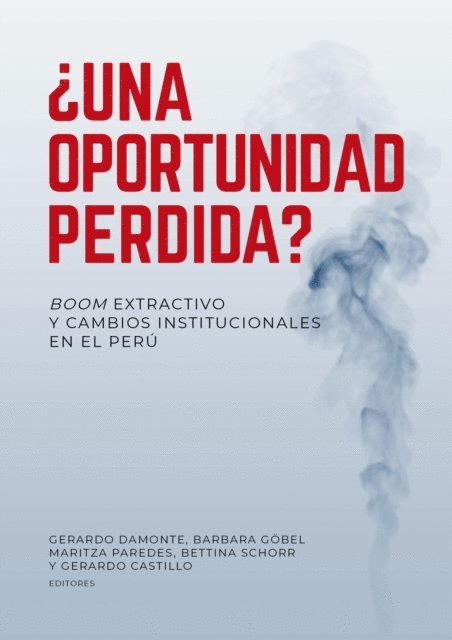
Con el fin del último boom extractivo terminaron dos décadas de bonanza económica en el Perú. ¿Supimos aprovechar este periodo de ingresos extraordinarios para sentar las bases de un desarrollo sostenible? ¿En qué medida el auge extractivo ha impulsado o dado forma a cambios en la institucionalidad del país? De considerarse positivos, ¿son sostenibles? ¿Hasta qué punto estos cambios han incidido en la reducción de desigualdades multidimensionales en la región? Estas son las preguntas que guían los artículos que, desde distintas perspectivas y disciplinas, dan cuenta de cambios institucionales y retos a la sostenibilidad en este libro. Con cada contribución podemos entender mejor cómo el auge extractivo ha influenciado significativamente en la construcción institucional del Estado peruano, construcción inconclusa que plantea retos para un futuro todavía incierto.