Gerda Horneck – författare
Visar alla böcker från författaren Gerda Horneck. Handla med fri frakt och snabb leverans.
12 produkter
12 produkter
Häftad, Engelska, 2009
541 kr
Skickas inom 7-10 vardagar
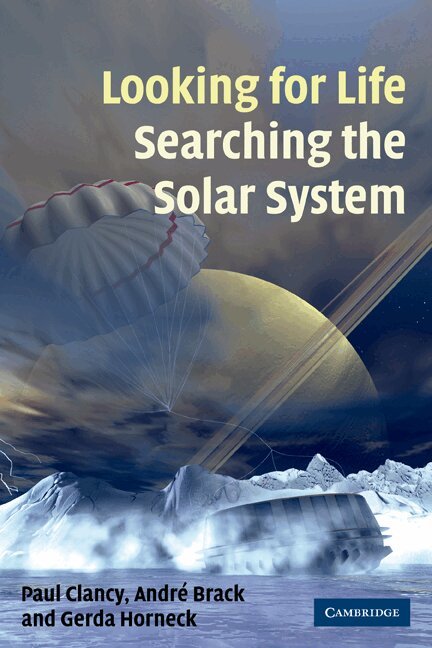
How did life begin on Earth? Is it confined to our planet? Will humans one day be able to travel long distances in space in search of other life forms? Written by three experts in the space arena, Looking for Life, Searching the Solar System aims to answer these and other intriguing questions. Beginning with what we understand of life on Earth, it describes the latest ideas about the chemical basis of life as we know it, and how they are influencing strategies to search for life elsewhere. It considers the ability of life, from microbes to humans, to survive in space, on the surface of other planets, and be transported from one planet to another. It looks at the latest plans for missions to search for life in the Solar System, and how these are being influenced by new technologies, and current thinking about life on Earth. This fascinating and broad-ranging book is for anyone with an interest in the search for life beyond our planet.
Inbunden, Engelska, 2005
795 kr
Skickas inom 7-10 vardagar
How did life begin on Earth? Is it confined to our planet? Will humans one day be able to travel long distances in space in search of other life forms? Written by three experts in the space arena, Looking for Life, Searching the Solar System aims to answer these and other intriguing questions. Beginning with what we understand of life on Earth, it describes the latest ideas about the chemical basis of life as we know it, and how they are influencing strategies to search for life elsewhere. It considers the ability of life, from microbes to humans, to survive in space, on the surface of other planets, and be transported from one planet to another. It looks at the latest plans for missions to search for life in the Solar System, and how these are being influenced by new technologies, and current thinking about life on Earth. This fascinating and broad-ranging book is for anyone with an interest in the search for life beyond our planet.
Inbunden, Engelska, 1999
1 091 kr
Skickas inom 10-15 vardagar
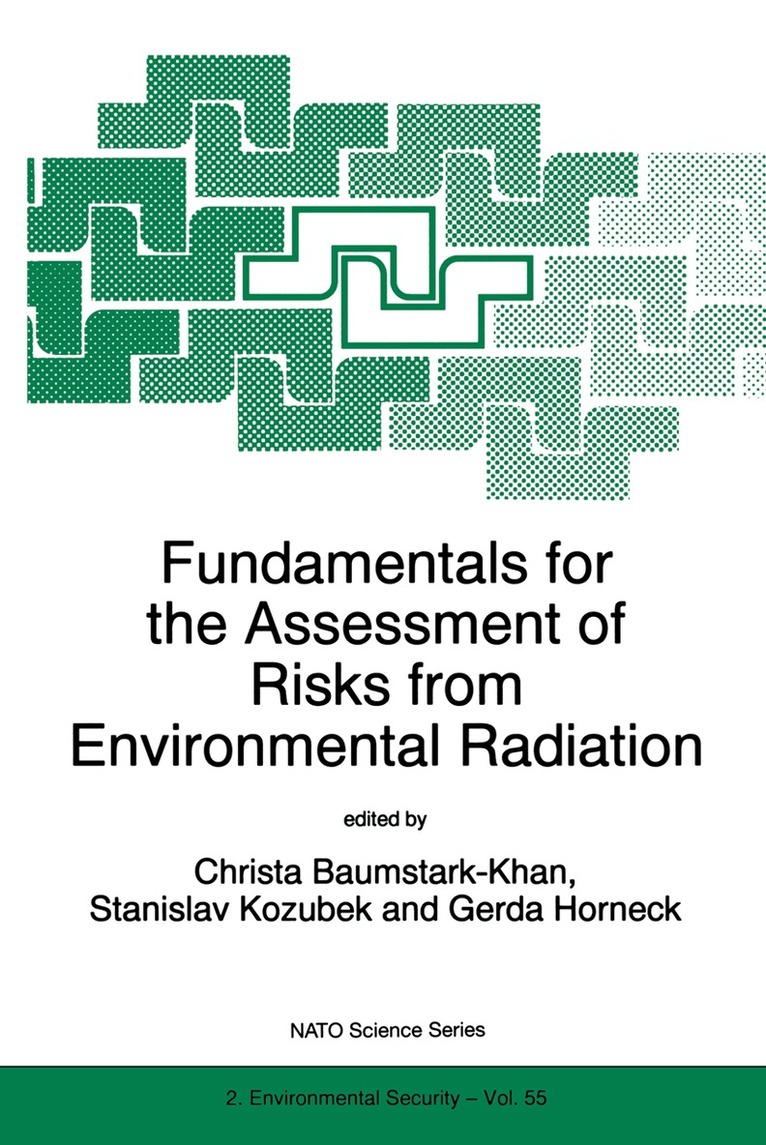
Human health, aquatic, and terrestrial ecosystems are all under threat from increasing levels of environmental radiation from a variety of sources, many of them anthropogenic. This book surveys the state of our knowledge of the fundamental processes that result from the interaction of environmental (both ionizing and UV) with living matter. Concepts of risk estimation and radiation protection are also considered. The book covers the consequences of radioactive pollution from accidents to nuclear power plant, especially in large areas of the former Soviet Union; the global problem of an increase in the incidence of UVB radiation at the earth's surface due to the depletion of the stratospheric ozone layer; the increase of natural radiation levels in areas of former uranium mining; and the increased levels of natural radiation experienced in air travel and space flight.
Häftad, Engelska, 1999
1 091 kr
Skickas inom 10-15 vardagar
Human health, aquatic, and terrestrial ecosystems are all under threat from increasing levels of environmental radiation from a variety of sources, many of them anthropogenic. This book surveys the state of our knowledge of the fundamental processes that result from the interaction of environmental (both ionizing and UV) with living matter. Concepts of risk estimation and radiation protection are also considered. The book covers the consequences of radioactive pollution from accidents to nuclear power plant, especially in large areas of the former Soviet Union; the global problem of an increase in the incidence of UVB radiation at the earth's surface due to the depletion of the stratospheric ozone layer; the increase of natural radiation levels in areas of former uranium mining; and the increased levels of natural radiation experienced in air travel and space flight.
Häftad, Engelska, 2012
549 kr
Skickas inom 10-15 vardagar
Space missions subject human beings or any other target of a spacecraft to a radiation environment of an intensity and composition not available on earth. Whereas for missions in low earth orbit (LEO), such as those using the Space Shuttle or Space Station scenario, radiation exposure guidelines have been developed and have been adopted by spacefaring agencies, for exploratory class missions that will take the space travellers outside the protective confines of the geomagnetic field sufficient guidelines for radiation protection are still outstanding. For a piloted Mars mission, the whole concept of radiation protection needs to be reconsidered. Since there is an increasing interest of many nations and space agencies in establishing a lunar base and lor exploring Mars by manned missions, it is both, timely and important to develop appropriate risk estimates and radiation protection guidelines which will have an influence on the design and structure of space vehicles and habitation areas of the extraterrestrial settlements. This book is the result of a multidisciplinary effort to assess the state of art in our knowledge on the radiation situation during deep space missions and on the impact of this complex radiation environment on the space traveller. It comprises the lectures by the faculty members as well as short contributions by the students given at the NATO Advanced Study Institute "Biological Effects and Physics of Solar and Galactic Cosmic Radiation" held in Armacao de Pera, Portugal, 12-23 October, 1991.
Häftad, Engelska, 2012
549 kr
Skickas inom 10-15 vardagar
Space missions subject human beings or any other target of a spacecraft to a radiation environment of an intensity and composition not available on earth. Whereas for missions in low earth orbit (LEO), such as those using the Space Shuttle or Space Station scenario, radiation exposure guidelines have been developed and have been adopted by spacefaring agencies, for exploratory class missions that will take the space travellers outside the protective confines of the geomagnetic field sufficient guidelines for radiation protection are still outstanding. For a piloted Mars mission, the whole concept of radiation protection needs to be reconsidered. Since there is an increasing interest ci many nations and space agencies in establishing a lunar base and lor exploring Mars by manned missions, it is both, timely and important to develop appropriate risk estimates and radiation protection guidelines which will have an influence on the design and structure of space vehicles and habitation areas of the extraterrestrial settlements. This book is the result of a multidisciplinary effort to assess the state of art in our knowledge on the radiation situation during deep space missions and on the impact of this complex radiation environment on the space traveller. ]t comprises the lectures by the faculty members as well as short contributions by the students given at the NATO Advanced Study Institute "Biological Effects and Physics of Solar and Galactic Cosmic Radiation" held in Armacao de Pera, Portugal, 12-23 October, 1991.
E-bok
PDF, Engelska, 2012687 kr
Läs direkt efter köp
Space missions subject human beings or any other target of a spacecraft to a radiation environment of an intensity and composition not available on earth. Whereas for missions in low earth orbit (LEO), such as those using the Space Shuttle or Space Station scenario, radiation exposure guidelines have been developed and have been adopted by spacefaring agencies, for exploratory class missions that will take the space travellers outside the protective confines of the geomagnetic field sufficient guidelines for radiation protection are still outstanding. For a piloted Mars mission, the whole concept of radiation protection needs to be reconsidered. Since there is an increasing interest of many nations and space agencies in establishing a lunar base and lor exploring Mars by manned missions, it is both, timely and important to develop appropriate risk estimates and radiation protection guidelines which will have an influence on the design and structure of space vehicles and habitation areas of the extraterrestrial settlements. This book is the result of a multidisciplinary effort to assess the state of art in our knowledge on the radiation situation during deep space missions and on the impact of this complex radiation environment on the space traveller. It comprises the lectures by the faculty members as well as short contributions by the students given at the NATO Advanced Study Institute "Biological Effects and Physics of Solar and Galactic Cosmic Radiation" held in Armacao de Pera, Portugal, 12-23 October, 1991.
E-bok
PDF, Engelska, 2012687 kr
Läs direkt efter köp
Space missions subject human beings or any other target of a spacecraft to a radiation environment of an intensity and composition not available on earth. Whereas for missions in low earth orbit (LEO), such as those using the Space Shuttle or Space Station scenario, radiation exposure guidelines have been developed and have been adopted by spacefaring agencies, for exploratory class missions that will take the space travellers outside the protective confines of the geomagnetic field sufficient guidelines for radiation protection are still outstanding. For a piloted Mars mission, the whole concept of radiation protection needs to be reconsidered. Since there is an increasing interest ci many nations and space agencies in establishing a lunar base and lor exploring Mars by manned missions, it is both, timely and important to develop appropriate risk estimates and radiation protection guidelines which will have an influence on the design and structure of space vehicles and habitation areas of the extraterrestrial settlements. This book is the result of a multidisciplinary effort to assess the state of art in our knowledge on the radiation situation during deep space missions and on the impact of this complex radiation environment on the space traveller. ]t comprises the lectures by the faculty members as well as short contributions by the students given at the NATO Advanced Study Institute "Biological Effects and Physics of Solar and Galactic Cosmic Radiation" held in Armacao de Pera, Portugal, 12-23 October, 1991.
E-bok
PDF, Engelska, 2008873 kr
Läs direkt efter köp
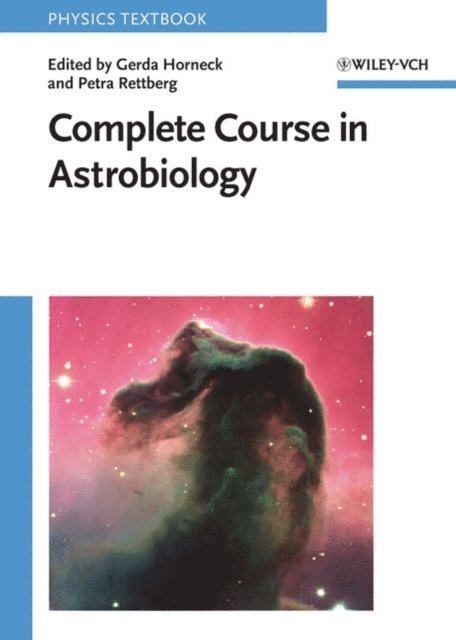
This up-to-date resource is based on lectures developed by experts in the relevant fields and carefully edited by the leading astrobiologists within the European community. Aimed at graduate students in physics, astronomy and biology and their lecturers, the text begins with a general introduction to astrobiology, followed by sections on basic prebiotic chemistry, extremophiles, and habitability in our solar system and beyond. A discussion of astrodynamics leads to a look at experimental facilities and instrumentation for space experiments and, ultimately, astrobiology missions, backed in each case by the latest research results from this fascinating field. Includes a CD-ROM with additional course material.
E-bok
PDF, Engelska, 2012687 kr
Läs direkt efter köp
How did life originate in the universe? How did it all start after the creation of matter and the formation of elements in the stars? What are the pathways from the first organic molecules in space to the evolution of complex life forms on Earth and perhaps elsewhere? And how will it all end? The Universe itself sets the stage for the very interdisciplinary field of astrobiology that attempts to answer such questions, the central one being: What is the (cosmic) recipe for life? Currently there are only very few known elements in this vast mosaic. This book bridges a gap in the literature by bringing together leading specialists from different backgrounds who lecture on their fields, with close relevance to astrobiology, providing tutorial accounts that lead all the way to the forefront of research. The book will thus be useful for students, lecturers and reseachers alike.
Häftad, Engelska, 2011
549 kr
Skickas inom 10-15 vardagar
How did life originate in the universe? How did it all start after the creation of matter and the formation of elements in the stars? What are the pathways from the first organic molecules in space to the evolution of complex life forms on Earth and perhaps elsewhere? And how will it all end? The Universe itself sets the stage for the very interdisciplinary field of astrobiology that attempts to answer such questions, the central one being: What is the (cosmic) recipe for life? Currently there are only very few known elements in this vast mosaic. This book bridges a gap in the literature by bringing together leading specialists from different backgrounds who lecture on their fields, with close relevance to astrobiology, providing tutorial accounts that lead all the way to the forefront of research. The book will thus be useful for students, lecturers and reseachers alike.
E-bok
PDF, Engelska, 20131 408 kr
Läs direkt efter köp
Human health as well as aquatic and terrestrial ecosystems are threatened from increa sing levels of environmental radiation of various sources, many of them of anthropoge nic causality: large areas of the former Soviet Union suffer from radioactive pollution, in particular after the Chemobyl accident; the increase in the incidence of UVB radiati on at the Earth''s surface as a result of a progressive depletion of stratospheric ozone is a global problem that requires international concerted actions; in areas of former uranium mining the natural radiation level is substantially increased due to elevated radon levels; a growing portion of the population involved in air traffic is exposed to increased levels of natural radiation; and with the International Space Station an increasing number of astronauts will be exposed to the complex field of cosmic radiation. To estimate the corresponding risks, a better knowledge of the underlying radiobiological mechanisms at the molecular, cellular and system level is required. This book is the result of a multidisciplinary effort to discuss the current state of knowledge of the fundamental processes that result from interactions of environmental radiation -ionizing as well as UV radiation -with living matter and the existing radiati on protection concepts, and then to define future research work needed as fundamental information for the assessment of risks from increased levels of environmental radiation to human health and ecosystem balance. It comprises the key lectures and statements presented at the NATO Advanced Research Workshop.