Gerhard Lutz - Böcker
Visar alla böcker från författaren Gerhard Lutz. Handla med fri frakt och snabb leverans.
7 produkter
7 produkter
594 kr
Skickas inom 10-15 vardagar
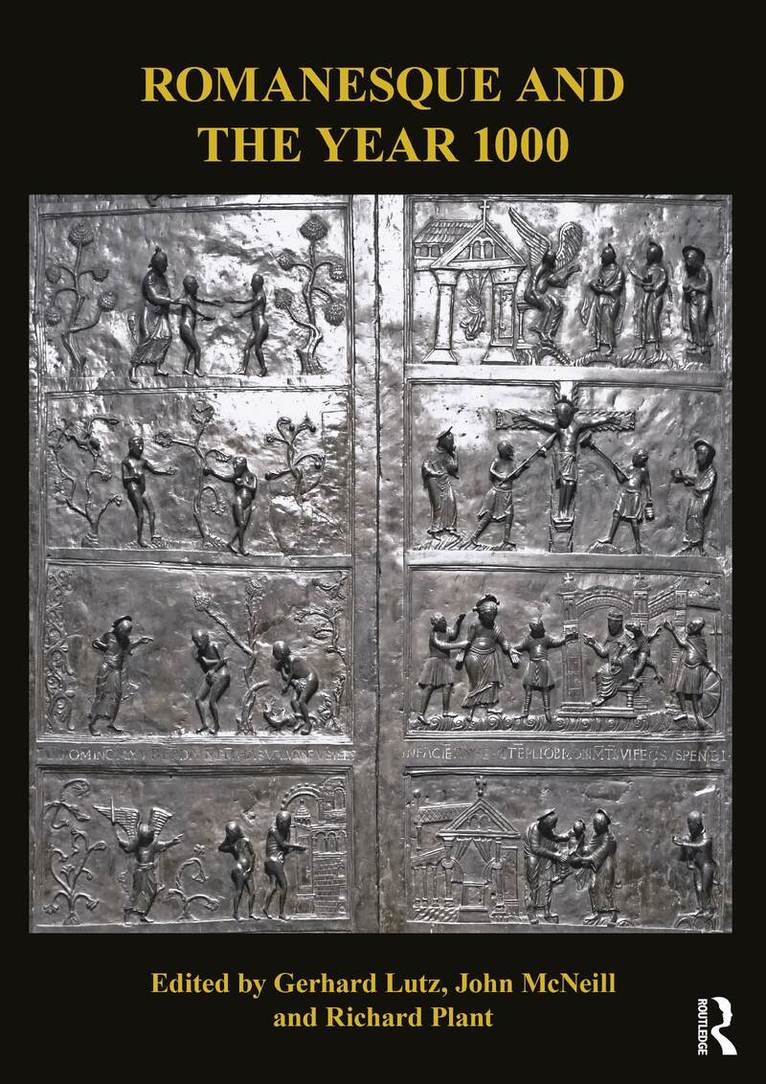
Romanesque and the Year 1000 examines the art and architecture of the Latin West between c. 970 and c. 1030, a period which witnessed crucial developments in iconography and stylistic expression across a wide range of media.Despite the complex political situation in late 10th-century Europe – a period marked by chaos in some areas and the effective exercise of authority in others – the last quarter of the century saw an apparent upsurge in artistic production in the Empire, southern Britain, Lombardy, the Alps, and the Mediterranean, albeit one whose survival rate is low. The decades after the millennium have left a larger residue of work, notably in France, Catalonia and northern Italy, but were the 1020s artistically more dynamic than the 980s? How might we describe the cultural climate of the Latin West between c. 970 and c. 1030? Individual chapters examine the influence of Carolingian art on artistic production around 1000; the emergence of new approaches to architecture in France, Germany, England and northern Italy; and the response of artists to perceived order and disorder at the turn of the millennium. There are studies of architectural sculpture in Catalonia and Castile, new town foundation in Saxony, and monastic architecture in southern Britain, together with examinations of Ottonian sarcophagi, book covers in gold and ivory, the wall-paintings at Reichenau, the patronage of Willigis at Mainz and Robert the Pious in northern France, the early Romanesque of Poland and Hungary, and the reflection of a new type of affective piety in the manuscript illumination of late Anglo-Saxon England.Romanesque and the Year 1000 presents a wealth of new research in artistic production at a critical period and is of interest to art historians, archaeologists, and historians alike.
2 151 kr
Skickas inom 10-15 vardagar
Romanesque and the Year 1000 examines the art and architecture of the Latin West between c. 970 and c. 1030, a period which witnessed crucial developments in iconography and stylistic expression across a wide range of media.Despite the complex political situation in late 10th-century Europe – a period marked by chaos in some areas and the effective exercise of authority in others – the last quarter of the century saw an apparent upsurge in artistic production in the Empire, southern Britain, Lombardy, the Alps, and the Mediterranean, albeit one whose survival rate is low. The decades after the millennium have left a larger residue of work, notably in France, Catalonia and northern Italy, but were the 1020s artistically more dynamic than the 980s? How might we describe the cultural climate of the Latin West between c. 970 and c. 1030? Individual chapters examine the influence of Carolingian art on artistic production around 1000; the emergence of new approaches to architecture in France, Germany, England and northern Italy; and the response of artists to perceived order and disorder at the turn of the millennium. There are studies of architectural sculpture in Catalonia and Castile, new town foundation in Saxony, and monastic architecture in southern Britain, together with examinations of Ottonian sarcophagi, book covers in gold and ivory, the wall-paintings at Reichenau, the patronage of Willigis at Mainz and Robert the Pious in northern France, the early Romanesque of Poland and Hungary, and the reflection of a new type of affective piety in the manuscript illumination of late Anglo-Saxon England.Romanesque and the Year 1000 presents a wealth of new research in artistic production at a critical period and is of interest to art historians, archaeologists, and historians alike.
270 kr
Skickas inom 7-10 vardagar
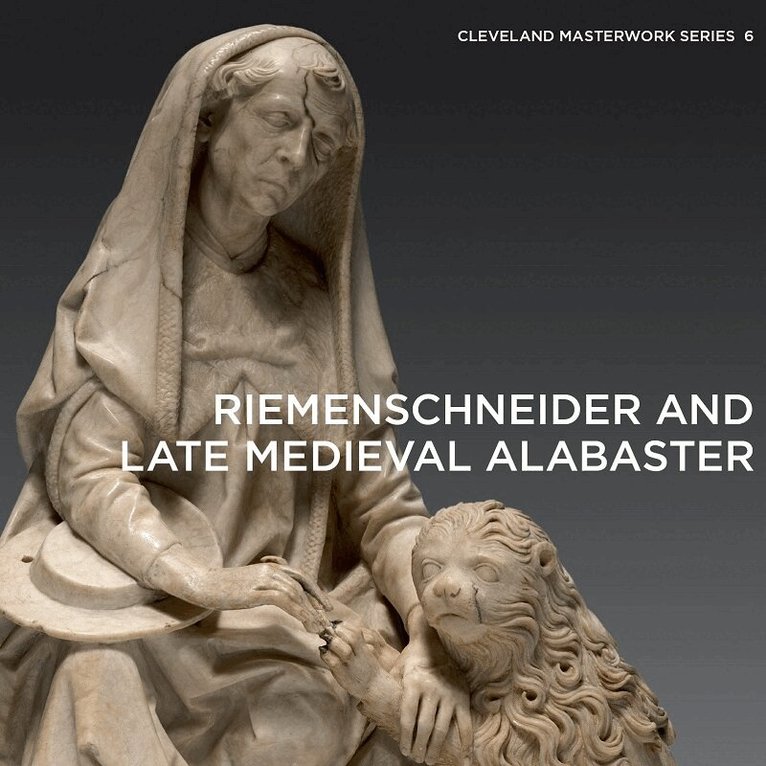
Said to have come from the Benedictine abbey church of Saint Peter in Erfurt, Germany, this statue by Tilman Riemenschneider (c. 1460 - 1531), dated to c. 1495, depicts the church father Saint Jerome as he removes a thorn from the paw of a lion, a legendary account of the saint's kindness. Following the common iconography of the scene, Jerome is dressed in the traditional robes of a Roman cardinal, with the cowl draped over his tonsured head and the broad-brimmed hat on his right leg. Traces of polychromy and gilding suggest that it was once brightly coloured. Drill holes in the hat further indicate that cords and tassels of fabric, typical of a cardinal's hat, would once have decorated the sculpture. Whether the statue was originally commissioned for an altar in a private chapel or for its artistic value remains unknown. Its alleged provenance from a church in Erfurt and Jerome's popularity as a patron saint of humanists and scholars make either scenario likely.Alabaster was prized for its lustre and capacity for fine details from the fourteenth to the sixteenth century. The gleaming stone was used for altarpieces and small sculptures, as well as the tombs of wealthy princes. The book unites alabaster works from the medieval collection of the Cleveland Museum of Art and selected masterpieces of alabaster sculpture from North American museums and the Louvre in Paris, which allow insight into the production of alabaster sculptures in this period. It is striking that these works are of such a particularly exquisite quality that this material was used especially for high-ranking commissions, such as the tomb of Duke Philip the Bold of Burgundy in Champmol near Dijon. The book is accompanied by several essays that examine the subject of alabaster sculpture from different perspectives.
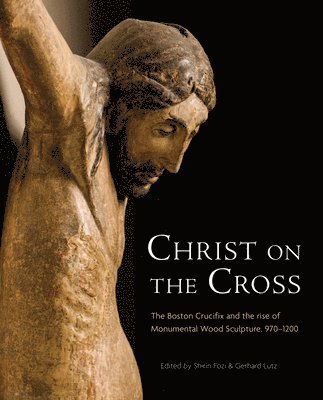
Christ on the Cross
The Boston Crucifix and the Rise of Monumental Wood Sculpture, 970-1200
Inbunden, Engelska, 2020
2 212 kr
Skickas inom 5-8 vardagar
1 472 kr
Skickas inom 10-15 vardagar
Starting from basic principles, the author, whose own contributions to these developments have been significant, describes the rapidly growing field of modern semiconductor detectors used for energy and position measurement radiation. This development was stimulated by requirements in elementary particle physics where it has led to important scientific discoveries. It has now spread to many other fields of science and technology. The book is written in a didactic way and includes an introduction to semiconductor physics. The working principles of semiconductor radiation detectors are explained in an intuitive way, followed by formal quantitative analysis. Broad coverage is also given to electronic signal readout and to the subject of radiation damage. The book is the first to comprehensively cover the semiconductor radiation detectors currently in use. It is useful as a teaching guide and as a reference work for research and applications.
536 kr
Skickas inom 3-6 vardagar
264 kr
Tillfälligt slut
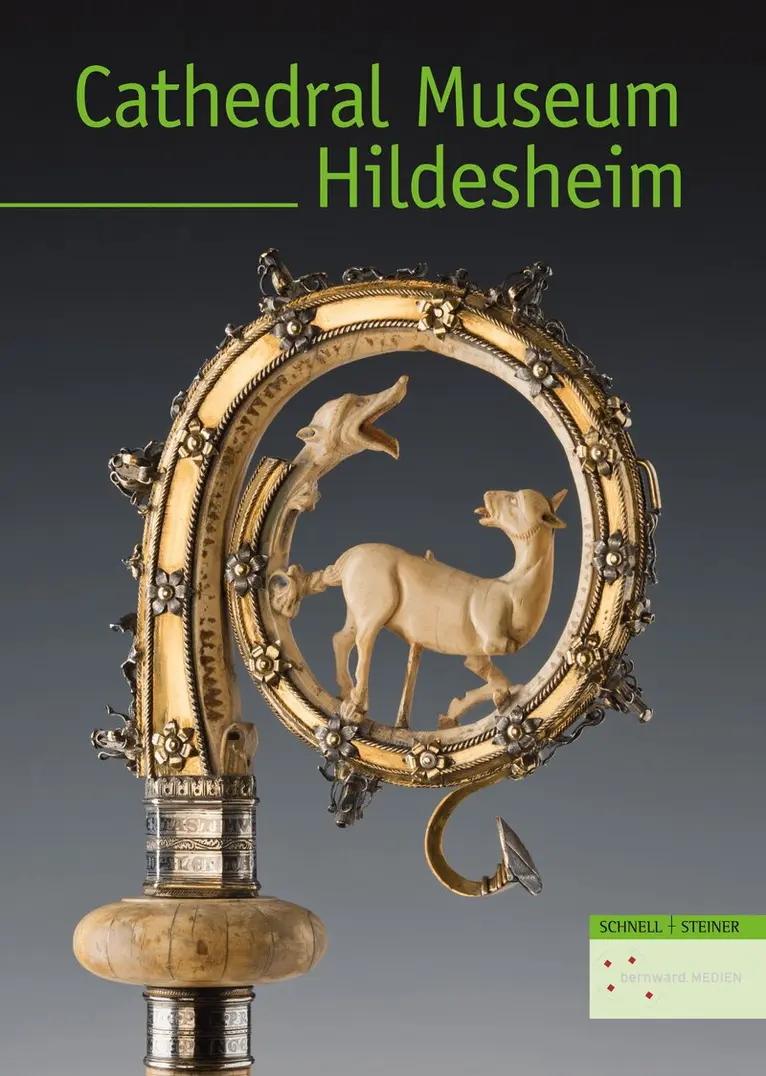
The new exhibition focuses on art from 1000–1250 AD, when Hildesheim was a leading cultural and spiritual centre. However, key works from more recent periods are also on display such as, for example, the cathedral‘s Renaissance choir screen, which dates from around 1540, or the monumental early 17th century tapestry cycle depicting the Artemisia legend. The historical works are juxtaposed with works by contemporary artists such as Bernhard Heiliger, Arnulf Rainer, Gerd Winner or Emil Cimiotti.This richly illustrated publication provides an overview of the main works in the form of short texts accompanied by mostly new pictures.