Gerhard Stickel (EFNIL) - Böcker
Visar alla böcker från författaren Gerhard Stickel (EFNIL). Handla med fri frakt och snabb leverans.
4 produkter
4 produkter
Del 78 - DASK – Duisburger Arbeiten zur Sprach- und Kulturwissenschaft / Duisburg Papers on Research in Language and Culture
Language Use in Business and Commerce in Europe
Contributions to the Annual Conference 2008 of EFNIL in Lisbon
Inbunden, Engelska, 2009
686 kr
Skickas inom 5-8 vardagar
The linguistic domains of business and commerce are especially affected by the economic and communicative globalization. Since language use in these domains has an impact on the use of a language in other domains, the future development of the European languages will not mainly depend on language-internal processes, but will increasingly be influenced by the use of English as the international vehicular language. The present development in Europe is discussed in several overview articles and a series of reports on the specific situation in various European countries. In addition, the Lisbon Resolution of EFNIL, pointing at the advantages of multilingualism in international business, is presented in 26 languages including the 23 official languages of the European Union. It calls the EU and its members to acknowledge languages as key factors for economic success, also from the perspective of consumers and workers.
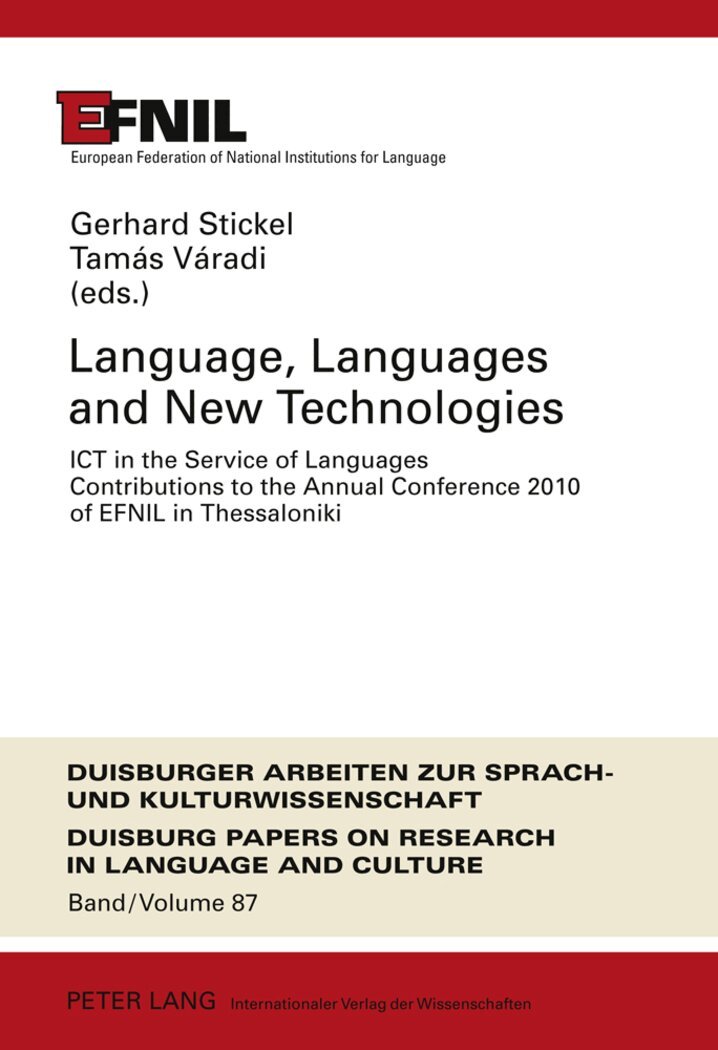
Del 87 - DASK – Duisburger Arbeiten zur Sprach- und Kulturwissenschaft / Duisburg Papers on Research in Language and Culture
Language, Languages and New Technologies
ICT in the Service of Languages- Contributions to the Annual Conference 2010 of EFNIL in Thessaloniki
Inbunden, Engelska, 2011
623 kr
Skickas inom 5-8 vardagar
The development of smaller and more powerful computers and the introduction of new communication channels by the interlinking of computers, by the Internet and the World Wide Web, have caused great changes for linguistics. They affect the methods in the various disciplines of pure linguistics as well as the tools and ways of applied linguistics such as translation and interpretation, language teaching, learning, and testing. This volume presents general reflections and overview articles on these new developments by noted experts followed by reports on the concrete uses of information technologies for linguistic purposes in different European countries and at the European Parliament. A discussion of another important linguistic issue is added: the various uses of the highly symbolic term national language.
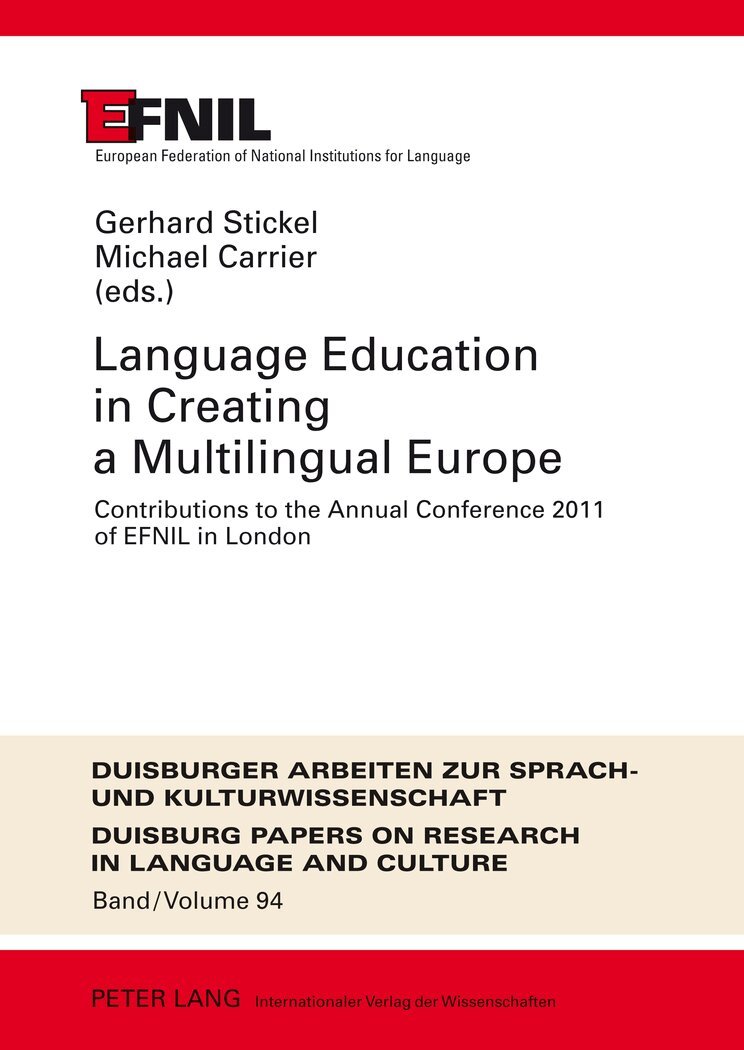
Del 94 - DASK – Duisburger Arbeiten zur Sprach- und Kulturwissenschaft / Duisburg Papers on Research in Language and Culture
Language Education in Creating a Multilingual Europe
Contributions to the Annual Conference 2011 of EFNIL in London
Inbunden, Engelska, 2012
576 kr
Skickas inom 5-8 vardagar
The European Union has conceived itself as multilingual since its beginning in 1956. EFNIL, the network of the central language institutions of all states of the Union and several other European countries, promotes the enhancement of individual plurilingualism of the people in Europe as an important prerequisite for European multilingualism. The EFNIL conference hosted 2011 by the British Council in London was devoted to the discussion of how individual plurilingualism is being achieved by language education in Europe. In this volume, several general reflections on the main topic are followed by a critical discussion of present language instruction in the United Kingdom and reports on foreign language education in various other countries. Reports on four current projects that aim to describe the present linguistic diversity of Europe follow. A detailed interim report on the results of one of these projects (ELM) concludes the book.
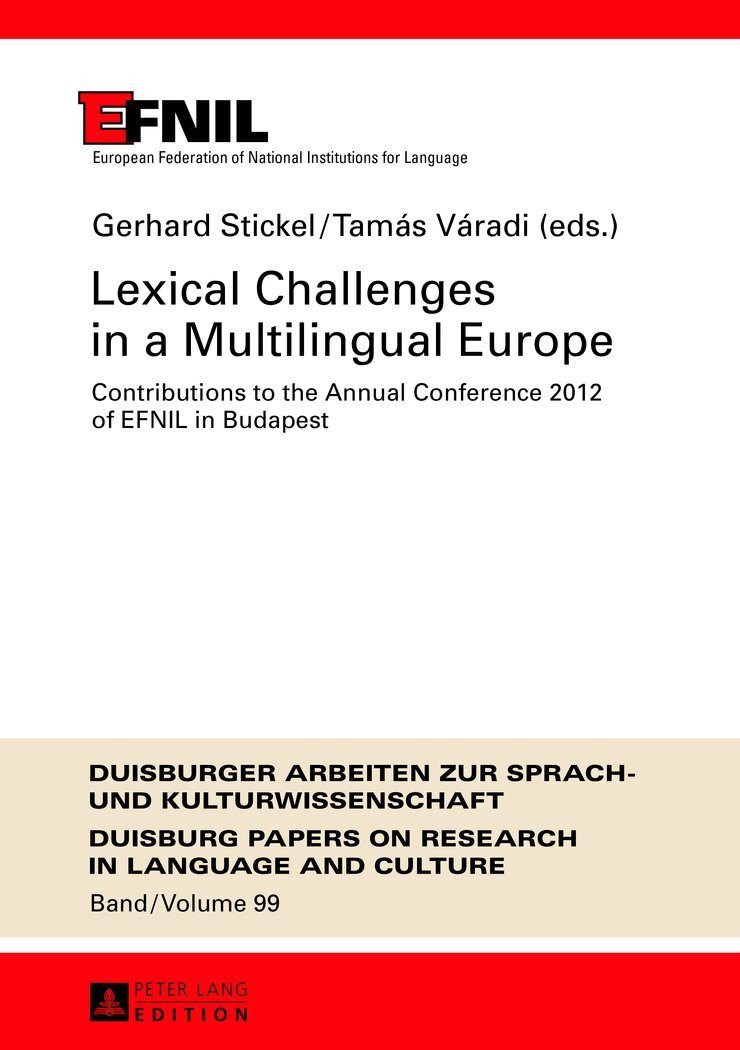
Del 99 - DASK – Duisburger Arbeiten zur Sprach- und Kulturwissenschaft / Duisburg Papers on Research in Language and Culture
Lexical Challenges in a Multilingual Europe
Contributions to the Annual Conference 2012 of EFNIL in Budapest
Inbunden, Engelska, 2013
686 kr
Skickas inom 5-8 vardagar
The tenth EFNIL conference investigated the different ways in which people in Europe access lexical information – both in their own language and in other languages – and how governments, language institutions, publishers, and others go about the business of compiling and disseminating this lexical information. In this volume, general reflections by several experts on the history, the present state and new developments of lexicography in Europe are presented, followed by reports on special lexicographic projects in several European countries. The Budapest Resolution of EFNIL on the Lexical Challenges in Multilingual Europe offered in the official languages of most of the member states of the European Union and other European countries concludes the book.