Gernot Segelbacher – författare
Visar alla böcker från författaren Gernot Segelbacher. Handla med fri frakt och snabb leverans.
3 produkter
3 produkter
Del 39 - Studies in Avian Biology
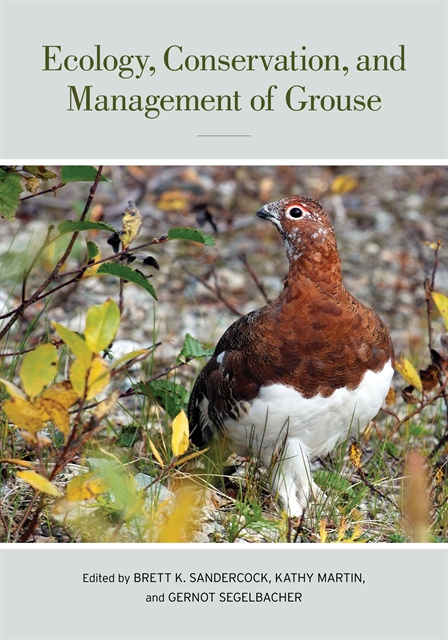
Ecology, Conservation, and Management of Grouse
Inbunden, Engelska, 2011
829 kr
Skickas inom 5-8 vardagar
Grouse - an ecologically important group of birds that include capercaillie, prairie chickens, and ptarmigan - are distributed throughout the forests, grasslands, and tundra of Europe, Asia, and North America. Today, many grouse populations are in decline, and the conservation and management of these charismatic birds is becoming a global concern. This volume summarizes current knowledge of grouse biology in 25 chapters contributed by 80 researchers from field studies around the world. Organized in four sections - Spatial Ecology, Habitat Relationships, Population Biology, and Conservation and Management - the chapters offer important insights into spatial requirements, movements, and demography of grouse. Much of the research employs emerging tools in ecology that span biogeochemistry, molecular genetics, endocrinology, radio-telemetry, and remote sensing. The chapters explore topics including the impacts of climate change, energy development, and harvest, and give new evidence for life-history changes in response to human activities.
E-bok
Engelska, 20111 363 kr
Läs direkt efter köp
Grouse—an ecologically important group of birds that include capercaillie, prairie chickens, and ptarmigan—are distributed throughout the forests, grasslands, and tundra of Europe, Asia, and North America. Today, many grouse populations are in decline, and the conservation and management of these charismatic birds is becoming a global concern. This volume summarizes current knowledge of grouse biology in 25 chapters contributed by 80 researchers from field studies around the world. Organized in four sections—Spatial Ecology, Habitat Relationships, Population Biology, and Conservation and Management—the chapters offer important insights into spatial requirements, movements, and demography of grouse. Much of the research employs emerging tools in ecology that span biogeochemistry, molecular genetics, endocrinology, radio-telemetry, and remote sensing. The chapters explore topics including the impacts of climate change, energy development, and harvest, and give new evidence for life-history changes in response to human activities.
E-bok
PDF, Tyska, 2022317 kr
Läs direkt efter köp
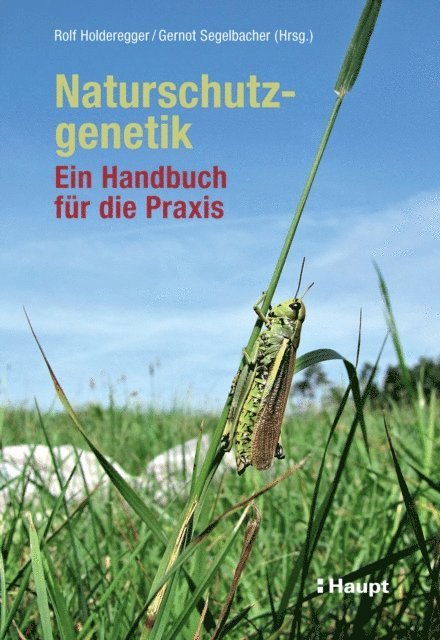
Genetische Methoden werden in der Naturschutzpraxis immer häufiger angewendet. Umwelt-DNA, Barcoding oder genetisches Monitoring sind nur einige der aktuellen Schlagwörter. Genetische Methoden verunsichern aber auch: Zu schwierig erscheinen die Methoden, zu wenig fassbar sind Gene, zu unverständlich sind die Fachwörter. Hier setzt «Naturschutzgenetik - Ein Handbuch für die Praxis» an. Es zeigt der Naturschutzpraxis - ob Behörden, Planungsbüros, Verbänden oder interessierten Einzelpersonen - auf möglichst einfache Weise die vielfältigen Verwendungsmöglichkeiten von Genetik im modernen Naturschutz auf. Dabei werden in 12 Kapiteln alle nötigen Grundlagen vermittelt, die Fachwörter erklärt und Bespiele konkreter Anwendungen gegeben. Die Themen umfassen:Rolle von Genetik im Naturschutz, Genetische Vielfalt, Anpassung und Anpassungsfähigkeit, Populationsgröße und Raumnutzung, Inzucht, Geografische Strukturen, Genfluss und Landschaftszerschneidung, Hybridisierung, Arten und Artbestimmung, Genetisches Monitoring, Genetische Methoden, Übersicht der Anwendungen von Naturschutzgenetik.Naturschutzgenetik trägt viel zum Schutz der biologischen Vielfalt bei, von der Stufe der Gene über die Arten bis hin zu Prozessen in Lebensräumen. Das Buch regt zum sinnvollen Einsatz genetischer Methoden im Naturschutz an und ist ein Handbuch und Nachschlagewerk für die Naturschutzpraxis.