Gert-Jan Burgers – författare
Visar alla böcker från författaren Gert-Jan Burgers. Handla med fri frakt och snabb leverans.
5 produkter
5 produkter
Del 7 - Explorations in Heritage Studies
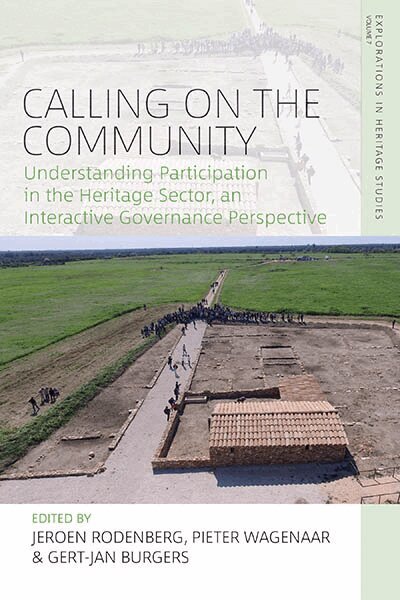
Calling on the Community
Understanding Participation in the Heritage Sector, an Interactive Governance Perspective
Inbunden, Engelska, 2023
1 903 kr
Skickas inom 3-6 vardagar
There is a call in Heritage Studies to democratize heritage practices and place local communities at the forefront; heritage plays an important role in identity formation, and therefore in social inclusion and exclusion. Public participation is often presented as the primary means to prioritize communities. However, studies focusing on public participation are typically descriptive in nature and lack a strong analytical framework that enables us to understand participation. The essays in this volume apply Public Administration theory to collaborative governance and thus contribute to a better understanding of public participation in the heritage sector.
Häftad, Engelska, 2026
373 kr
Skickas
There is a call in Heritage Studies to democratize heritage practices and place local communities at the forefront; heritage plays an important role in identity formation, and therefore in social inclusion and exclusion. Public participation is often presented as the primary means to prioritize communities. However, studies focusing on public participation are typically descriptive in nature and lack a strong analytical framework that enables us to understand participation. The essays in this volume apply Public Administration theory to collaborative governance and thus contribute to a better understanding of public participation in the heritage sector.
1 100 kr
Skickas inom 5-8 vardagar
E-bok
Engelska, 2021122 kr
Läs direkt efter köp
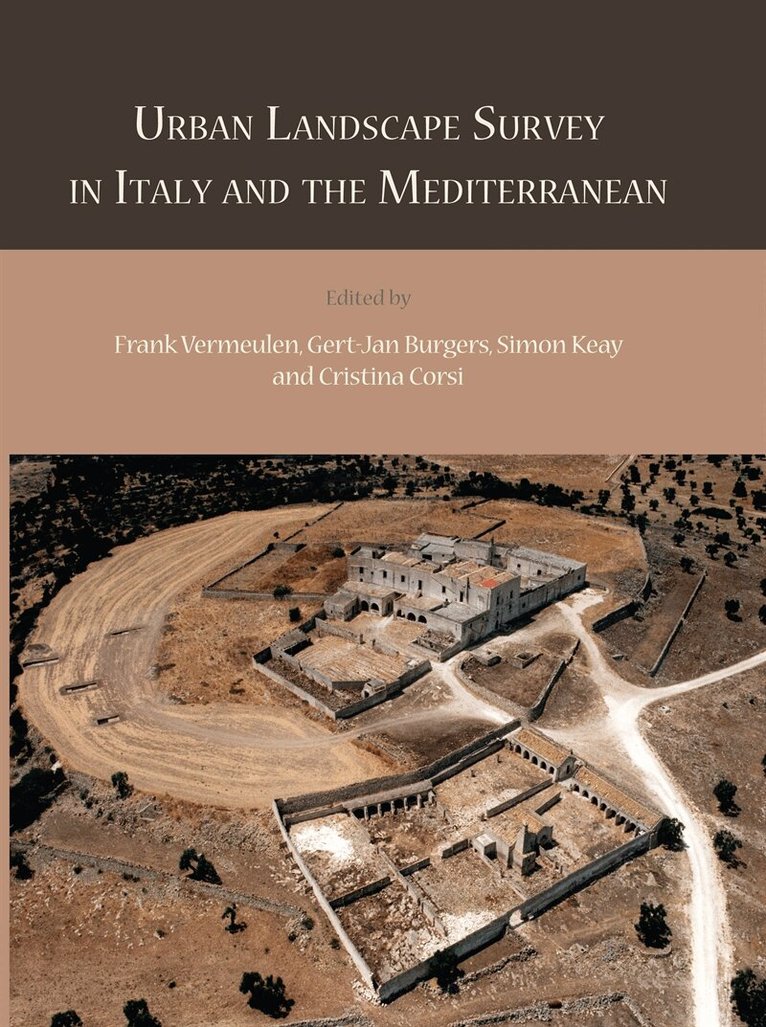
Field survey has been making a major contribution to our understanding of the rural landscapes of the Mediterranean for nearly forty years. During that time the techniques used to map ancient settlement patterns have grown in sophistication from being a process of simply identifying sites in the landscape, to one which provided nuanced understandings of their layouts, chronologies and contexts. This has led to a revolution in how archaeologists approach urban sites, with survey techniques being used increasingly often to generate a plan of a town site prior to excavation as a way of ensuring that the excavation can be used to address site-specific questions in a way that had not been possible before. Most recently, research has begun to reveal the advantages of integrating a range of different non-destructive techniques on urban sites. In combination with exciting new computer-based means of data visualization, all of this work means that it is now possible to virtually reconstruct a buried town within a relatively short space of time, as opposed to the old and destructive excavation-centered approach that could take generations. Unsurprisingly these advances are starting to make a very important understanding to urbanism in general and the Roman Empire in particular. Urban Landscape Survey in Italy and the Mediterranean builds upon all these new developments and is one of the first publications to focus exclusively upon the contribution of survey techniques to our understanding of ancient towns. It addresses methodology led enquiry into the nature of urban settlements primarily in Italy, but also in Greece, Turkey, Croatia, Portugal and Spain. The twenty-two papers from leading specialists in the field focus on two underlying themes. The first deals with the characterization of urban sites and draws upon a wide range of case studies. These range from key protohistoric centres in central and south Italy, to towns that epitomise the contradictions of cultural change under Rome, such as Paestum, Aquinum and Sagalassos, to Roman centres such as Teano, Suasa and Ammaia. The second theme is inter-urban relationships, looking in particular at wider urbanized landscapes in Italy. The fascinating selection of recent and on-going projects presented here significantly moves the limits of our current knowledge about ancient towns.
E-bok
PDF, Engelska, 20232 050 kr
Läs direkt efter köp
Over the last three decades, archaeologists have progressively embarked on field-walking projects all around the Mediterranean basin. The aim of most of these projects is to investigate the ancient settlement and landscape dynamics of specific Mediterranean regions. They greatly contribute to the new liveliness which characterizes present-day classical archaeology, not only by introducing new research methods but also, and in particular, by widening its subject matter to include the history of societies in the margins of the Graeco-Roman urban world. It is within this recent tradition that the present book has been written; the author aims to examine the ancient settlement and societal dynamics of the Brindisi region, in the north-east of the Salento peninsula. The field surveys indicate that during the pre-Roman period the regional society was characterized by processes of centralization and urbanization. Subsequently, from the 3rd century BC onwards, it gradually integrated into the Roman orbit. Burgers emphasizes an active indigenous role in the succesive colonial situations in southern Italy. He focuses on the internal dynamics of the local communities and investigates how social strategies manifested themselves, especially in external contacts and in the organization of settlement and landscape.