
Inbunden, Engelska, 2018
522 kr
Skickas inom 3-6 vardagar
522 kr
Skickas inom 3-6 vardagar
375 kr
Läs direkt efter köp
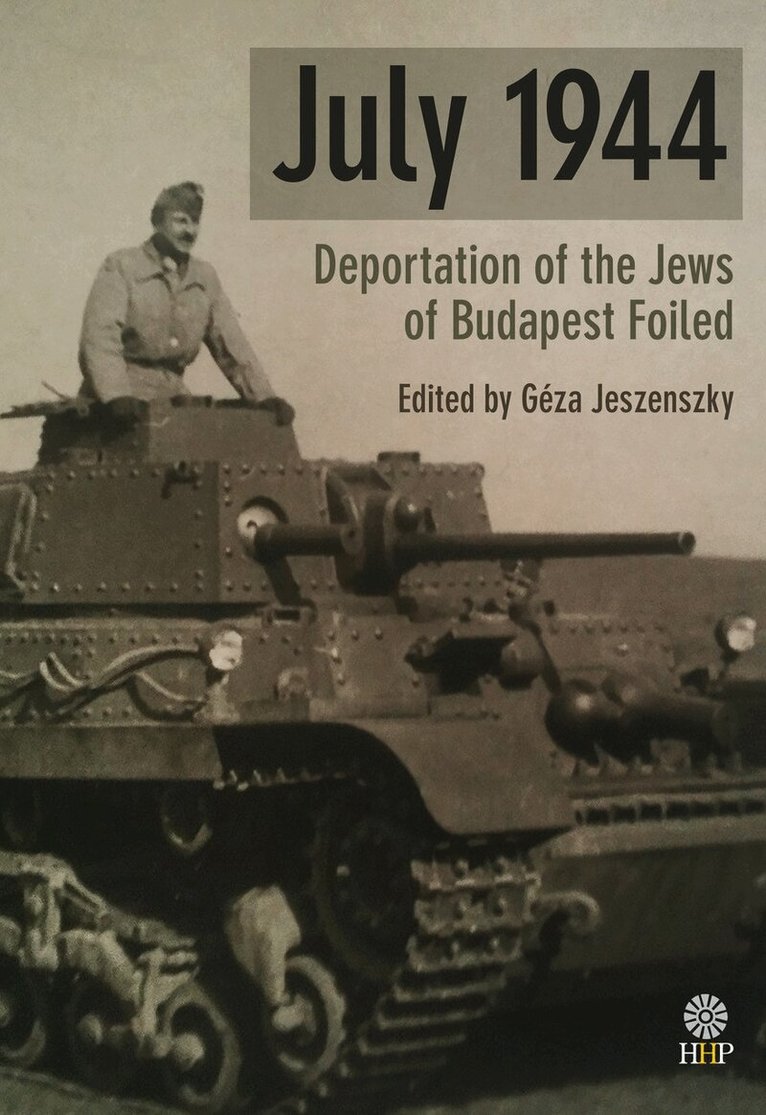
The aim of this volume is to shed light on a little known controversy about the most tragic year 1944, in Hungary: did a unit of the Hungarian army prevent the deportation of 300,000 Jewish Hungarians living in Budapest to the Nazi death camps?
Colonel Ferenc Koszorús used the 1st Hungarian Armored Division under his command to force the removal of the gendarmerie loyal to the pro-Nazi puppet government and ready to carry out the deportation of the Jews from Budapest. By that time the Regent, Admiral Horthy, under international pressure and learning from the Auschwitz Protocol of what was in store for the deported Hungarian nationals, ordered the ending of the deportations. There were rumors in town that the pro-Nazi and rabidly anti-Semitic State Secretary Baky was planning a coup to remove the Regent and to continue the deportations. As the round-up of Jews, contrary to the order of the Regent, was started on the outskirts of Budapest, Col. Koszorús, with the approval of Horthy entered Budapest with his troops and sent a courier to Baky threatening him with military action unless the gendarmerie is evacuated. Baky had no alternative but to comply. This action foiled both the coup (if that was really planned) and the continuation of the deportations. The Jews of Budapest were thus temporarily saved and Wallenberg and others could help them to survive the war until the Soviet Army occupied Budapest and expelled the Germans by February 1945.
366 kr
Skickas inom 5-8 vardagar
423 kr
Läs direkt efter köp
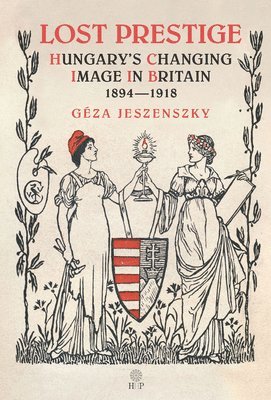
This book is not about how present-day Hungary has recently lost so much of the prestige it won with its heroic uprising in 1956 and its role in the fall of the communist satellites in 1989. Rather, it is the story of the formation of Hungary''s image abroad before and during World War I. That contributed to the exceptionally harsh terms the 1920 Trianon Peace Treaty meted out to Hungary: the historic kingdom was reduced to one third of its territory and population, leaving 3.5 million Hungarians outside the new borders. Despite the constant discrimination the Hungarian minorities have faced in most of Hungary''s neighbours in language use, education and administration, today they number about 2.5 million and they want to enjoy all the rights international law recommends and local self-government would provide.
Géza Jeszenszky chronicles how the very favourable reputation of Hungary and the Hungarians, established in their 1848-49 war for a liberal constitution and independence from Habsburg absolutism, was seriously damaged in the decade preceding the First World War. He shows its causes: the internal political crisis in 1904-06 undermined the notion that Hungary was a stabilizing and liberalizing factor in the Habsburg Monarchy; the almost daily London Times reports by its extremely well-informed correspondent, H.W. Steed, exposed the short-sighted social and electoral policies of Hungary''s political elite; and increasing awareness of the unfair treatment of the non-Hungarian national minorities, as revealed (with bias and exaggeration) by the political writer R.W. Seton-Watson. All of which coincided with the ascendancy of progressive social and political reforms in Britain, in the light of which Hungary appeared "backward". Finally, what counted most, was that despite its strong Anglophile sympathies Hungary found itself among the enemies of Great Britain in the Great War, on the side of Germany, the power which was seen as a threat to the British Empire and its command of the seas.

542 kr
Skickas inom 5-8 vardagar

547 kr
Skickas inom 5-8 vardagar