Gheorghe Clitan – författare
Visar alla böcker från författaren Gheorghe Clitan. Handla med fri frakt och snabb leverans.
4 produkter
4 produkter
Inbunden, Engelska, 2021
898 kr
Skickas inom 5-8 vardagar
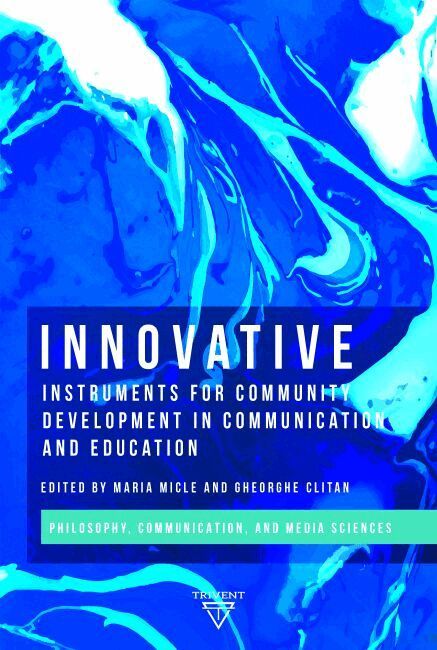
The multiple facets of this volume belong to five large themes. The first theme, that of persuasion and manipulation, is studied here through electoral campaigns (i.e., mental filters used in voting manipulation, the mechanisms of vote mobilisation, manipulation and storytelling models). The institutionalization of education represents the second theme, approached here through specific interdisciplinary instruments: the intersection of higher education with public learning, the answers of the knowledge society to the issues of contemporary work problems, the institutional relationships used to solve educational problems specific to childhood and adolescence, as well as the role of media competencies in professional development. The third theme is related to the inheritance and transmission of cultural identity, instrumentalized through issues such as: the duty of intergenerational justice with regard to cultural heritage, education and vocational training in library science, the social inclusion role of public and digital libraries. The collective and cultural identity of communities represents the fourth large theme, being approached through a triple perspective: the philosophical background of restoring the political dignity of communities, the communication space as a point of a needle towards the community space, and the communicational issue of the European capital of culture programmes. Lastly, the fifth theme belongs to practical and applied philosophy, specifically philosophical counselling, debating issues such as: the identification of the communicational background for this type of counselling, the secular approach to the problem of evil from a philosophical counselling perspective, the discussion of Platon's attitude towards suicide and of frank speech in the Epicurean school, the socio-anthropological perspective of immortality, as well as the formal approach of the relationship between real and imaginary.
Del 30 - International Issues in Adult Education
Collective Capacity Building
Shaping Education and Communication in Knowledge Society
Häftad, Engelska, 2020
814 kr
Skickas inom 5-8 vardagar
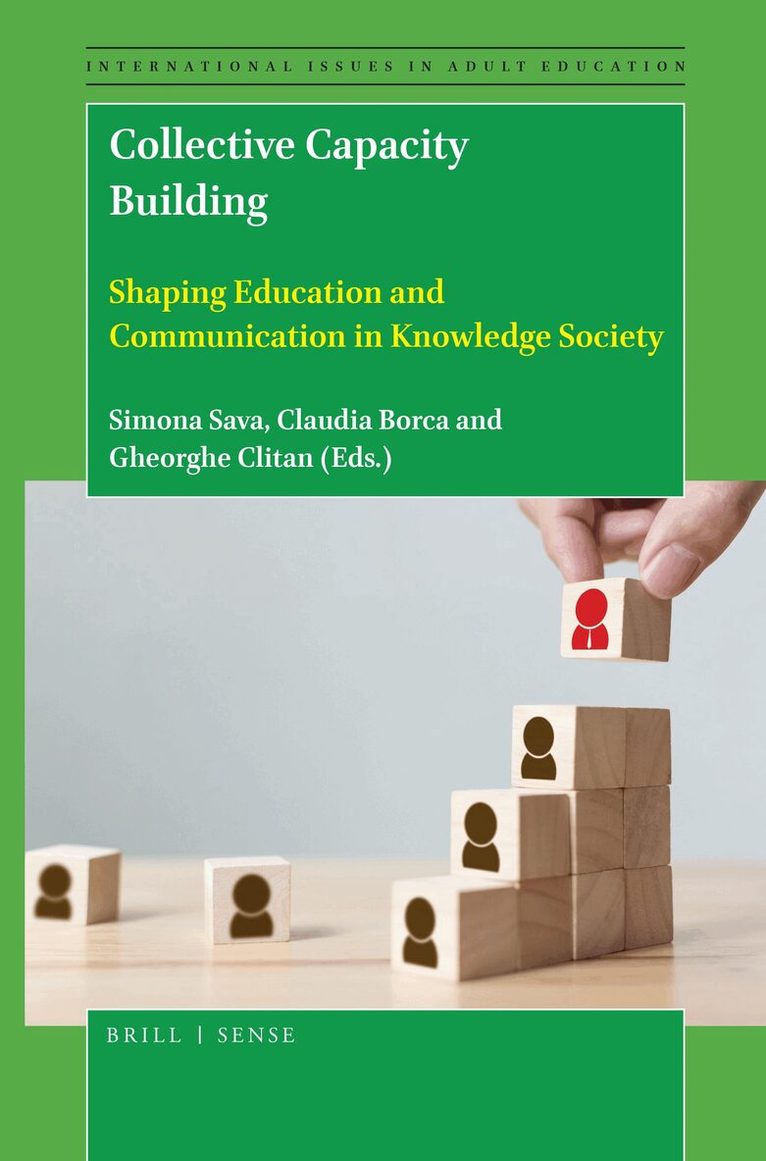
The theme of Collective Capacity Building (CCB) is a comprehensive one, resonating with the complexity of the knowledge society. Such complexity requires contributions of a wide range of scientists, for a multidimensional understanding. Thus, philosophers, economists, educationalists, sociologists, political scientists, psychologists, scientists from Romania, Germany, Spain, Serbia, Greece, Cyprus, Latvia and Sweden have come together in Collective Capacity Building: Shaping Education and Communication in Knowledge Society. Their choice to discuss current societal challenges in different fields, in a transdisciplinary and interdisciplinary manner, illustrates how communication, education, interaction, identity, science, professionalization and others are (re)shaped nowadays.As it is increasingly evident that the challenges of a knowledge-based society are more resilient to traditional approaches and the new focus is on how to regulate new skills and capacities, the contributions propose a more stimulating reflection and dialogue on how CCB can foster progress in some of the most intricate educational, social, cultural, geopolitical and economic issues today. In light of this, the contributors have addressed the following questions: How can we define collaboration in communication and educational theory and practice? What are the tools and the rules adopted by CCB in various practical contexts? How can researchers develop their theoretical perspective on CCB after their thorough investigation of current and complex educational issues and societal challenges?
Del 30 - International Issues in Adult Education
Collective Capacity Building
Shaping Education and Communication in Knowledge Society
Inbunden, Engelska, 2020
1 724 kr
Skickas inom 5-8 vardagar
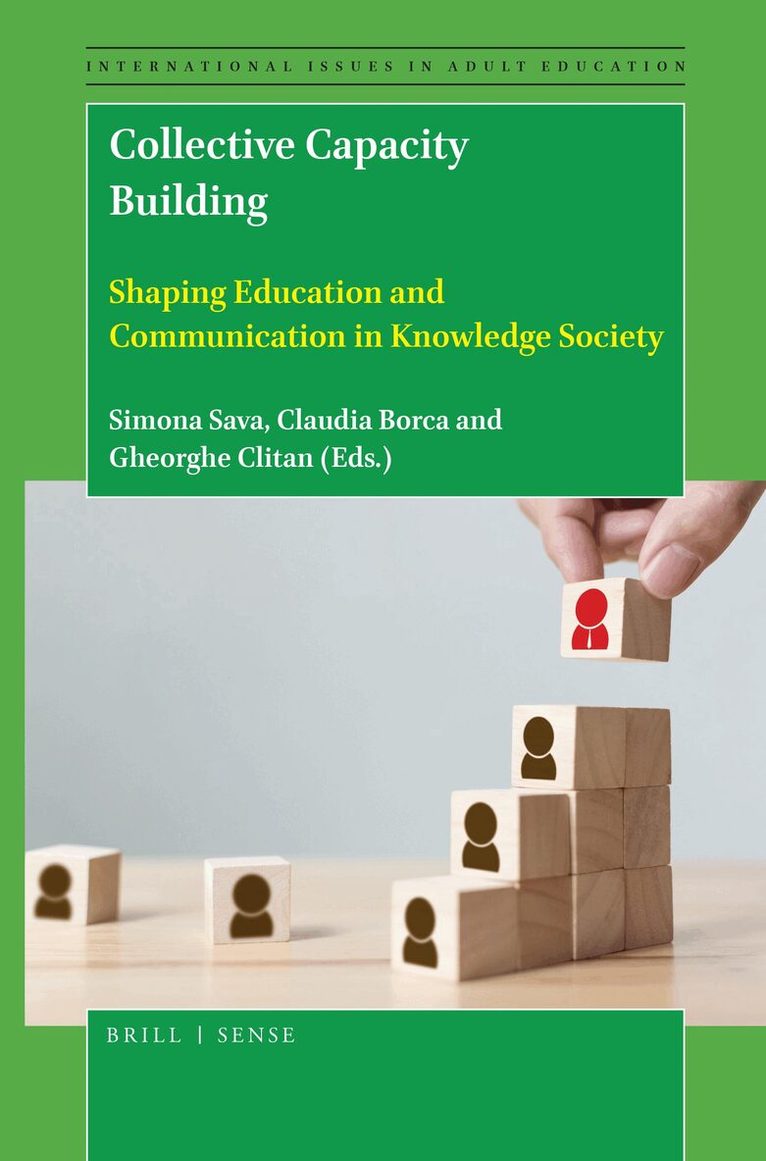
The theme of Collective Capacity Building (CCB) is a comprehensive one, resonating with the complexity of the knowledge society. Such complexity requires contributions of a wide range of scientists, for a multidimensional understanding. Thus, philosophers, economists, educationalists, sociologists, political scientists, psychologists, scientists from Romania, Germany, Spain, Serbia, Greece, Cyprus, Latvia and Sweden have come together in Collective Capacity Building: Shaping Education and Communication in Knowledge Society. Their choice to discuss current societal challenges in different fields, in a transdisciplinary and interdisciplinary manner, illustrates how communication, education, interaction, identity, science, professionalization and others are (re)shaped nowadays.As it is increasingly evident that the challenges of a knowledge-based society are more resilient to traditional approaches and the new focus is on how to regulate new skills and capacities, the contributions propose a more stimulating reflection and dialogue on how CCB can foster progress in some of the most intricate educational, social, cultural, geopolitical and economic issues today. In light of this, the contributors have addressed the following questions: How can we define collaboration in communication and educational theory and practice? What are the tools and the rules adopted by CCB in various practical contexts? How can researchers develop their theoretical perspective on CCB after their thorough investigation of current and complex educational issues and societal challenges?
E-bok
PDF, Engelska, 20201 844 kr
Läs direkt efter köp
The theme of Collective Capacity Building (CCB) is a comprehensive one, resonating with the complexity of the knowledge society. Such complexity requires contributions of a wide range of scientists, for a multidimensional understanding. Thus, philosophers, economists, educationalists, sociologists, political scientists, psychologists, scientists from Romania, Germany, Spain, Serbia, Greece, Cyprus, Latvia and Sweden have come together in Collective Capacity Building: Shaping Education and Communication in Knowledge Society. Their choice to discuss current societal challenges in different fields, in a transdisciplinary and interdisciplinary manner, illustrates how communication, education, interaction, identity, science, professionalization and others are (re)shaped nowadays. As it is increasingly evident that the challenges of a knowledge-based society are more resilient to traditional approaches and the new focus is on how to regulate new skills and capacities, the contributions propose a more stimulating reflection and dialogue on how CCB can foster progress in some of the most intricate educational, social, cultural, geopolitical and economic issues today. In light of this, the contributors have addressed the following questions: How can we define collaboration in communication and educational theory and practice? What are the tools and the rules adopted by CCB in various practical contexts? How can researchers develop their theoretical perspective on CCB after their thorough investigation of current and complex educational issues and societal challenges?