Ghislaine Pellat - Böcker
Visar alla böcker från författaren Ghislaine Pellat. Handla med fri frakt och snabb leverans.
7 produkter
7 produkter
1 338 kr
Skickas inom 5-8 vardagar
Les leçons d'une crise
Comment les territoires, les citoyens et les entreprises s'approprient l'Europe
Häftad, Franska, 2024
294 kr
Skickas inom 5-8 vardagar
Quand une crise est porteuse d'innovations
Comment les territoires, les citoyens et les entreprises s'approprient l'Europe
Häftad, Franska, 2024
366 kr
Skickas inom 5-8 vardagar
363 kr
Skickas inom 5-8 vardagar
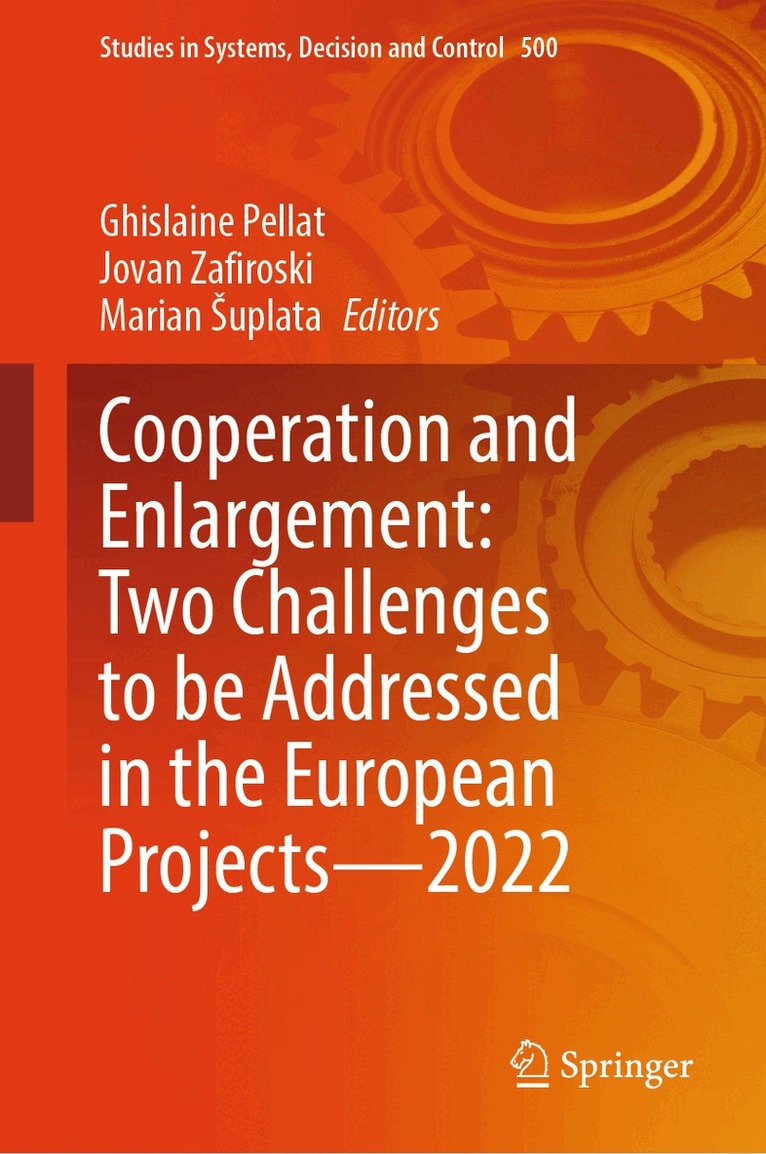
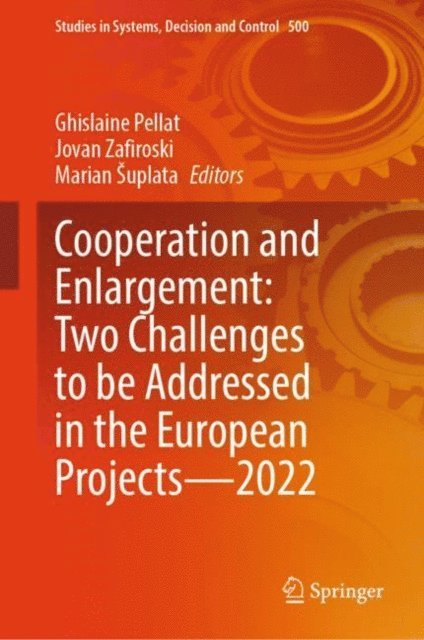
Cooperation and Enlargement: Two Challenges to be Addressed in the European Projects—2022
Inbunden, Engelska, 2023
2 110 kr
Skickas inom 7-10 vardagar
In this book, the ERECO-PGV[1] network wishes to make an overview of the cooperation implemented by and in the European Union and to describe the concrete forms they have taken. The issue is to analyze the internal European cooperation between economic actors, politicians, and EU citizens at different levels, but also to focus attention on the external cooperation (neighborhood policies, external policies, and collaborations with international institutions: NATO, OECD, WTO, etc.). Carrying uncompromising attention on this issue means rethinking the European project in light of today's challenges.From the very beginning, the EU was based on and called for forms of multinational cooperation, bilateral (internal and external) at different levels, involving economic actors, public actors, local authorities, and civil society. The frameworks for this cooperation as well as for the successive enlargements of the EU were drawn up in the context of European negotiations, in particular during discussions on the European Treaties. European values, standards, and rules are embodied in the texts of agreements, resolutions, and European directives and Treaties signed by all member countries. They establish the functioning of European institutions and the framework of democratic life in Europe.The emergence of current crises (Brexit, COVID-19, migration crisis, non-respect of rule of law rules, refusal of certain member countries to apply the European Charter of Human Rights, etc.) is questioning the project of the European Union and introduced the challenges which should be overcome by the proposal of the new project able to face the internal complexity of the Union and to answer to the pressure of a conflicting international context. What remains of the European ideal affirmed in the treaties of 1957, 1992, and 2007? How to "re-enchant" the common project? Yet, the European Union remains attractive to new candidate countries. How do they read the integration conditions into the EU with regard to their own projects?
Cooperation and Enlargement: Two Challenges to be Addressed in the European Projects—2022
Häftad, Engelska, 2024
2 110 kr
Skickas inom 10-15 vardagar
In this book, the ERECO-PGV[1] network wishes to make an overview of the cooperation implemented by and in the European Union and to describe the concrete forms they have taken. The issue is to analyze the internal European cooperation between economic actors, politicians, and EU citizens at different levels, but also to focus attention on the external cooperation (neighborhood policies, external policies, and collaborations with international institutions: NATO, OECD, WTO, etc.). Carrying uncompromising attention on this issue means rethinking the European project in light of today's challenges.From the very beginning, the EU was based on and called for forms of multinational cooperation, bilateral (internal and external) at different levels, involving economic actors, public actors, local authorities, and civil society. The frameworks for this cooperation as well as for the successive enlargements of the EU were drawn up in the context of European negotiations, in particular during discussions on the European Treaties. European values, standards, and rules are embodied in the texts of agreements, resolutions, and European directives and Treaties signed by all member countries. They establish the functioning of European institutions and the framework of democratic life in Europe.The emergence of current crises (Brexit, COVID-19, migration crisis, non-respect of rule of law rules, refusal of certain member countries to apply the European Charter of Human Rights, etc.) is questioning the project of the European Union and introduced the challenges which should be overcome by the proposal of the new project able to face the internal complexity of the Union and to answer to the pressure of a conflicting international context. What remains of the European ideal affirmed in the treaties of 1957, 1992, and 2007? How to "re-enchant" the common project? Yet, the European Union remains attractive to new candidate countries. How do they read the integration conditions into the EU with regard to their own projects?
Del 258 - Lecture Notes on Data Engineering and Communications Technologies
Data-Centric Business and Applications
How a Business and Territorial Approach Can Challenge the Crises in Europe?
Häftad, Engelska, 2025
1 479 kr
Skickas inom 10-15 vardagar
The ERECO #European #Research #Community is an established network in interdisciplinary European research, bringing together 133 academics from 33 universities across the continent. Since 1994, ERECO has fostered a unique environment where economics, business, governance, technology, and culture meet to address the major transformations shaping Europe today. Driven by a belief that crises are moments for opportunity rather than decline, ERECO’s researches offer forward-looking analyses on innovation, sustainability, regional resilience, and the future of work. Their collective expertise supports universities, public institutions, and businesses seeking to understand and anticipate Europe’s next challenges. At a time when adaptability and vision are more critical than ever, ERECO positions itself as a strategic partner for those who aim to build a more resilient, inclusive, and future-ready Europe.