Giacomo Landeschi - Böcker
Visar alla böcker från författaren Giacomo Landeschi. Handla med fri frakt och snabb leverans.
5 produkter
5 produkter
558 kr
Skickas inom 10-15 vardagar
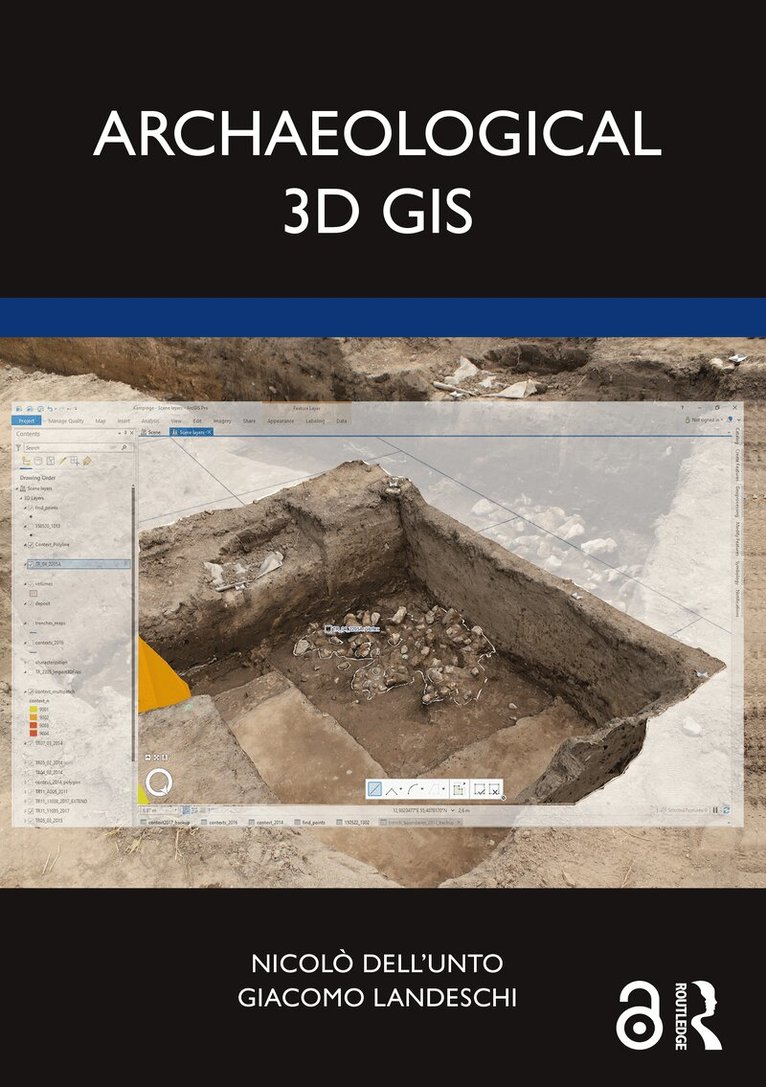
Archaeological 3D GIS provides archaeologists with a guide to explore and understand the unprecedented opportunities for collecting, visualising, and analysing archaeological datasets in three dimensions.With platforms allowing archaeologists to link, query, and analyse in a virtual, georeferenced space information collected by different specialists, the book highlights how it is possible to re-think aspects of theory and practice which relate to GIS. It explores which questions can be addressed in such a new environment and how they are going to impact the way we interpret the past. By using material from several international case studies such as Pompeii, Çatalhöyük, as well as prehistoric and protohistoric sites in Southern Scandinavia, this book discusses the use of the third dimension in support of archaeological practice.This book will be essential for researchers and scholars who focus on archaeology and spatial analysis, and is designed and structured to serve as a textbook for GIS and digital archaeology courses.The Open Access version of this book, available at www.taylorfrancis.com, has been made available under a Creative Commons Attribution-Non Commercial-No Derivatives 4.0 license.
2 150 kr
Skickas inom 10-15 vardagar
Archaeological 3D GIS provides archaeologists with a guide to explore and understand the unprecedented opportunities for collecting, visualising, and analysing archaeological datasets in three dimensions.With platforms allowing archaeologists to link, query, and analyse in a virtual, georeferenced space information collected by different specialists, the book highlights how it is possible to re-think aspects of theory and practice which relate to GIS. It explores which questions can be addressed in such a new environment and how they are going to impact the way we interpret the past. By using material from several international case studies such as Pompeii, Çatalhöyük, as well as prehistoric and protohistoric sites in Southern Scandinavia, this book discusses the use of the third dimension in support of archaeological practice.This book will be essential for researchers and scholars who focus on archaeology and spatial analysis, and is designed and structured to serve as a textbook for GIS and digital archaeology courses.The Open Access version of this book, available at www.taylorfrancis.com, has been made available under a Creative Commons Attribution-Non Commercial-No Derivatives 4.0 license.
552 kr
Skickas inom 10-15 vardagar
This open-access book surveys how digital technology can contribute effectively to improving our understanding of the past, through a sensory engagement based on the evidence of material culture. In particular, it encourages specialists to consider senses and human agency as important factors in studying ancient space, while recognising the role played by digital tools in enhancing a human-centred form of analysis. Significant advances in archaeological computing, digital methods, and sensory approaches have led archaeologists to rethink strategies and methods for creating narratives of the past. Recent progress in data visualisation and implementation, as well as other nascent digital sensory methods, means that it is now easier to explore and experience ancient space from a multiscalar perspective, from the individual body or single building to the wider landscape.The chapters in Capturing the Senses: Digital Methods for Sensory Archaeologies present innovative methods for representing an embodied experience of ancient space, simulating (but not recreating) ancient behaviours and social interaction. Chapters cover topics including the potentials and pitfalls of visualising, recreating, and re-enacting/experiencing the senses in Virtual Reality environments and also digital reconstructions and auralisations of ancient spaces to study sound sensory perception. Overall, the book demonstrates that multisensory approaches can give a new perspective on how ancient spaces were intended to be used by inhabitants to fulfil a series of purposes including conveying messages and regulating movement. This is an open-access book.
653 kr
Skickas inom 5-8 vardagar
443 kr
Skickas inom 10-15 vardagar
This open-access book surveys how digital technology can contribute effectively to improving our understanding of the past, through a sensory engagement based on the evidence of material culture. In particular, it encourages specialists to consider senses and human agency as important factors in studying ancient space, while recognising the role played by digital tools in enhancing a human-centred form of analysis. Significant advances in archaeological computing, digital methods, and sensory approaches have led archaeologists to rethink strategies and methods for creating narratives of the past. Recent progress in data visualisation and implementation, as well as other nascent digital sensory methods, means that it is now easier to explore and experience ancient space from a multiscalar perspective, from the individual body or single building to the wider landscape.The chapters in Capturing the Senses: Digital Methods for Sensory Archaeologies present innovative methods for representing an embodied experience of ancient space, simulating (but not recreating) ancient behaviours and social interaction. Chapters cover topics including the potentials and pitfalls of visualising, recreating, and re-enacting/experiencing the senses in Virtual Reality environments and also digital reconstructions and auralisations of ancient spaces to study sound sensory perception. Overall, the book demonstrates that multisensory approaches can give a new perspective on how ancient spaces were intended to be used by inhabitants to fulfil a series of purposes including conveying messages and regulating movement. This is an open-access book.