Giada Canziani – författare
Visar alla böcker från författaren Giada Canziani. Handla med fri frakt och snabb leverans.
2 produkter
2 produkter
Inbunden, Engelska, 2026
621 kr
Skickas inom 10-15 vardagar
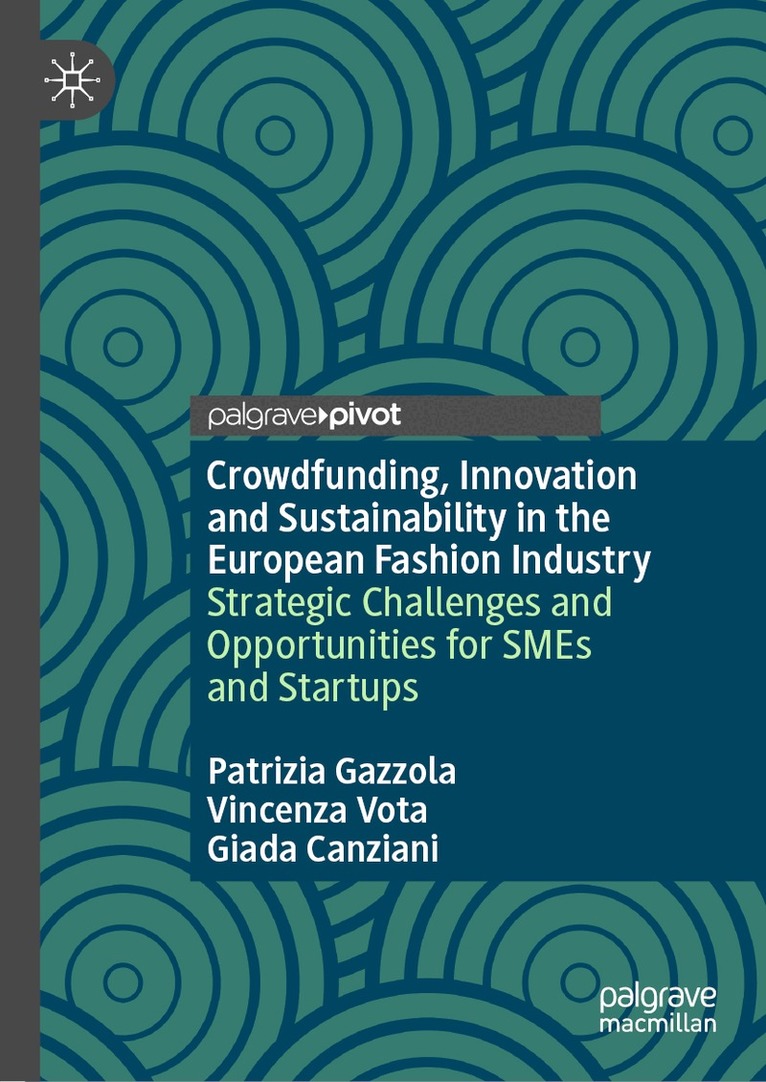
This book explores the strategic importance of crowdfunding in promoting sustainability and innovation, with a particular focus on its role in supporting start-ups and SMEs in the European fashion industry. Based on a solid theoretical framework, the book establishes links between sustainability theories — including ESG (Environmental, Social and Governance), Corporate Social Responsibility (CSR) and the circular economy — and the economics of innovation and alternative finance. In doing so, it provides a conceptual bridge between business strategy and unconventional financing models.The book reveals how crowdfunding intersects with ESG performance and regulatory compliance in the fashion industry, explores how crowdfunding can be strategically leveraged to support sustainable innovation, and uncovers the role of institutional frameworks and public-private partnerships in shaping crowdfunding ecosystems. Ultimately, this is a valuable resource for scholars, advanced students and public policy professionals who wish to understand how sustainability-oriented strategies are defined, communicated and financed in contemporary Europe.
E-bok
Engelska, 2026786 kr
Läs direkt efter köp
This book explores the strategic importance of crowdfunding in promoting sustainability and innovation, with a particular focus on its role in supporting start-ups and SMEs in the European fashion industry. Based on a solid theoretical framework, the book establishes links between sustainability theories — including ESG (Environmental, Social and Governance), Corporate Social Responsibility (CSR) and the circular economy — and the economics of innovation and alternative finance. In doing so, it provides a conceptual bridge between business strategy and unconventional financing models.The book reveals how crowdfunding intersects with ESG performance and regulatory compliance in the fashion industry, explores how crowdfunding can be strategically leveraged to support sustainable innovation, and uncovers the role of institutional frameworks and public-private partnerships in shaping crowdfunding ecosystems. Ultimately, this is a valuable resource for scholars, advanced students and public policy professionals who wish to understand how sustainability-oriented strategies are defined, communicated and financed in contemporary Europe.