Giampiero Beroggi – författare
Visar alla böcker från författaren Giampiero Beroggi. Handla med fri frakt och snabb leverans.
8 produkter
8 produkter
Inbunden, Engelska, 2004
1 105 kr
Skickas inom 10-15 vardagar
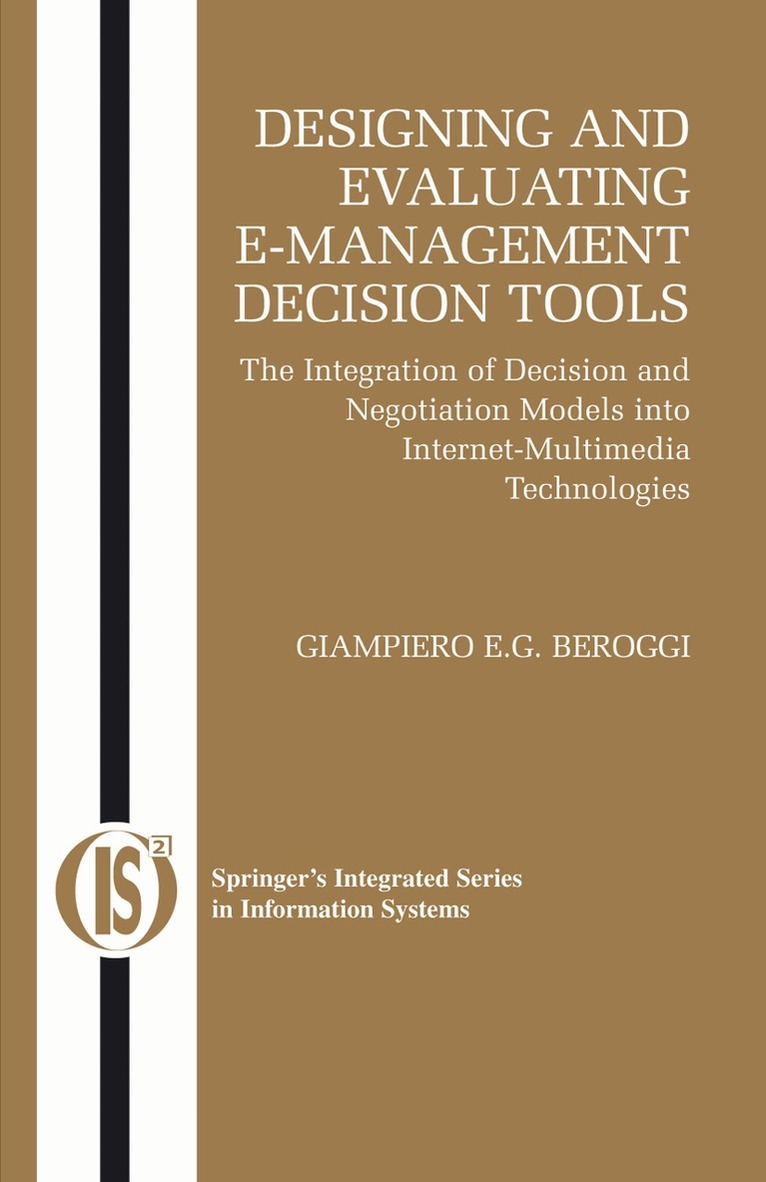
Designing and Evaluating E-Managemnet Decision Tools presents the most relevant concepts for designing intelligent decision tools in an Internet-based multimedia environment and assessing the tools using concepts of statistical design of experiments. The design principle is based on the visual interactive decision modeling (VIDEMO) paradigm. Several case studies are discussed in detail, referring to online preference elicitation, collaborative decision making, negotiation and conflict resolution, and marketing decision optimization. (See www beroggi.net for more info on the book and Visual Interactive Decision Modeling)
Inbunden, Engelska, 1995
2 138 kr
Skickas inom 10-15 vardagar
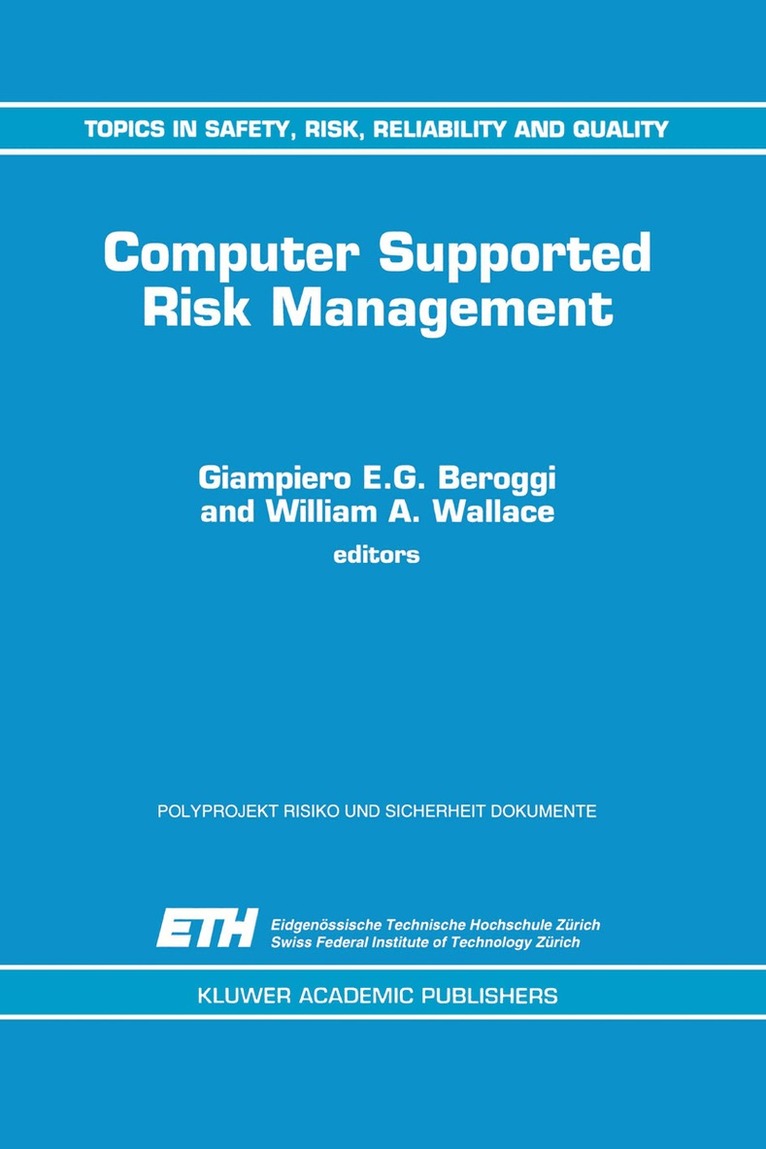
Advances in information technology provide opportunities for the development of computer systems that support risk managers in complex tasks. In this book, leading experts report on the potentials and limitations concerning the use of computer systems in risk management. Their reports are based on many years of experience in their fields which include: risk analysis; systems engineering; geographic information systems; decision-support systems; human-machine systems; and psychology. The book addresses four major issues in computer-supported risk management: conceptual aspects - the role, design, and use of computers in risk management; planning and policy analysis - transportation, equity analysis, emergency management, group decision-making; operational decision making - nuclear power monitoring, emergency response, public safety warning, satellite tracking; and commercial applications - GIS from IIASA, InterClair from IAEA, EPA software and clean-up decision-support software survey.This book is intended for researchers who should find the emerging issues in risk management that are motivated by the encounter of new tasks and novel technology; practitioners who find here descriptions and references of the state-of-the-art models and software; and students who can here learn the basic concepts needed to develop advanced information and decision support systems in risk management.
Inbunden, Engelska, 1998
1 105 kr
Skickas inom 10-15 vardagar
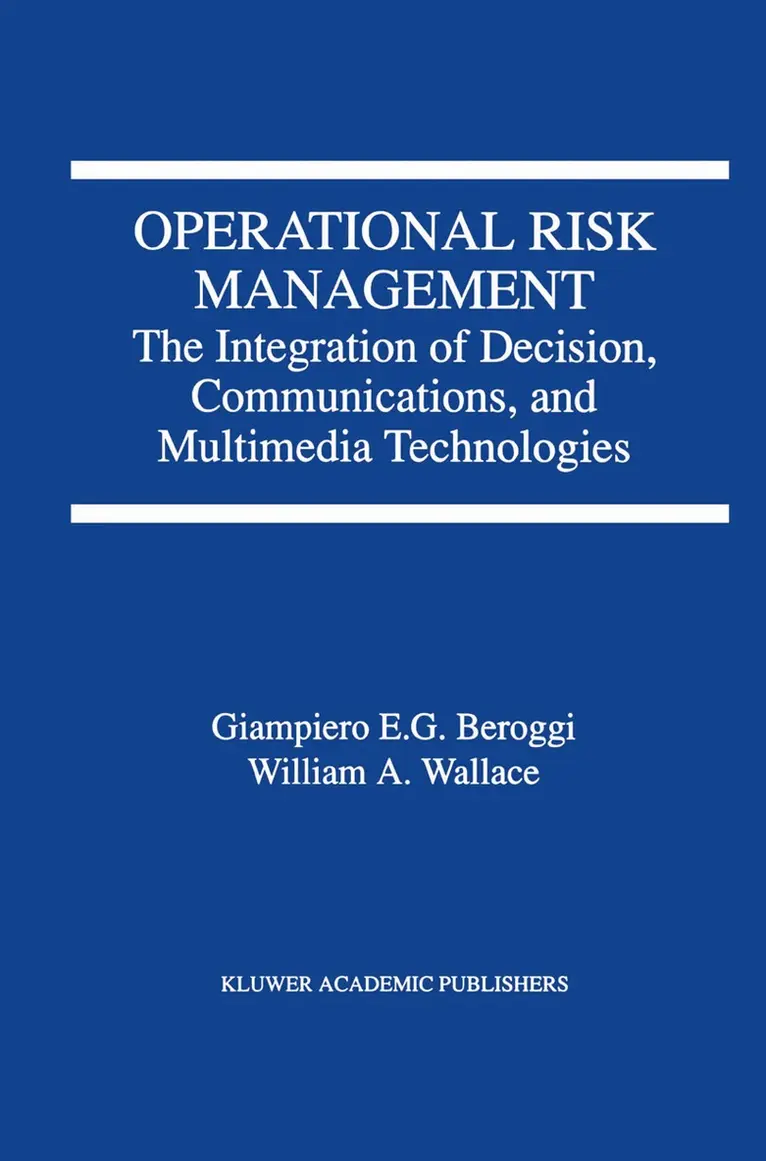
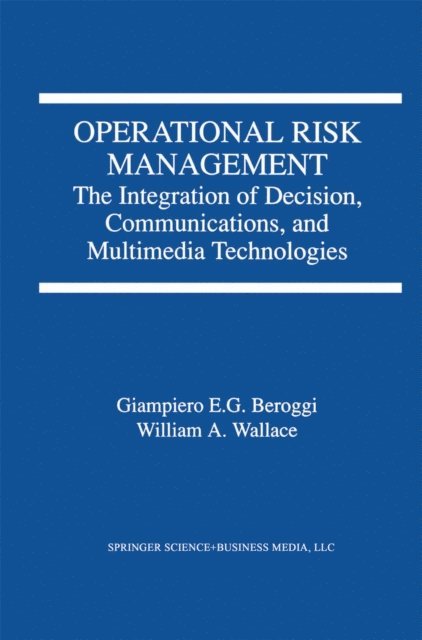
Advanced communications and information technologies provide the basis for operational risk management. In order to support managers in real-time risk assessment and decision-making, the advanced technologies must be complemented by an appropriate reasoning logic. This book presents such a reasoning logic for operational risk management. Chapter 1 discusses the need for operational risk management and the feasibility of its use based upon advances in sensing, mobile communications, and satellite positioning technologies. Chapter II presents a reasoning logic for operational risk management that capitalizes upon these developments. Chapter III illustrates the integration of the reasoning logic in hypermedia, multimedia, and virtual reality systems, coupled with the capabilities provided by the Internet. Chapters IV-VI illustrate the realism of operational risk management for hazardous material transportation, emergency response, air raid command, and emergency response at a nuclear power generation facility. The book closes with an experimental assessment of the logic and associated decision aids in Chapter VII.
Inbunden, Engelska, 1998
1 105 kr
Skickas inom 10-15 vardagar
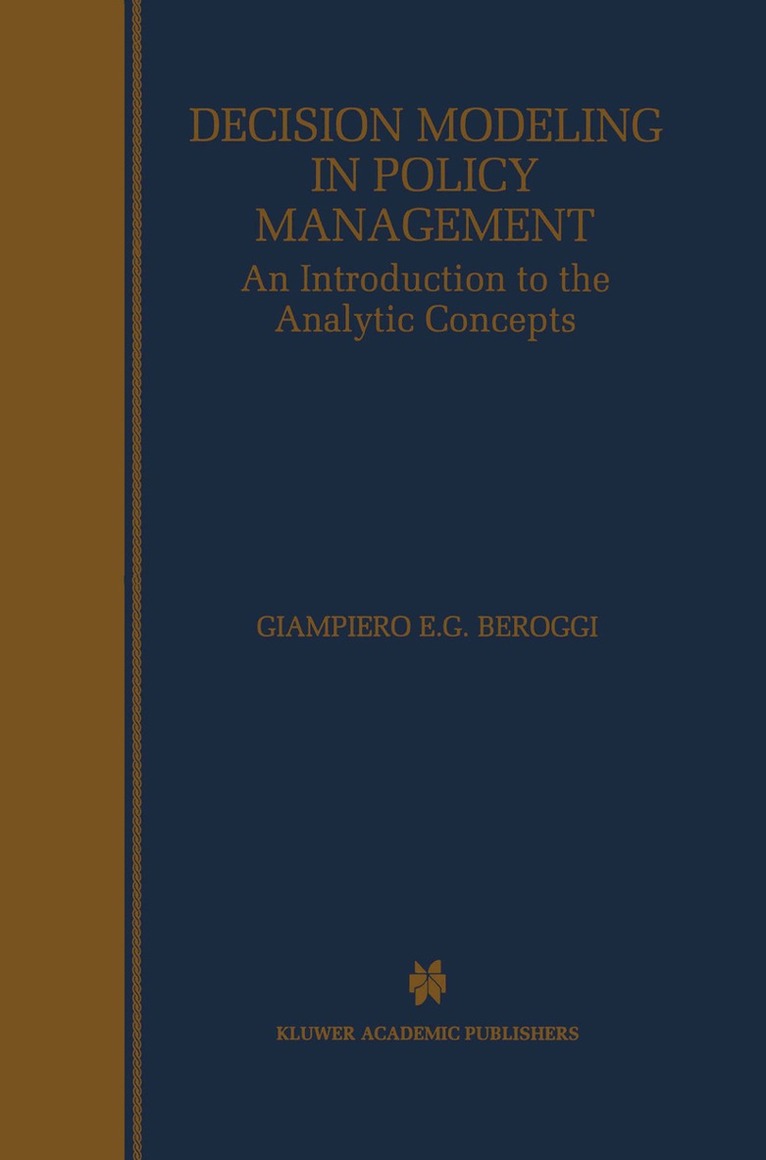
The last decade has experienced major societal challenges at the intersection of technological systems and policy making. Prevalent examples are the liberalization of energy and telecommunications markets, the public aversion towards nuclear power plants, the development of high-speed trains, the debates about global warming and sustainability, the development of intelligent vehicle systems, and the controversies concerning the location of waste depositories, airports, and energy systems. These challenges, coupled with the call from industry for a systems-engineering oriented approach to policy analysis, motivated Delft University of Technology to launch the first European School of Systems Engineering, Policy Analysis. and Management (SEPA). The purpose was to educate engineering oriented policy analysts in bridging the gap between engineering systems and policy decision making processes, both for the public and private sector. Up to now, more than 500 first-year students and 30 Ph.D. students have enrolled in the program. In 1993, I set up a class called Quantitative Methods for Problem Solving which had to address the most relevant issues in decision making for policy management, such as linear and non-linear optimization, multiattribute utility theory, multicriteria decision making, concepts from game theory, outranking relations, and probabilistic influence diagrams.
Häftad, Engelska, 1998
1 105 kr
Skickas inom 10-15 vardagar
The last decade has experienced major societal challenges at the intersection of technological systems and policy making. Prevalent examples are the liberalization of energy and telecommunications markets, the public aversion towards nuclear power plants, the development of high-speed trains, the debates about global warming and sustainability, the development of intelligent vehicle systems, and the controversies concerning the location of waste depositories, airports, and energy systems. These challenges, coupled with the call from industry for a systems-engineering oriented approach to policy analysis, motivated Delft University of Technology to launch the first European School of Systems Engineering, Policy Analysis. and Management (SEPA). The purpose was to educate engineering oriented policy analysts in bridging the gap between engineering systems and policy decision making processes, both for the public and private sector. Up to now, more than 500 first-year students and 30 Ph.D. students have enrolled in the program. In 1993, I set up a class called Quantitative Methods for Problem Solving which had to address the most relevant issues in decision making for policy management, such as linear and non-linear optimization, multiattribute utility theory, multicriteria decision making, concepts from game theory, outranking relations, and probabilistic influence diagrams.
Häftad, Engelska, 2010
1 499 kr
Skickas inom 10-15 vardagar
Designing and Evaluating E-Managemnet Decision Tools presents the most relevant concepts for designing intelligent decision tools in an Internet-based multimedia environment and assessing the tools using concepts of statistical design of experiments. The design principle is based on the visual interactive decision modeling (VIDEMO) paradigm. Several case studies are discussed in detail, referring to online preference elicitation, collaborative decision making, negotiation and conflict resolution, and marketing decision optimization. (See www.beroggi.net for more info on the book and Visual Interactive Decision Modeling)
Häftad, Engelska, 2012
1 073 kr
Skickas inom 10-15 vardagar
Advanced communications and information technologies provide the basis for operational risk management. In order to support managers in real-time risk assessment and decision-making, the advanced technologies must be complemented by an appropriate reasoning logic. This book presents such a reasoning logic for operational risk management. Chapter 1 discusses the need for operational risk management and the feasibility of its use based upon advances in sensing, mobile communications, and satellite positioning technologies. Chapter II presents a reasoning logic for operational risk management that capitalizes upon these developments. Chapter III illustrates the integration of the reasoning logic in hypermedia, multimedia, and virtual reality systems, coupled with the capabilities provided by the Internet. Chapters IV-VI illustrate the realism of operational risk management for hazardous material transportation, emergency response, air raid command, and emergency response at a nuclear power generation facility. The book closes with an experimental assessment of the logic and associated decision aids in Chapter VII. Audience: Researchers, who will find the most recent advances in operational risk management with experimental assessments. Practitioners, who are provided with a detailed description of operational risk management and the latest advances in information and communications technologies to implement this new approach for managing risks in operational settings, such as transportation of hazardous materials and emergency response. Students, who will learn the basic concepts in theory and practice of building models for decision and risk analysis, and embedding them into commercial software as decision support systems.
Häftad, Engelska, 2012
2 138 kr
Skickas inom 10-15 vardagar
Advances in information technology provide opportunities for the development of computer systems that support risk managers in complex tasks. Leading experts report on the potentials and limitations concerning the use of computer systems in risk management. Their reports are based on many years of experience in their fields which include: risk analysis, systems engineering, geographic information systems, decision support systems, human--machine systems, and psychology. The book addresses four major issues in computer supported risk management:Conceptual aspects: the role, design, and use of computers in risk management Planning and policy analysis: transportation, equity analysis, emergency management, group decision making Operational decision making: nuclear power monitoring, emergency response, public safety warning, satellite tracking Commercial applications: GIS from IIASA, InterClair from IAEA, EPA software, cleanup decision support software survey. This book is meant for researchers, who will find the emerging issues in risk management that are motivated by the encounter of new tasks and novel technology; practitioners who will have descriptions and references of the state-of-the-art models and software; and students who will learn the basic concepts needed to develop advanced information and decision support systems in risk management.