Gianni Pedrizzetti - Böcker
Visar alla böcker från författaren Gianni Pedrizzetti. Handla med fri frakt och snabb leverans.
6 produkter
6 produkter
1 632 kr
Skickas inom 10-15 vardagar
Vortex Formation in the Cardiovascular System will recapitulate the current knowledge about the vortex formation in the cardiovascular system, from mechanics to cardiology. This can facilitate the interaction between basic scientists and clinicians on the topic of the circulatory system. The book begins with a synopsis of the fundamentals aspects of fluid mechanics to give the reader the essential background to address the proceeding chapters. Then the fundamental elements of vortex dynamics will be discussed, explaining the conditions for their formation and the rules governing their dynamics. The main equations are accompanied by mathematical models. Cardiovascular vortex formation is first analyzed in physiological, healthy conditions in the heart chambers and in the large arterial vessels. The analysis is initially presented with an intuitive appeal grounded on the physical phenomena and a focus on its clinical significance.In the proceeding chapters, the knowledge gained from either clinical or basic science literature will be discussed. The corresponding mathematical elements will finally be presented to ensure the adequate diligence. The proceeding chapters ensue to the analysis of pathological conditions, when the reader may have developed the ability to recognize normal from abnormal vortex formation phenomenon. Pathological vortex formation represents vortices that develop at sites where normally laminar flow should exist, e.g. stenosis and aneurisms. This analysis naturally leads to the interaction of vortices due to the surgical procedures with respect to prediction of changes in vortex formation. The existing techniques, from medical imaging to numerical simulations, to explore vortex flows in the cardiovascular systems will also be described. The presentations are accompanied by the mathematical definitions can that be understandable for reader without the advanced mathematical background, while an interested reader with more advanced knowledge inmathematics can be referred to references for further quantitative analyses. The book pursues the objective to transfer the fundamental vortex formation phenomena with application to the cardiovascular system to the reader. This book will be a valuable support for physicians in the evaluation of vortex influence on diagnosis and therapeutic choices. At the same time, the book will provide the rigorous information for research scientists, either from medicine and mechanics, working on the cardiovascular circulation incurring with the physics of vortex dynamics.
1 210 kr
Skickas inom 10-15 vardagar
Vortex Formation in the Cardiovascular System will recapitulate the current knowledge about the vortex formation in the cardiovascular system, from mechanics to cardiology. This can facilitate the interaction between basic scientists and clinicians on the topic of the circulatory system. The book begins with a synopsis of the fundamentals aspects of fluid mechanics to give the reader the essential background to address the proceeding chapters. Then the fundamental elements of vortex dynamics will be discussed, explaining the conditions for their formation and the rules governing their dynamics. The main equations are accompanied by mathematical models. Cardiovascular vortex formation is first analyzed in physiological, healthy conditions in the heart chambers and in the large arterial vessels. The analysis is initially presented with an intuitive appeal grounded on the physical phenomena and a focus on its clinical significance.In the proceeding chapters, the knowledge gained from either clinical or basic science literature will be discussed. The corresponding mathematical elements will finally be presented to ensure the adequate diligence. The proceeding chapters ensue to the analysis of pathological conditions, when the reader may have developed the ability to recognize normal from abnormal vortex formation phenomenon. Pathological vortex formation represents vortices that develop at sites where normally laminar flow should exist, e.g. stenosis and aneurisms. This analysis naturally leads to the interaction of vortices due to the surgical procedures with respect to prediction of changes in vortex formation. The existing techniques, from medical imaging to numerical simulations, to explore vortex flows in the cardiovascular systems will also be described. The presentations are accompanied by the mathematical definitions can that be understandable for reader without the advanced mathematical background, while an interested reader with more advanced knowledge inmathematics can be referred to references for further quantitative analyses. The book pursues the objective to transfer the fundamental vortex formation phenomena with application to the cardiovascular system to the reader. This book will be a valuable support for physicians in the evaluation of vortex influence on diagnosis and therapeutic choices. At the same time, the book will provide the rigorous information for research scientists, either from medicine and mechanics, working on the cardiovascular circulation incurring with the physics of vortex dynamics.
1 101 kr
Skickas inom 10-15 vardagar
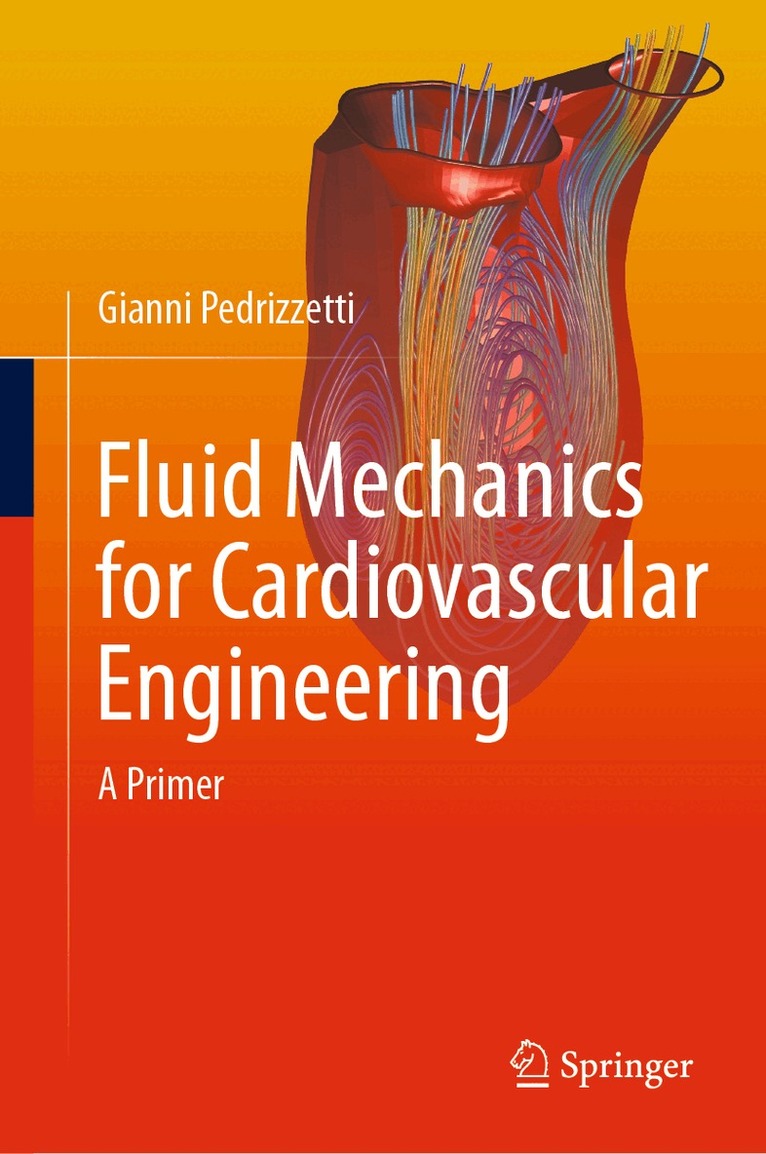
This book provides a guiding thread between the distant fields of fluid mechanics and clinical cardiology. Well rooted in the science of fluid dynamics, it drives the reader across progressively more realistic scenarios up to the complexity of routine medical applications. Based on the author’s 25 years of collaborations with cardiologists, it helps engineers learn communicating with clinicians, yet maintaining the rigor of scientific disciplines. This book starts with a description of the fundamental elements of fluid dynamics in large blood vessels. This is achieved by introducing a rigorous physical background accompanied by examples applied to the circulation, and by presenting classic and recent results related to the application of fluid dynamics to the cardiovascular physiology. It then explores more advanced topics for a physics-based understanding of phenomena effectively encountered in clinical cardiology.It stands as an ideal learning resource for physicists and engineers working in cardiovascular fluid dynamics, industry engineers working on biomedical/cardiovascular technology, and students in bio-fluid dynamics.Written with a concise style, this textbook is accessible to a broad readership, including students, physical scientists and engineers, offering an entry point into this multi-disciplinary field. It includes key concepts exemplified by illustrations using cutting-edge imaging, references to modelling and measurement technologies, and includes unique original insights.
718 kr
Skickas inom 10-15 vardagar
This book provides a guiding thread between the distant fields of fluid mechanics and clinical cardiology. Well rooted in the science of fluid dynamics, it drives the reader across progressively more realistic scenarios up to the complexity of routine medical applications. Based on the author’s 25 years of collaborations with cardiologists, it helps engineers learn communicating with clinicians, yet maintaining the rigor of scientific disciplines. This book starts with a description of the fundamental elements of fluid dynamics in large blood vessels. This is achieved by introducing a rigorous physical background accompanied by examples applied to the circulation, and by presenting classic and recent results related to the application of fluid dynamics to the cardiovascular physiology. It then explores more advanced topics for a physics-based understanding of phenomena effectively encountered in clinical cardiology.It stands as an ideal learning resource for physicists and engineers working in cardiovascular fluid dynamics, industry engineers working on biomedical/cardiovascular technology, and students in bio-fluid dynamics.Written with a concise style, this textbook is accessible to a broad readership, including students, physical scientists and engineers, offering an entry point into this multi-disciplinary field. It includes key concepts exemplified by illustrations using cutting-edge imaging, references to modelling and measurement technologies, and includes unique original insights.
600 kr
Skickas inom 5-8 vardagar
Questo libro parte da una descrizione degli elementi fondamentali della meccanica dei fluidi nei grandi vasi sanguigni. A questo fine, viene introdotto un rigoroso background fisico accompagnato da esempi applicati alla circolazione, presentando risultati classici e sviluppi recenti relativi allo studio della dinamica sanguigna nella fisiologia cardiovascolare. Esplora poi argomenti più avanzati per una comprensione dei fenomeni, effettivamente riscontrati in cardiologia clinica, fondata sull’utilizzo delle leggi di conservazione della meccanica.Il testo si presenta come una risorsa di apprendimento ideale per fisici e ingegneri che si occupano di dinamica dei fluidi cardiovascolare, operatori nel settore delle tecnologie biomediche, studenti in biofluidodinamica.Il libro fornisce un filo conduttore tra i campi distanti della meccanica dei fluidi e della cardiologia clinica. Ben radicato nella teoria della dinamica dei fluidi, guida il lettore attraverso scenari progressivamente più realistici fino alla complessità delle applicazioni mediche di routine. Basato su oltre 25 anni di collaborazioni dell'autore con i cardiologi, aiuta gli ingegneri a imparare a comunicare con i clinici, mantenendo al contempo il rigore delle discipline scientifiche.Scritto in uno stile conciso, è un libro di testo accessibile a un ampio pubblico di lettori, tra cui studenti, fisici e ingegneri, offrendo un punto di ingresso a questo campo multidisciplinare. Include concetti chiave esemplificati da illustrazioni che utilizzano tecniche di analisi di immagini all'avanguardia e da riferimenti a metodi di modellazione e misurazione, e contiene intuizioni originali uniche.
1 101 kr
Skickas inom 10-15 vardagar
The book presents the state-of-the-art in the interdisciplinary field of fluid mechanics applied to cardiovascular modelling. It is neighter a monograph nor a collection of research papers, rather an extended review in the field. It is arranged in 4 scientific chapters each presenting thoroughly the approach of a leading research team; two additional chapters prepared by biomedical scientists present the topic by the applied perspective.This volume covers a wide range of the current topics in the field. It is an advanced text, however it derives from school lectures and presents several introductory portions to the advanced topics. A unique feature is a substantial (approx. one fourth of the book) medical introductory part, written by clinical researchers for scientific readers, that would require a large effort to be collected otherwise.