Gilbert M. Masters – författare
1 877 kr
Läs direkt efter köp
A solid, quantitative, practical introduction to a wide range of renewable energy systemsin a completely updated, new edition
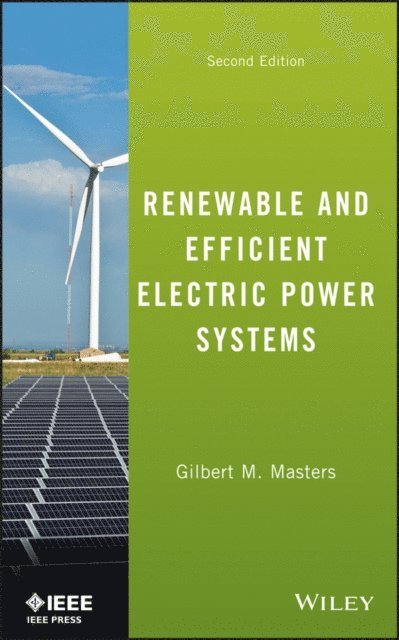
The second edition of Renewable and Efficient Electric Power Systems provides a solid, quantitative, practical introduction to a wide range of renewable energy systems. For each topic, essential theoretical background is introduced, practical engineering considerations associated with designing systems and predicting their performance are provided, and methods for evaluating the economics of these systems are presented. While the book focuses on the fastest growing, most promising wind and solar technologies, new material on tidal and wave power, small-scale hydroelectric power, geothermal and biomass systems is introduced. Both supply-side and demand-side technologies are blended in the final chapter, which introduces the emerging smart grid. As the fraction of our power generated by renewable resources increases, the role of demand-side management in helping maintain grid balance is explored.
Renewable energy systems have become mainstream technologies and are now, literally, big business. Throughout this edition, more depth has been provided on the financial analysis of large-scale conventional and renewable energy projects. While grid-connected systems dominate the market today, off-grid systems are beginning to have a significant impact on emerging economies where electricity is a scarce commodity. Considerable attention is paid to the economics of all of these systems.
This edition has been completely rewritten, updated, and reorganized. New material has been presented both in the form of new topics as well as in greater depth in some areas. The section on the fundamentals of electric power has been enhanced, making this edition a much better bridge to the more advanced courses in power that are returning to many electrical engineering programs. This includes an introduction to phasor notation, more emphasis on reactive power as well as real power, more on power converter and inverter electronics, and more material on generator technologies. Realizing that many students, as well as professionals, in this increasingly important field may have modest electrical engineering backgrounds, early chapters develop the skills and knowledge necessary to understand these important topics without the need for supplementary materials.
With numerous completely worked examples throughout, the book has been designed to encourage self-instruction. The book includes worked examples for virtually every topic that lends itself to quantitative analysis. Each chapter ends with a problem set that provides additional practice. This is an essential resource for a mixed audience of engineering and other technology-focused individuals.
1 946 kr
Läs direkt efter köp
A solid, quantitative, practical introduction to a wide range of renewable energy systemsin a completely updated, new edition
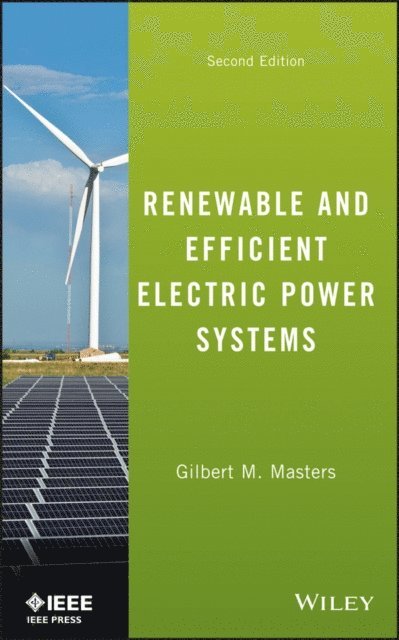
The second edition of Renewable and Efficient Electric Power Systems provides a solid, quantitative, practical introduction to a wide range of renewable energy systems. For each topic, essential theoretical background is introduced, practical engineering considerations associated with designing systems and predicting their performance are provided, and methods for evaluating the economics of these systems are presented. While the book focuses on the fastest growing, most promising wind and solar technologies, new material on tidal and wave power, small-scale hydroelectric power, geothermal and biomass systems is introduced. Both supply-side and demand-side technologies are blended in the final chapter, which introduces the emerging smart grid. As the fraction of our power generated by renewable resources increases, the role of demand-side management in helping maintain grid balance is explored.
Renewable energy systems have become mainstream technologies and are now, literally, big business. Throughout this edition, more depth has been provided on the financial analysis of large-scale conventional and renewable energy projects. While grid-connected systems dominate the market today, off-grid systems are beginning to have a significant impact on emerging economies where electricity is a scarce commodity. Considerable attention is paid to the economics of all of these systems.
This edition has been completely rewritten, updated, and reorganized. New material has been presented both in the form of new topics as well as in greater depth in some areas. The section on the fundamentals of electric power has been enhanced, making this edition a much better bridge to the more advanced courses in power that are returning to many electrical engineering programs. This includes an introduction to phasor notation, more emphasis on reactive power as well as real power, more on power converter and inverter electronics, and more material on generator technologies. Realizing that many students, as well as professionals, in this increasingly important field may have modest electrical engineering backgrounds, early chapters develop the skills and knowledge necessary to understand these important topics without the need for supplementary materials.
With numerous completely worked examples throughout, the book has been designed to encourage self-instruction. The book includes worked examples for virtually every topic that lends itself to quantitative analysis. Each chapter ends with a problem set that provides additional practice. This is an essential resource for a mixed audience of engineering and other technology-focused individuals.
1 600 kr
Skickas inom 5-8 vardagar
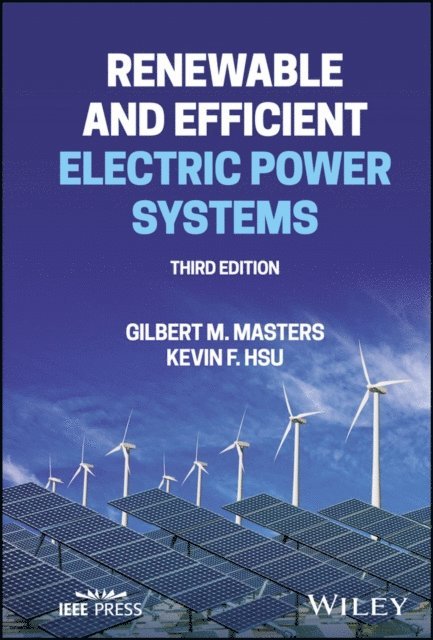
2 082 kr
Läs direkt efter köp
Join the energy revolution—this comprehensive resource offers quantitative and practical approaches for designing a sustainable, 21st-century electricity system, covering renewable generation technologies, conventional power plants, energy efficiency, storage, and microgrids.
Renewable and Efficient Electric Power Systems dives into the fundamentals of modern electricity systems, introducing key technologies, economic and environmental impacts, and practical considerations for energy and climate professionals. The book explains the science and engineering underlying renewable energy—including solar, wind, and hydropower—along with an expanded set of key energy technologies such as fuel cells, batteries, and hydrogen. This updated edition prepares readers to participate in the world’s ongoing efforts to decarbonize the electricity sector and move toward a more sustainable future.
The book covers foundational knowledge of electric power, up through current developments and future prospects for renewable energy. The update significantly expands core content to address topics such as energy efficiency, smart grids, energy storage, and microgrids. It reframes energy as an integral factor in urban development and highlights forward-looking strategies to decarbonize the built environment. The text draws on a multi-scalar approach that ranges from utility-scale to building-scale to assess energy systems, and further considers centralized vs. distributed system architecture. The authors integrate perspectives from engineering professionals across different sectors, incorporating relevant insights from applied projects, with an eye toward implementing energy systems in the real world. Given the textbook’s broad reach, this edition situates energy development in an international context and provides examples relevant to a global audience.
An essential resource for engineers and other practitioners working in climate and energy, offering cutting-edge frameworks and quantitative approaches to energy system design. Early chapters develop the skills and knowledge necessary for students and professionals entering the clean energy field. Later chapters offer an excellent bridge to prepare advanced students for further study in power engineering, or who intend to pursue policy or economic analysis. Step-by-step explanations of quantitative analysis are supplemented with additional practice problems to encourage self-instruction or complement classroom use. Accessible explanations provide planners and policymakers with fundamental technical understanding of energy systems. Combines pure technical analysis with economic and environmental considerations, and explores the link between energy, carbon, and new digital technologies, to provide a more comprehensive approach to energy education.As the world undergoes a transformation in energy and electricity, Renewable and Efficient Electric Power Systems is an indispensable text for students of energy, environment, and climate, as well as for practitioners seeking to refresh their understanding of renewable energy systems.
2 064 kr
Läs direkt efter köp
Join the energy revolution—this comprehensive resource offers quantitative and practical approaches for designing a sustainable, 21st-century electricity system, covering renewable generation technologies, conventional power plants, energy efficiency, storage, and microgrids.
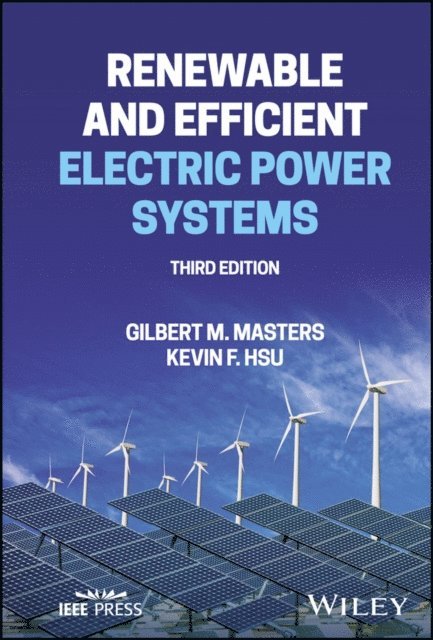
Renewable and Efficient Electric Power Systems dives into the fundamentals of modern electricity systems, introducing key technologies, economic and environmental impacts, and practical considerations for energy and climate professionals. The book explains the science and engineering underlying renewable energy—including solar, wind, and hydropower—along with an expanded set of key energy technologies such as fuel cells, batteries, and hydrogen. This updated edition prepares readers to participate in the world’s ongoing efforts to decarbonize the electricity sector and move toward a more sustainable future.
The book covers foundational knowledge of electric power, up through current developments and future prospects for renewable energy. The update significantly expands core content to address topics such as energy efficiency, smart grids, energy storage, and microgrids. It reframes energy as an integral factor in urban development and highlights forward-looking strategies to decarbonize the built environment. The text draws on a multi-scalar approach that ranges from utility-scale to building-scale to assess energy systems, and further considers centralized vs. distributed system architecture. The authors integrate perspectives from engineering professionals across different sectors, incorporating relevant insights from applied projects, with an eye toward implementing energy systems in the real world. Given the textbook’s broad reach, this edition situates energy development in an international context and provides examples relevant to a global audience.
An essential resource for engineers and other practitioners working in climate and energy, offering cutting-edge frameworks and quantitative approaches to energy system design. Early chapters develop the skills and knowledge necessary for students and professionals entering the clean energy field. Later chapters offer an excellent bridge to prepare advanced students for further study in power engineering, or who intend to pursue policy or economic analysis. Step-by-step explanations of quantitative analysis are supplemented with additional practice problems to encourage self-instruction or complement classroom use. Accessible explanations provide planners and policymakers with fundamental technical understanding of energy systems. Combines pure technical analysis with economic and environmental considerations, and explores the link between energy, carbon, and new digital technologies, to provide a more comprehensive approach to energy education.As the world undergoes a transformation in energy and electricity, Renewable and Efficient Electric Power Systems is an indispensable text for students of energy, environment, and climate, as well as for practitioners seeking to refresh their understanding of renewable energy systems.
673 kr
Läs direkt efter köp
Appropriate for undergraduate engineering and science courses in Environmental Engineering.
Balanced coverage of all the major categories of environmental pollution, with coverage of current topics such as climate change and ozone depletion, risk assessment, indoor air quality, source-reduction and recycling, and groundwater contamination.
The full text downloaded to your computer
With eBooks you can:
search for key concepts, words and phrases make highlights and notes as you study share your notes with friendseBooks are downloaded to your computer and accessible either offline through the Bookshelf (available as a free download), available online and also via the iPad and Android apps.
Upon purchase, you''ll gain instant access to this eBook.
Time limit
The eBooks products do not have an expiry date. You will continue to access your digital ebook products whilst you have your Bookshelf installed.
1 464 kr
Skickas inom 5-8 vardagar
1 331 kr
Tillfälligt slut