Gilbert Rozman – författare
247 kr
Skickas inom 5-8 vardagar
687 kr
Läs direkt efter köp
2 183 kr
Skickas inom 10-15 vardagar
583 kr
Skickas inom 10-15 vardagar
448 kr
Skickas inom 7-10 vardagar
693 kr
Skickas inom 7-10 vardagar
431 kr
Skickas inom 7-10 vardagar
1 244 kr
Skickas inom 7-10 vardagar
1 136 kr
Skickas inom 3-6 vardagar
1 430 kr
Skickas inom 3-6 vardagar
834 kr
Skickas inom 3-6 vardagar
1 203 kr
Skickas inom 3-6 vardagar
931 kr
Skickas inom 3-6 vardagar
1 078 kr
Skickas inom 3-6 vardagar
1 053 kr
Skickas inom 3-6 vardagar
2 572 kr
Skickas inom 3-6 vardagar
3 292 kr
Skickas inom 3-6 vardagar
999 kr
Skickas inom 5-8 vardagar
2 851 kr
Skickas inom 3-6 vardagar
2 322 kr
Skickas inom 3-6 vardagar
2 644 kr
Skickas inom 3-6 vardagar
2 497 kr
Skickas inom 3-6 vardagar
2 152 kr
Skickas inom 10-15 vardagar
588 kr
Skickas inom 10-15 vardagar
725 kr
Skickas inom 10-15 vardagar
648 kr
Skickas inom 11-20 vardagar
680 kr
Läs direkt efter köp
How can democratization move forward in an era of populist-nationalist backlash? Many countries in Asia, and elsewhere, face the challenge of navigating between China and the United States in a period of intensifying polarization in their policies tied to democracy. East Asia has shown the way to democratization in Asia—with Japan, South Korea, and Taiwan linking national identity to democratization. In other parts of Asia, especially Southeast Asia, nationalist governments have tended to move away from democratization, as happened in Hong Kong at China’s insistence. This book investigates how national identity can both help and hinder democratization, illustrated by a series of examples from across Asia. A valuable guide for students and scholars both of democratization and of Asian politics.
680 kr
Läs direkt efter köp
How can democratization move forward in an era of populist-nationalist backlash? Many countries in Asia, and elsewhere, face the challenge of navigating between China and the United States in a period of intensifying polarization in their policies tied to democracy. East Asia has shown the way to democratization in Asia—with Japan, South Korea, and Taiwan linking national identity to democratization. In other parts of Asia, especially Southeast Asia, nationalist governments have tended to move away from democratization, as happened in Hong Kong at China’s insistence. This book investigates how national identity can both help and hinder democratization, illustrated by a series of examples from across Asia. A valuable guide for students and scholars both of democratization and of Asian politics.
682 kr
Läs direkt efter köp
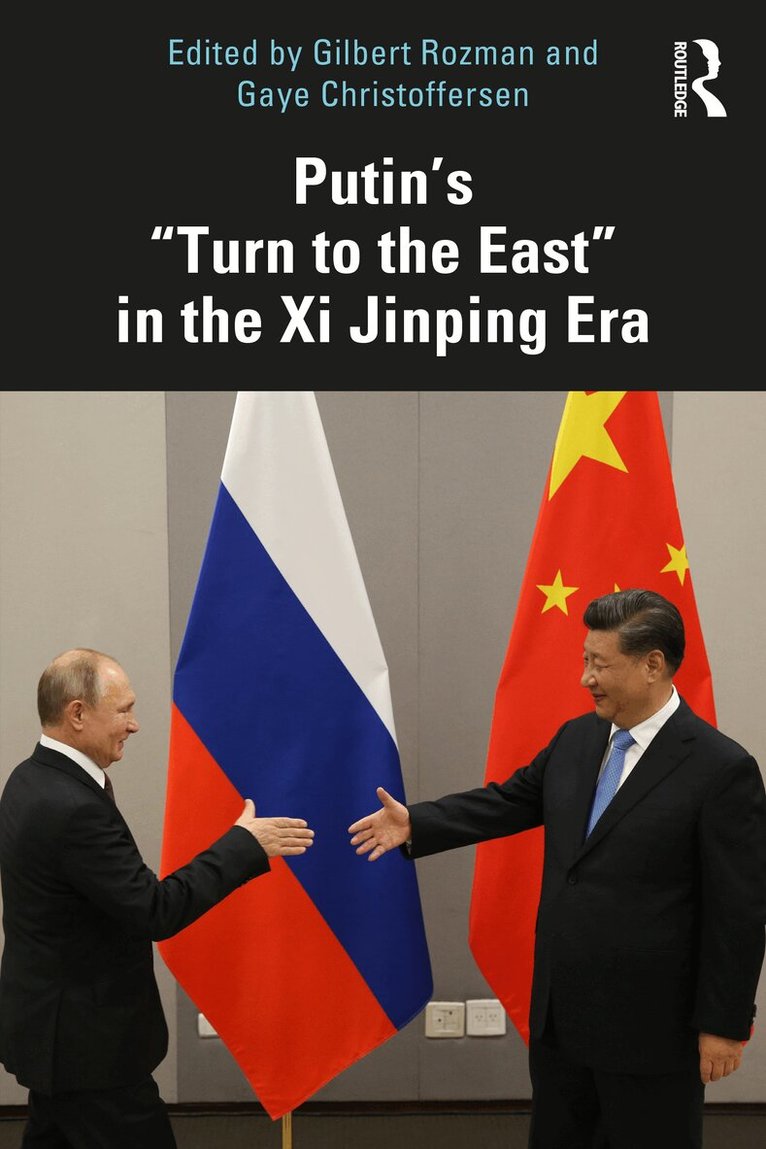
Rozman, Christoffersen, and a team of expert contributors analyze the evolution of Vladimir Putin’s reorientation to Asia since 2012.
When Putin announced a “Turn to the East” in Russian foreign policy upon his return to the presidency, this was to be strategic reorientation emphasizing multilateralism. As the years have passed, however, this has turned into a tight reliance on the bilateral relationship with China. Rozman, Christoffersen, and their team explore how the “Turn” proceeded and developed over the course of a decade, ending by examining the impact of the Ukraine war on Sino-Russian relations. Their analysis focuses on Russia’s perspective, taking into account an extensive range of Russian publications to look at how priorities shifted. While affirming the continued strengthening of ties between Beijing and Moscow, they identify many tensions between them, noting especially Russia’s illusions about the relationship.
A comprehensive review of Russian policy toward the Indo-Pacific, which is essential reading for courses on Russian foreign policy and international relations in East Asia.
706 kr
Läs direkt efter köp
Rozman, Christoffersen, and a team of expert contributors analyze the evolution of Vladimir Putin’s reorientation to Asia since 2012.
When Putin announced a “Turn to the East” in Russian foreign policy upon his return to the presidency, this was to be strategic reorientation emphasizing multilateralism. As the years have passed, however, this has turned into a tight reliance on the bilateral relationship with China. Rozman, Christoffersen, and their team explore how the “Turn” proceeded and developed over the course of a decade, ending by examining the impact of the Ukraine war on Sino-Russian relations. Their analysis focuses on Russia’s perspective, taking into account an extensive range of Russian publications to look at how priorities shifted. While affirming the continued strengthening of ties between Beijing and Moscow, they identify many tensions between them, noting especially Russia’s illusions about the relationship.
A comprehensive review of Russian policy toward the Indo-Pacific, which is essential reading for courses on Russian foreign policy and international relations in East Asia.