Gillespie - Böcker
Visar alla böcker från författaren Gillespie. Handla med fri frakt och snabb leverans.
6 produkter
6 produkter
1 304 kr
Skickas inom 5-8 vardagar
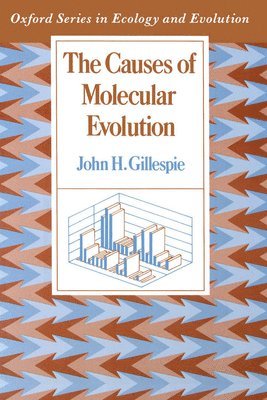
This work provides a unified theory that addresses the important problem of the origin and maintenance of genetic variation in natural populations. With modern molecular techniques, variation is found in all species, sometimes at astonishingly high levels. Yet the forces that maintain variation within and between species have been difficult subjects of study. Because they act very weakly and operate over vast time scales, scientists must rely on indirect inferences and speculative mathematical models. The author's research in molecular genetics, evolution, and bio-mathematics has enabled him to draw on his work, and present a coherent and valuable view of the field. The book is divided into three parts. The first addresses protein evolution, DNA evolution, and molecular mechanisms, reviewing the experimental observations on genetic variation. The second gives a unified treatment of the mathematical theory of selection in a fluctuating environment. The final section combines the earlier assessments in a treatment of the scientific status of two competing theories for the maintenance of genetic variation.
4 160 kr
Skickas inom 3-6 vardagar
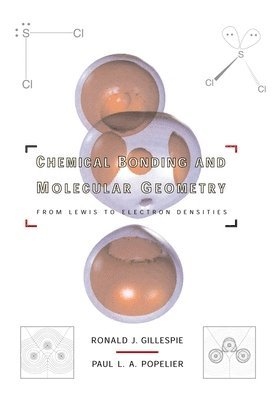
Written by one of the world's foremost authorities in the chemical bond, this textbook is ideal for courses on chemical bonding in chemistry departments at the senior/first year graduate level and can also be used to supplement inorganic survey courses needing an increased focus on bonding. The ideal course will contain the word "Bonding" in the course title, e.g. Chemical Bonding. The text starts with the basic principles of bonding and proceeds to advanced level topics in the same volume. It provides undergraduate (and 1st year graduate) students with an introduction to models and theories of chemical bonding and geometry as applied to the molecules of the main group elements. It gives students an understanding of how the concept of the the chemical bond has developed from its earliest days, through Lewis' brillant concept of the electron pair bond, up until the present day. The texts also elucidates the relationships between these various models and theories. Particular emphasis is placed on the valence-shell electron pair (VSEPR) and ligand close packing (LCP) models as well as the analysis of electron density distributions by the atoms in molecules (AIM) theory.The book is ideal for courses specifically devoted to bindng or to supplement inorganic chemistry courses at both the intermediate and adavanced levels.
3 370 kr
Skickas inom 3-6 vardagar
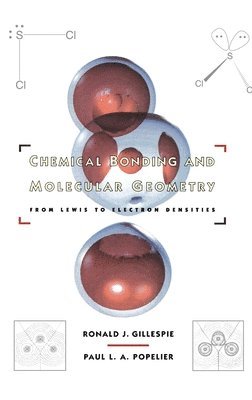
Written by one the world's foremost authorities on the chemical bond, this textbook is ideal for courses on chemical bonding in chemistry departmetns at the senior/first year graduate level and can also be used to supplement inorganic survey courses needing an increased focus on bonding. The ideal course will contain the word "Bonding" in the course title, e.g. Chemical Bonding. The text starts with the basic principles of bonding and proceeds to advanced level topics in the same volume. It provides undergraduate (and 1st year graduate) students with an introduction to models and theories of chemical bonding and geometry as applied to the molecules of the main group elements. It gives students an understanding of how the concept of the chemical bond has developed from its earliest days, through Lewis' brillant concept of the electron pair bond, up until the present day. The texts also elucidates the relationships between these various models and theories. Particular emphasis is placed on the valence-shell electron pair (VSEPR) and ligand close packing (LCP) models as well as the analysis of electron density distributions by the atoms in molecules (AIM) theory.The book is ideal for courses specifically devoted to bonding or to supplement inorganic chemistry courses at both the intermediate and advanced levels.
1 855 kr
Skickas inom 5-8 vardagar
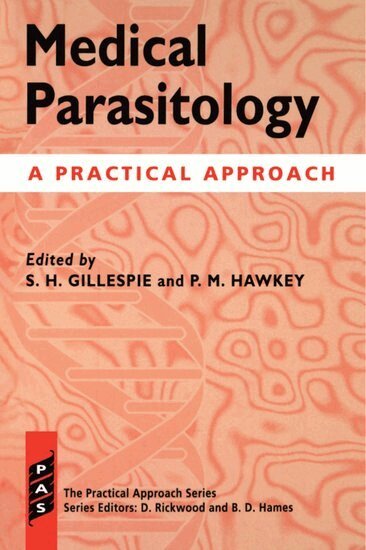
This is a concise yet comprehensive practical manual, enabling all those involved in the diagnosis of disease, caused by parasites, to provide both a competent and up-to-date service. There is also sufficient information on the biology of parasites provided to ensure that the book is a valuable resource for educational courses teaching parasitology in both the developed and devloping Worlds.
Projective Use Of Mother-And- Child Drawings: A Manual
A Manual For Clinicians
Inbunden, Engelska, 1994
823 kr
Skickas inom 10-15 vardagar
A unique and powerful new projective technique is now available to mental health professionals. Based on the most primary of human relationships that between mother and child this technique is able to foster projections and identify perceptions of self and others that carry an unusually strong component of unconscious material. Strikingly clear and accessible, The Projective Use of Mother-and-Child Drawings is one of the few books on projective techniques to provide a consistent theoretical outlook and to address the very significant issues of transference and countertransference as they relate to this technique. While firmly grounded in a psychodynamic view of personality development, the volume also conveys a clinical outlook with applications suitable to a variety of theoretical paradigms. The author comprehensively considers the theoretical and practical aspects of mother-and-child drawings and how to both use and assess them to gain insight into the most fundamental reaches of the self. She consistently cautions against overly simplified interpretations of the drawings and stresses the importance of using conclusions drawn from them only as indications for further assessment, confirmation, or rejection. The book is replete with examples of mother-and-child drawings from all age groups in both average populations and those with both mental and physical pathologies. The volume opens with a careful discussion of the theoretical considerations behind mother-and-child drawings, as well as the development and validation of projective drawing techniques in general. The next section, on research issues, discourages diagnostic labeling in favor of making optimum use of the highly personal and idiosyncratic nature of these drawings. This chapter features an interesting attempt to classify mother-and-child drawings in relation to size of the figures. A particularly fascinating chapter on the impact of art on the therapist focuses on artwork done by professional artists who have addressed the mother-and-child theme. The author explores and analyzes several thematic works of art from varying time periods and cultures. It is her intent to help mental health professionals to explore their responses to pictorial art as individuals and thereby gain new understandings of related transference and countertransference issues with clients. Chapter four provides clear instructions for administering mother-and-child drawings as a projective technique and guidelines for their interpretation. This section provides samples and analyses of age-typical drawings from the general population. They vary greatly in style and artistic proficiency and are included to provide an idea of the usual developmental sequence of drawing characteristics from early childhood through the adult years. Drawings of groups with demonstrated psychological pathologies or physical and developmental abnormalities comprise the final chapter. This section approaches the interpretation of drawings by asking questions about how they communicate basic self and object relations issues. This commanding volume, of interest, to students and professionals alike, will provide art therapists, school psychologists and mental health practitioners of all stripes with a powerful new projective technique to add to their professional armamentarium.
710 kr
Skickas inom 10-15 vardagar
A unique and powerful new projective technique is now available to mental health professionals. Based on the most primary of human relationships that between mother and child this technique is able to foster projections and identify perceptions of self and others that carry an unusually strong component of unconscious material. Strikingly clear and accessible, The Projective Use of Mother-and-Child Drawings is one of the few books on projective techniques to provide a consistent theoretical outlook and to address the very significant issues of transference and countertransference as they relate to this technique. While firmly grounded in a psychodynamic view of personality development, the volume also conveys a clinical outlook with applications suitable to a variety of theoretical paradigms. The author comprehensively considers the theoretical and practical aspects of mother-and-child drawings and how to both use and assess them to gain insight into the most fundamental reaches of the self. She consistently cautions against overly simplified interpretations of the drawings and stresses the importance of using conclusions drawn from them only as indications for further assessment, confirmation, or rejection. The book is replete with examples of mother-and-child drawings from all age groups in both average populations and those with both mental and physical pathologies. The volume opens with a careful discussion of the theoretical considerations behind mother-and-child drawings, as well as the development and validation of projective drawing techniques in general. The next section, on research issues, discourages diagnostic labeling in favor of making optimum use of the highly personal and idiosyncratic nature of these drawings. This chapter features an interesting attempt to classify mother-and-child drawings in relation to size of the figures. A particularly fascinating chapter on the impact of art on the therapist focuses on artwork done by professional artists who have addressed the mother-and-child theme. The author explores and analyzes several thematic works of art from varying time periods and cultures. It is her intent to help mental health professionals to explore their responses to pictorial art as individuals and thereby gain new understandings of related transference and countertransference issues with clients. Chapter four provides clear instructions for administering mother-and-child drawings as a projective technique and guidelines for their interpretation. This section provides samples and analyses of age-typical drawings from the general population. They vary greatly in style and artistic proficiency and are included to provide an idea of the usual developmental sequence of drawing characteristics from early childhood through the adult years. Drawings of groups with demonstrated psychological pathologies or physical and developmental abnormalities comprise the final chapter. This section approaches the interpretation of drawings by asking questions about how they communicate basic self and object relations issues. This commanding volume, of interest, to students and professionals alike, will provide art therapists, school psychologists and mental health practitioners of all stripes with a powerful new projective technique to add to their professional armamentarium.